
Soups and Salad
Easy Chicken Pot Pie Soup Recipe (Creamy And Hearty)

Introduction
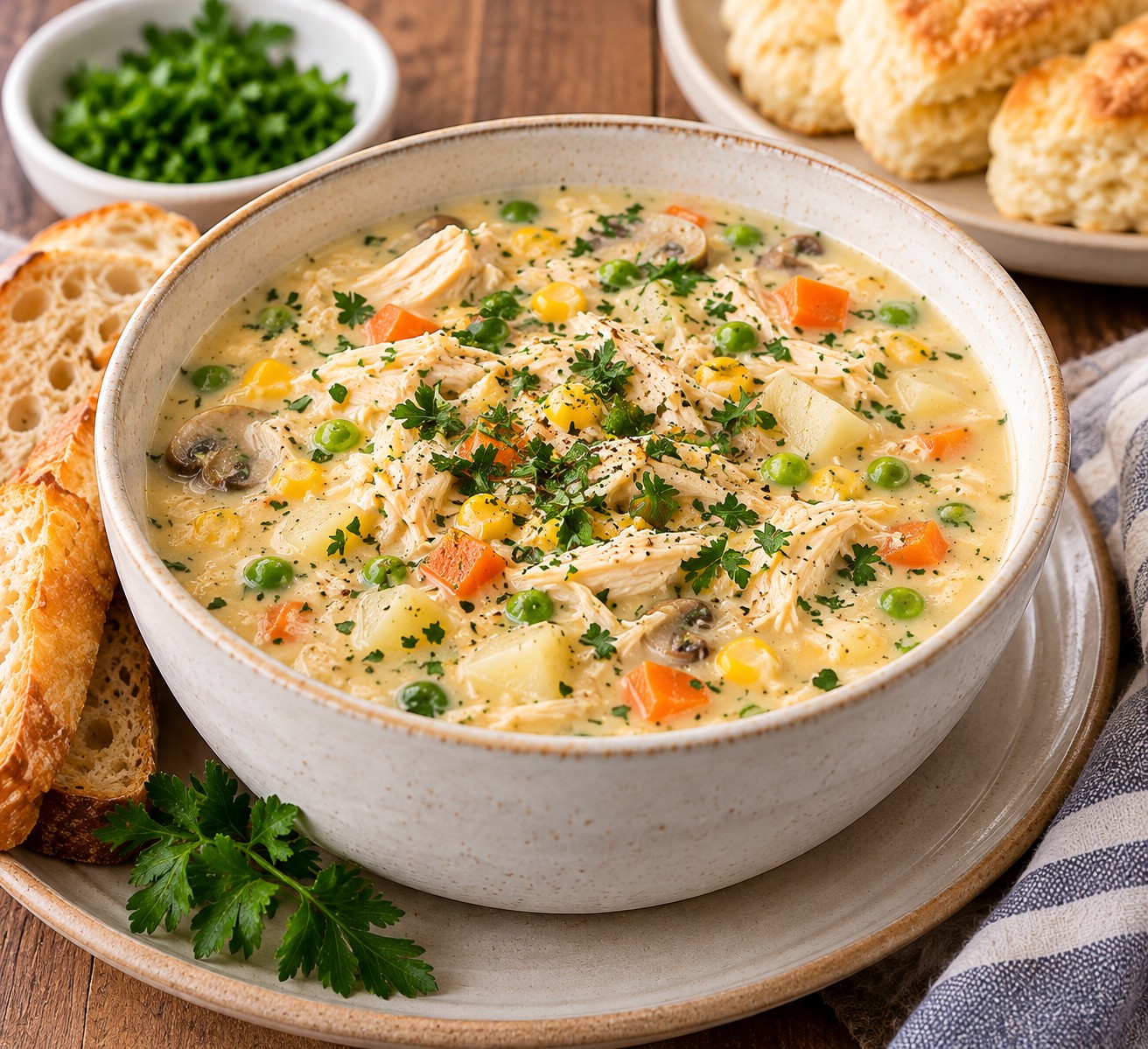
Chicken pot pie soup brings all the comforting flavors of traditional chicken pot pie into a warm, creamy bowl. Made with tender chicken, carrots, celery, potatoes, and a rich, savory broth, this homemade chicken pot pie soup is perfect for chilly evenings, family dinners, or any time you want a satisfying comfort-food meal.
It’s easy and quickly prepared in a very short time. You can use rotisserie chicken or leftover cooked chicken to save time, and simple pantry ingredients help create a thick, flavorful soup without making pastry from scratch. Serve it with crusty bread, warm biscuits, or crispy cheddar crust dippers for a cozy dinner the whole family can enjoy.
Why You’ll Love This Recipe
- Creamy and comforting: Butter, flour, chicken stock, and milk or cream create a smooth, rich texture.
- Packed with chicken and veggies: Each bowl is substantial and filling thanks to the addition of carrots, celery, potatoes, and peas.
- Easy to prepare: For a straightforward dinner with less cleaning, cook everything in one pot.
- Great for leftovers: Rotisserie chicken or leftover roast chicken makes preparation faster.
- Easy to customize: Add mushrooms, corn, or your favorite vegetables to suit your family’s taste.
- Perfect for serving: Pair it with biscuits, crusty bread, or cheddar pie crust dippers for a complete meal.
Ingredients for Chicken Pot Pie Soup
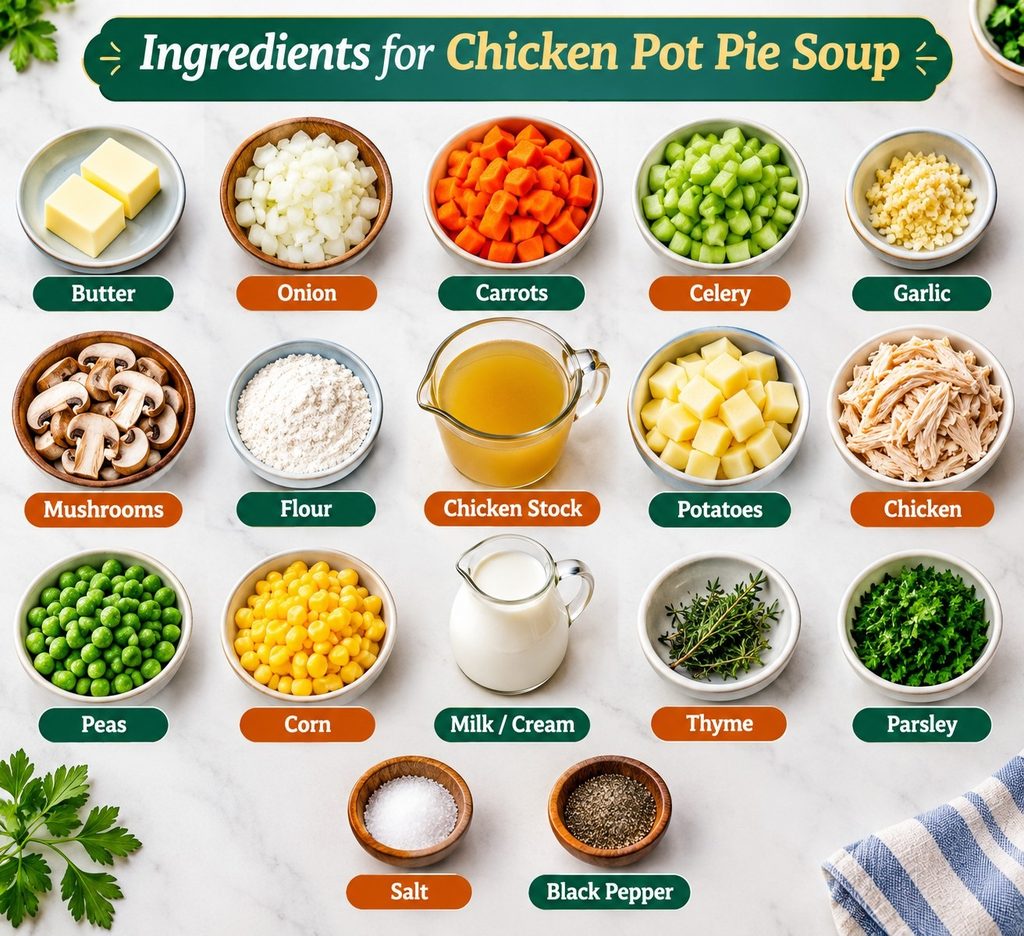
This simple recipe for chicken pot pie soup makes a creamy broth with delicate chicken and veggies using common ingredients.
Main Ingredients for Creamy Chicken Pot Pie Soup
- 2 tablespoons unsalted butter: Helps soften the vegetables and adds richness.
- 1 medium onion, chopped: Provides a savory base.
- Peel and chop two carrots to provide color and natural sweetness.
- Add a traditional pot pie flavor with two chopped celery stalks.
- 2 garlic cloves, minced: Add a fragrant, savory taste.
- 8 ounces mushrooms, sliced: Optional, but they add depth and earthy flavor.
- ¼ cup all-purpose flour: Thickens the broth.
- 6 cups chicken stock: Forms the soup’s flavorful base.
- To make the soup substantial and satisfying, peel and chop two medium potatoes.
- 3 cups cooked, shredded chicken: Rotisserie chicken is a convenient option.
- ½ cup frozen peas: Add sweetness and color.
- ½ cup corn: Use frozen or drained canned corn.
- To achieve a creamy finish, use half a cup of milk or heavy cream.
- One teaspoon of fresh thyme leaves: Provides a subtle herbal taste.
- 2 tablespoons chopped fresh parsley: Brightens the finished soup.
- Salt and black pepper: Season to taste.
Ingredient note: This is a practical home-cooking version based on the common ingredients and methods in the recipe sources. The quantities are designed for a smaller batch and differ from the larger source recipes.
Ingredient Substitutions for Chicken Pot Pie Soup
Chicken: Use cooked chicken breast, shredded rotisserie chicken, or leftover roast turkey.
For a thinner soup, use milk; for a deeper texture, use heavy cream. For chicken pot pie soup without heavy cream, milk is a useful alternative.
Vegetables: Add extra carrots, peas, corn, mushrooms, or celery. If you prefer potatoes to remain firm, cut them into evenly sized pieces.
Flour: For a gluten-free version, use an all-purpose flour blend that is free of gluten. Verify that the boxed items, including the chicken stock, are free of gluten.
Chicken stock: Homemade stock or store-bought broth both work. Choose a lower-sodium option if you want more control over the salt.
Equipment Needed For Chicken Pot Pie Soup
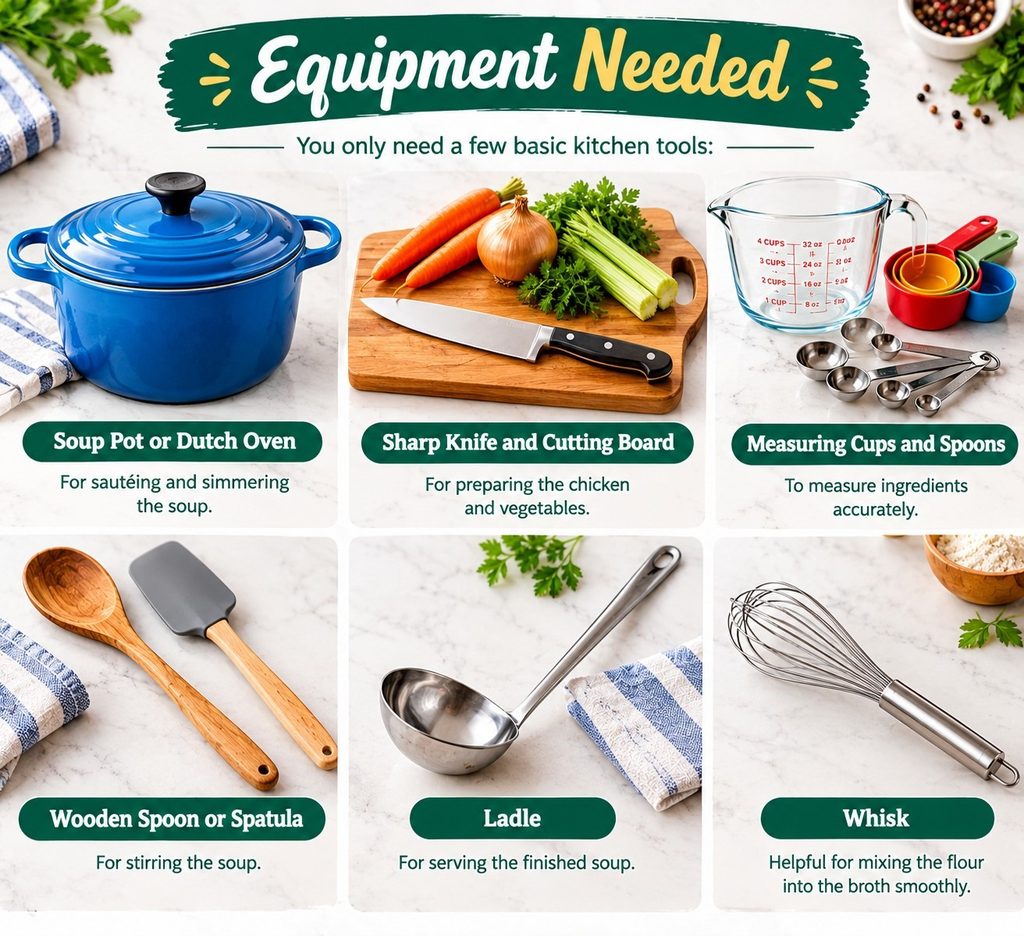
You only need a few basic kitchen tools:
- Use a big soup pot or Dutch oven to sauté the ingredients and simmer the soup.
- Sharp knife and cutting board: For preparing the chicken and vegetables.
- Measuring cups and spoons: To measure ingredients accurately.
- Wooden spoon or spatula: For stirring the soup.
- Ladle: For serving the finished soup.
- Whisk: Helpful for mixing the flour into the broth smoothly.
How to Make Chicken Pot Pie Soup
Step 1: Sauté the Vegetables
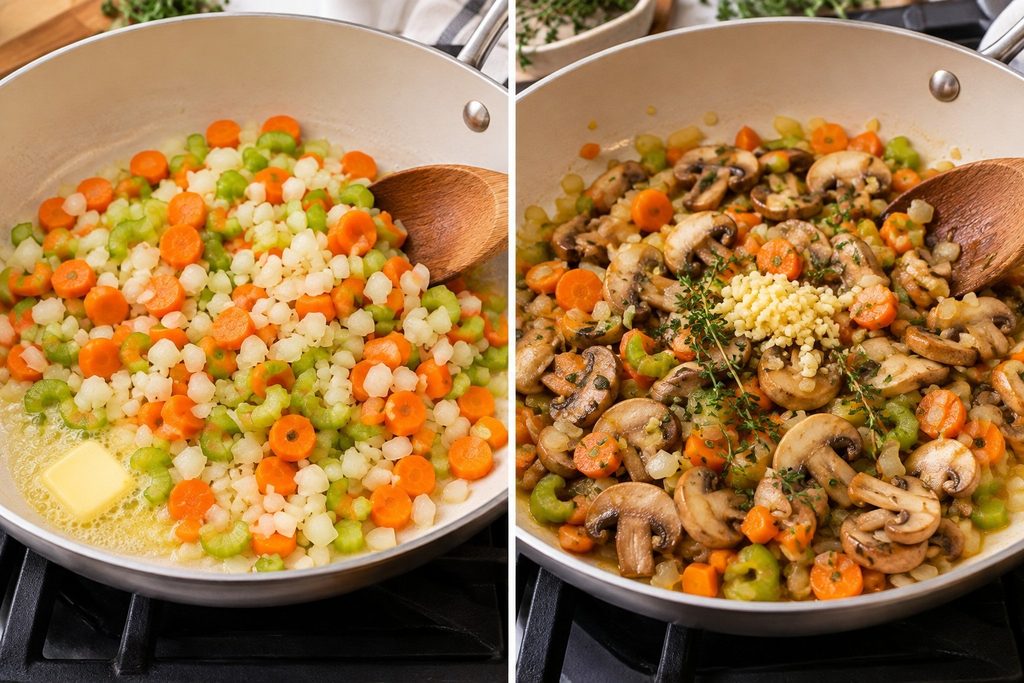
Take a large pan and add small amount of butter is added in a low medium heat. Add the celery, carrots, and chopped onion. Cook, stirring regularly, until the veggies start to soften, about 5 minutes.
Add the minced garlic, mushrooms, and thyme. Cook for another 3 to 5 minutes, until the mushrooms soften and release their moisture.
Step 2: Add the Flour
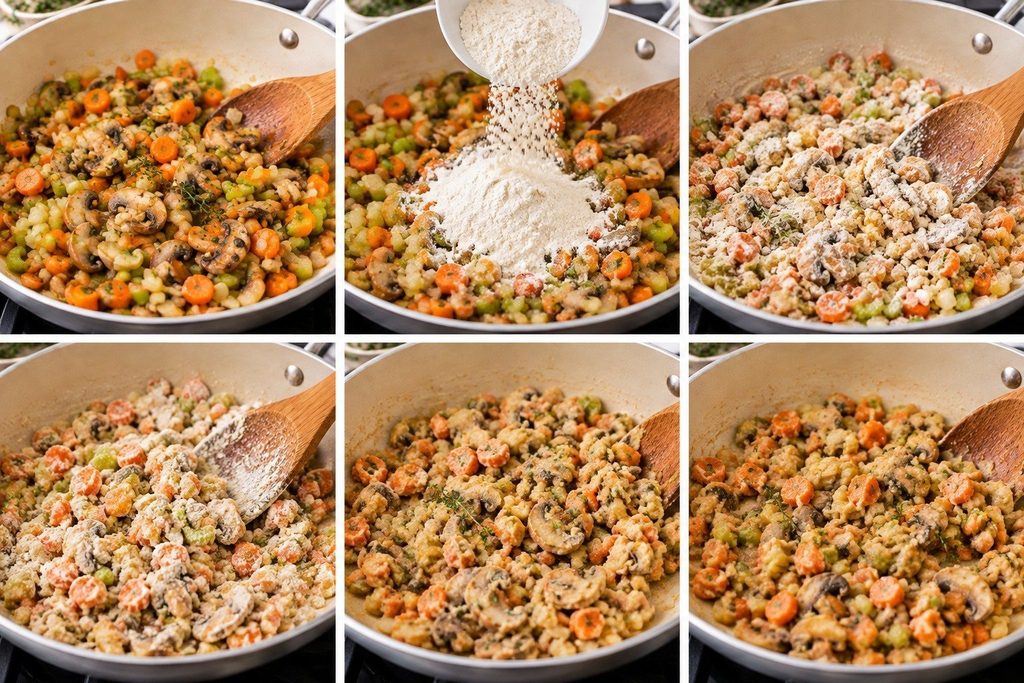
Stir thoroughly to coat all of the vegetables after sprinkling them with flour. Cook for about 1 minute, stirring constantly. This also helps eliminate the taste of raw flour and lays the foundation for a rich, creamy soup.
Step 3: Pour in the Chicken Stock
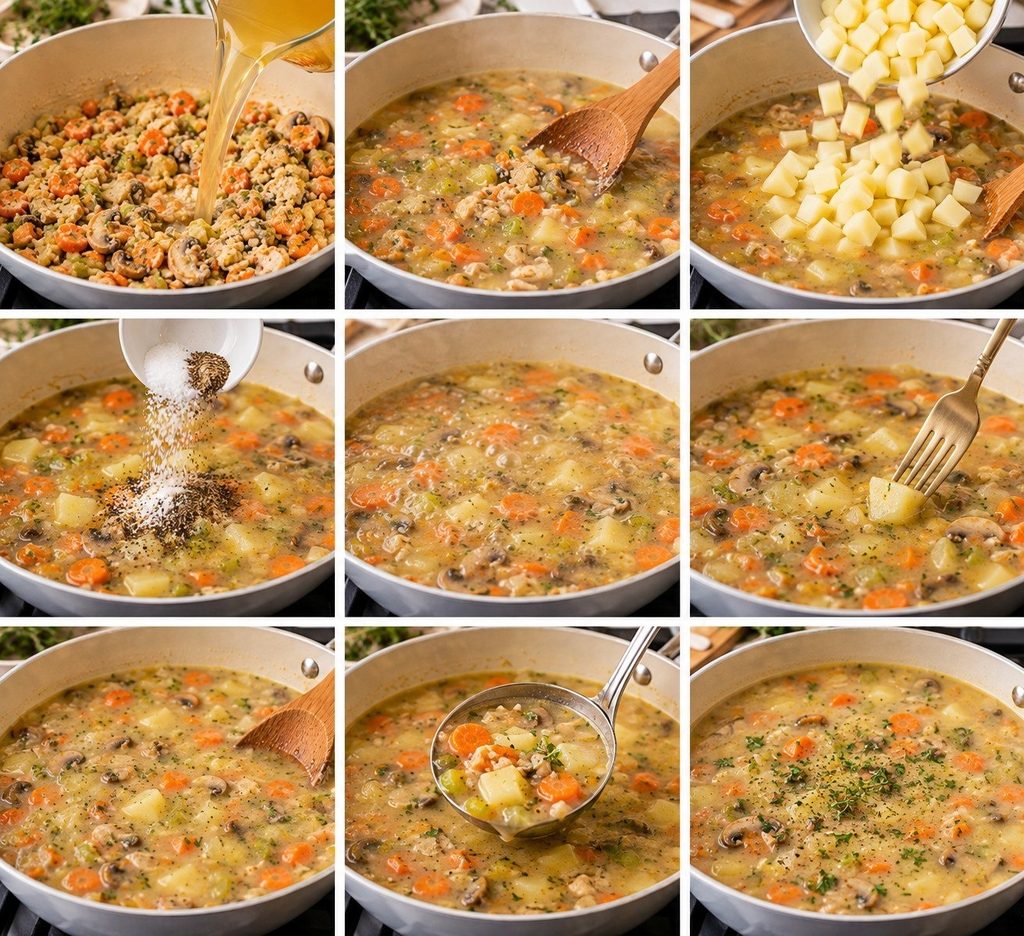
Gradually pour in the chicken stock while stirring. Mix well to loosen any flour stuck to the bottom of the pot. Add the diced potatoes, salt, and black pepper.
Once the soup reaches a gentle boil, reduce the heat. Simmer for about 12 to 15 minutes, until the potatoes are soft enough to pierce with a fork.
Step 4: Add the Chicken and Vegetables
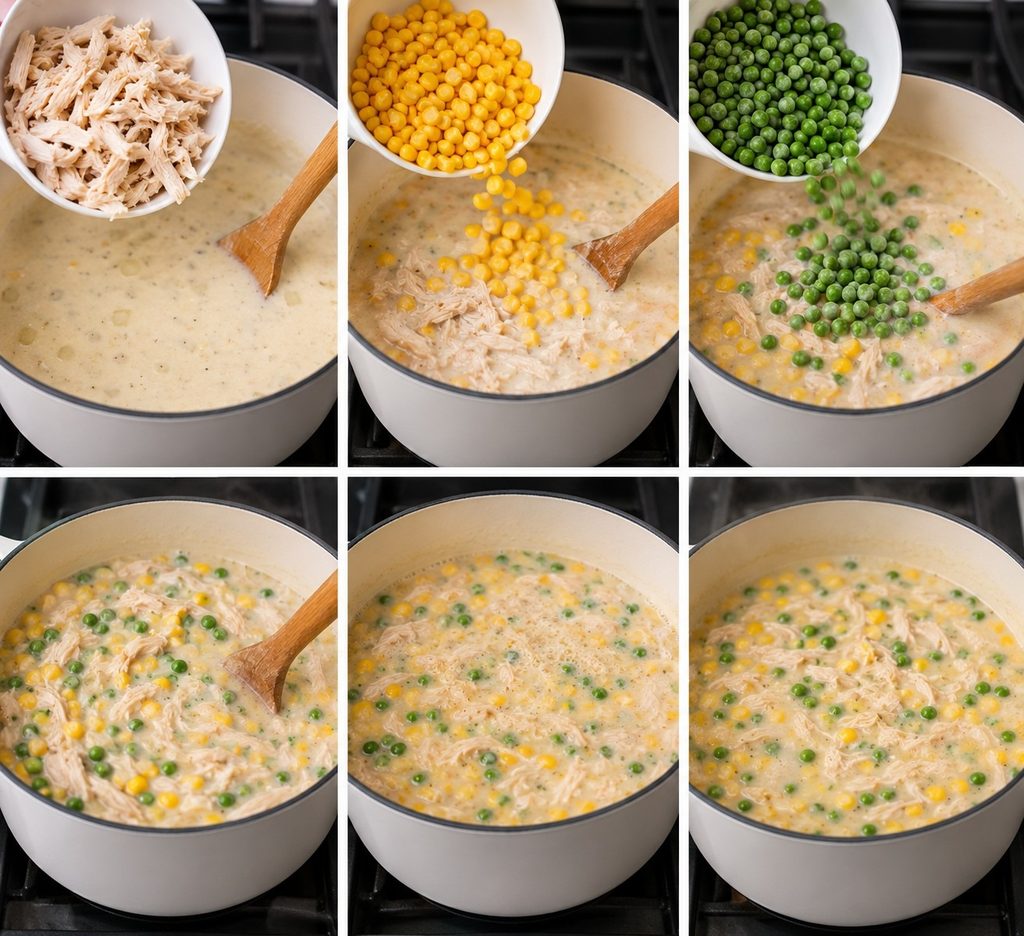
Stir in the cooked shredded chicken, corn, and frozen peas. Simmer the soup for approximately five minutes, or until the veggies are soft and the chicken is heated. If you are using raw chicken instead of cooked chicken, adjust the cooking method and time to ensure the chicken reaches an internal temperature of 165°F (74°C) before serving.
Step 5: Make the Soup Creamy
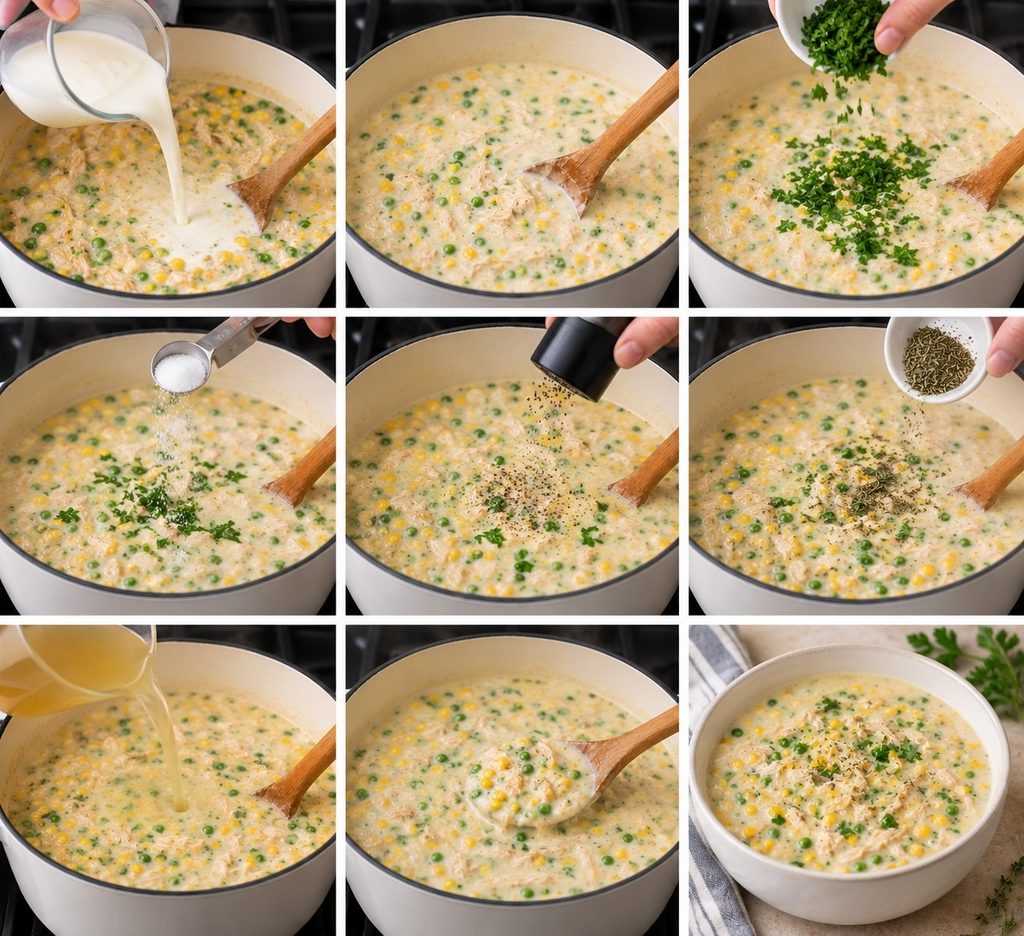
Turn down the heat to low and mix in the heavy cream or milk. Do not let the soup boil; instead, warm it slowly. Add the chopped parsley and taste the broth.
Adjust the salt, pepper, and thyme as needed. If the soup is thicker than you prefer, stir in a little extra chicken stock until it reaches your desired consistency.
Step 6: Serve Warm

Pour the soup into dishes and top with more parsley. Serve immediately with crusty bread, warm biscuits, or cheddar pie crust dippers.
Expert Tips for the Best Chicken Pot Pie Soup
- Use cooked chicken for convenience: Rotisserie chicken helps you prepare dinner quickly without cooking the chicken separately.
- Cut veggies equally so that they cook at a consistent rate.
- Cook the flour briefly: One minute of stirring helps improve the flavor of the soup base.
- Add stock gradually: Stir as you pour to reduce the chance of lumps.
- Keep the heat gentle after adding dairy: A strong boil can affect the texture of a milk- or cream-based soup.
- Season at the end: Chicken stock varies in saltiness, so taste before adding more salt.
- Let the potatoes become tender: They should be soft enough to eat easily but not so overcooked that they fall apart completely.
Chicken Pot Pie Soup Recipe Variations

Chicken Pot Pie Soup with Rotisserie Chicken
For a quick dinner, shred a store-bought rotisserie chicken and stir it into the soup near the end of cooking. Leftover cooked chicken works just as well. Making this soup with leftover chicken is a terrific way to turn leftovers into another satisfying supper.
Chicken Pot Pie Soup Without Heavy Cream
For a lighter version, use milk for heavy cream. The flour thickens the broth, so you can still enjoy a creamy texture without relying entirely on cream. Add the milk over low heat and stir gently.
Gluten-Free Easy Chicken Pot Pie Soup
Use a gluten-free flour blend that works well for thickening sauces in place of the all-purpose flour. Use certified gluten-free chicken stock and check the labels on all packaged ingredients.
Chicken Pot Pie Soup with Cheddar Crust Dippers
For a special touch, bake refrigerated pie crust topped with grated cheddar cheese and chopped parsley at 375°F (190°C) until golden and crisp, following the pastry package’s instructions. Let it cool slightly, break it into pieces, and serve alongside the soup for dipping.
Chicken Pot Pie Soup Using Cream of Chicken Soup
If you would rather take a shortcut, use canned cream of chicken soup in place of the flour-based thickening step. Reduce the amount of additional thickener and add the canned soup gradually with the stock, following its package directions. Taste before adding salt because canned soup can already be salty.
Search terms like “cream of chicken pot pie,” “chicken pot pie with cream of chicken soup,” and “simple chicken pot pie recipe using cream of chicken soup” are related to this variation. While Campbell’s soup is used in some traditional baked pot pie recipes, it is not the same as classic stovetop soup.
Serving Suggestions for Chicken Pot Pie Soup
The soup made from chicken pot pie is substantial enough to be served as a main meal. Try it with:
- Warm biscuits: Perfect for soaking up the creamy broth.
- Crusty French bread: Adds a satisfying crunch.
- Dinner rolls: A soft, family-friendly side.
- Cheddar crust dippers: Bring a buttery, cheesy flavor that complements the soup.
- A simple green salad: Adds a fresh contrast to the rich soup.
- Serve each bowl with a side of bread and some fresh parsley for a full dinner.
Storage and Reheating Chicken Pot Pie Soup
Store leftovers properly to maintain the soup’s flavor and texture.
How to Store Chicken Pot Pie Soup in the Refrigerator
After letting the soup cool quickly, pour it into an airtight container. Refrigerate for three to four days. To keep bread or pastry dippers crisp, store them separately.
Can You Freeze Chicken Pot Pie Soup?
Yes, you can freeze this soup, although the texture may change slightly because it contains dairy and potatoes. Freeze the soup before adding the milk or cream for optimal results. Thaw it overnight in the refrigerator, reheat gently, and stir in the dairy near the end.
Warm the soup in a saucepan over low to medium-low heat, stirring now and again, until it reaches 165°F (74°C) to reheat. If it has gotten too thick, add a little milk or chicken stock.
Common Mistakes to Avoid When Making Chicken Pot Pie Soup
- Adding too much flour: Too much flour can make the soup pasty. Measure carefully and add extra stock if needed.
- Adding dairy over high heat: Boiling the soup vigorously after adding milk or cream can affect its texture.
- Undercooking the vegetables: Give the potatoes enough time to become tender before adding the final ingredients.
- Ignoring the seasoning check: Before serving, taste the soup and make any necessary salt and pepper adjustments.
- Adding too much liquid at once: To assist make a smooth soup, gently stir the stock into the flour mixture.
- Freezing with pastry dippers: Keep the dippers separate from the soup to preserve their crisp texture.
Frequently Asked Questions About Chicken Pot Pie Soup
Can You Make Chicken Pot Pie Soup with Leftover Chicken?
Yes. Leftover roast chicken, baked chicken breast, or rotisserie chicken works well. Add the cooked chicken near the end of cooking after shredding or dicing it. Heat it thoroughly without simmering it for too long, which can make it dry.
Can You Make Chicken Pot Pie Soup Without Heavy Cream?
Yes. For a lighter version, substitute ordinary milk for heavy cream. The flour thickens the stock, allowing the soup to retain its creamy texture. You can also use a suitable dairy-free alternative, although the flavor and texture may differ.
Can You Use Cream of Chicken Soup in Chicken Pot Pie Soup?
Yes. Canned cream of chicken soup can replace the flour-based thickening step for a convenient variation. Before adding salt, stir it into the chicken stock, adjust the liquid as necessary, and taste. This method is inspired by the shortcut used in some chicken pot pie recipes with Campbell’s soup, although those recipes are often baked pies rather than soups.
What Vegetables Work Best in Chicken Pot Pie Soup?
Carrots, celery, onions, potatoes, peas, and corn are classic choices. Mushrooms and garlic add extra savory flavor. To ensure consistent cooking, cut the vegetables into pieces of comparable size.
How Do You Thicken Chicken Pot Pie Soup?
The easiest method is to cook flour with butter and vegetables before adding the stock. If the soup is still too thin, simmer it gently for a few more minutes. Alternatively, mix a small amount of flour or cornstarch with cold water and stir it into the simmering soup gradually.
Chicken Pot Pie Soup Nutrition Information (Approximate)
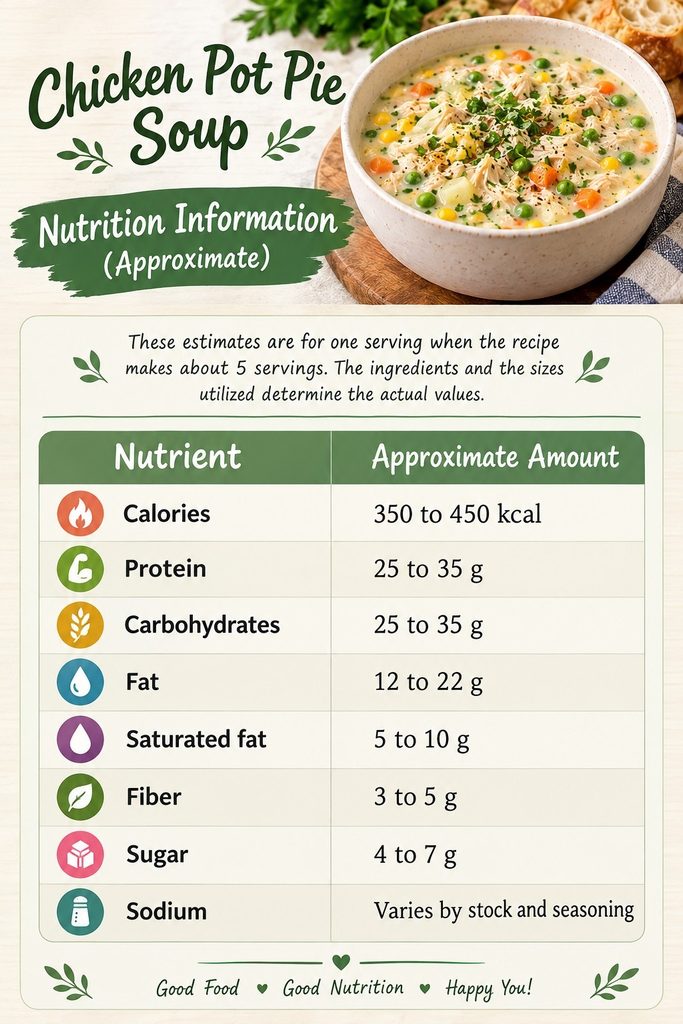
These estimates are for one serving when the recipe makes about 5 servings. The ingredients and the sizes utilized determine the actual values.
| Nutrient | Approximate Amount |
| Calories | 350 to 450 kcal |
| Protein | 25 to 35 g |
| Carbohydrates | 25 to 35 g |
| Fat | 12 to 22 g |
| Saturated fat | 5 to 10 g |
| Fiber | 3 to 5 g |
| Sugar | 4 to 7 g |
| Sodium | Varies by stock and seasoning |
These values are estimates, not laboratory-tested nutrition data. For a more precise result, compute nutrition using your actual ingredients.
Chicken Pot Pie Soup Recipe Card
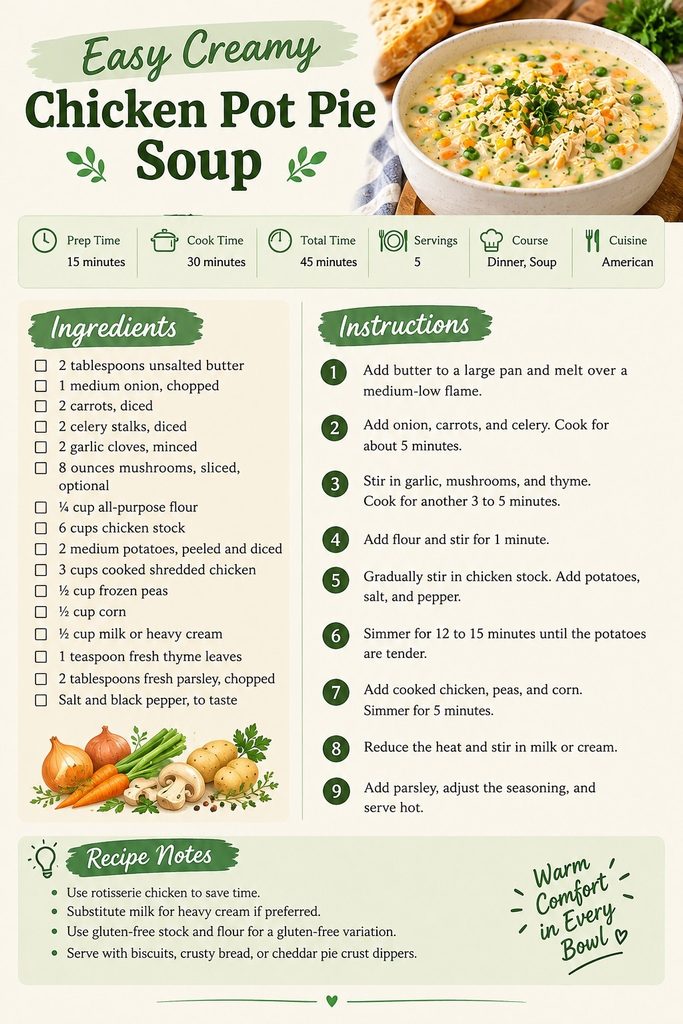
Recipe Name: Easy Creamy Chicken Pot Pie Soup
Prep Time: 15 minutes
Cook Time: 30 minutes
Total Time: 45 minutes
Servings: 5
Course: Dinner, Soup
Cuisine: American
Ingredients
- 2 tablespoons unsalted butter
- 1 medium onion, chopped
- 2 carrots, diced
- 2 celery stalks, diced
- 2 garlic cloves, minced
- 8 ounces mushrooms, sliced, optional
- ¼ cup all-purpose flour
- 6 cups chicken stock
- 2 medium potatoes, peeled and diced
- 3 cups cooked shredded chicken
- ½ cup frozen peas
- ½ cup corn
- ½ cup milk or heavy cream
- 1 teaspoon fresh thyme leaves
- 2 tablespoons fresh parsley, chopped
- Salt and black pepper, to taste
Instructions
- Add butter to a large pan and melt over a medium-low flame.
- Add onion, carrots, and celery. Cook for about 5 minutes.
- Stir in garlic, mushrooms, and thyme. Cook for another 3 to 5 minutes.
- Add flour and stir for 1 minute.
- Gradually stir in chicken stock. Add potatoes, salt, and pepper.
- Simmer for 12 to 15 minutes until the potatoes are tender.
- Add cooked chicken, peas, and corn. Simmer for 5 minutes.
- Reduce the heat and stir in milk or cream.
- Add parsley, adjust the seasoning, and serve hot.
Recipe Notes
- Use rotisserie chicken to save time.
- Substitute heavy cream for milk if preferred.
- Use gluten-free stock and flour for a gluten-free variation.
- Serve with biscuits, crusty bread, or cheddar pie crust dippers.
Conclusion: Enjoy This Easy Chicken Pot Pie Soup Recipe
This easy chicken pot pie soup recipe brings together tender chicken, hearty potatoes, colorful vegetables, and a creamy, savory broth in one comforting meal. It is simple enough for a weeknight dinner but satisfying enough for a relaxed family gathering.
Whether you use rotisserie chicken, add extra mushrooms, choose milk instead of heavy cream, or serve the soup with crispy cheddar crust dippers, you can easily adapt it to your taste. Prepare a pot, serve it with warm bread, and enjoy the comforting flavors of homemade chicken pot pie in every spoonful.
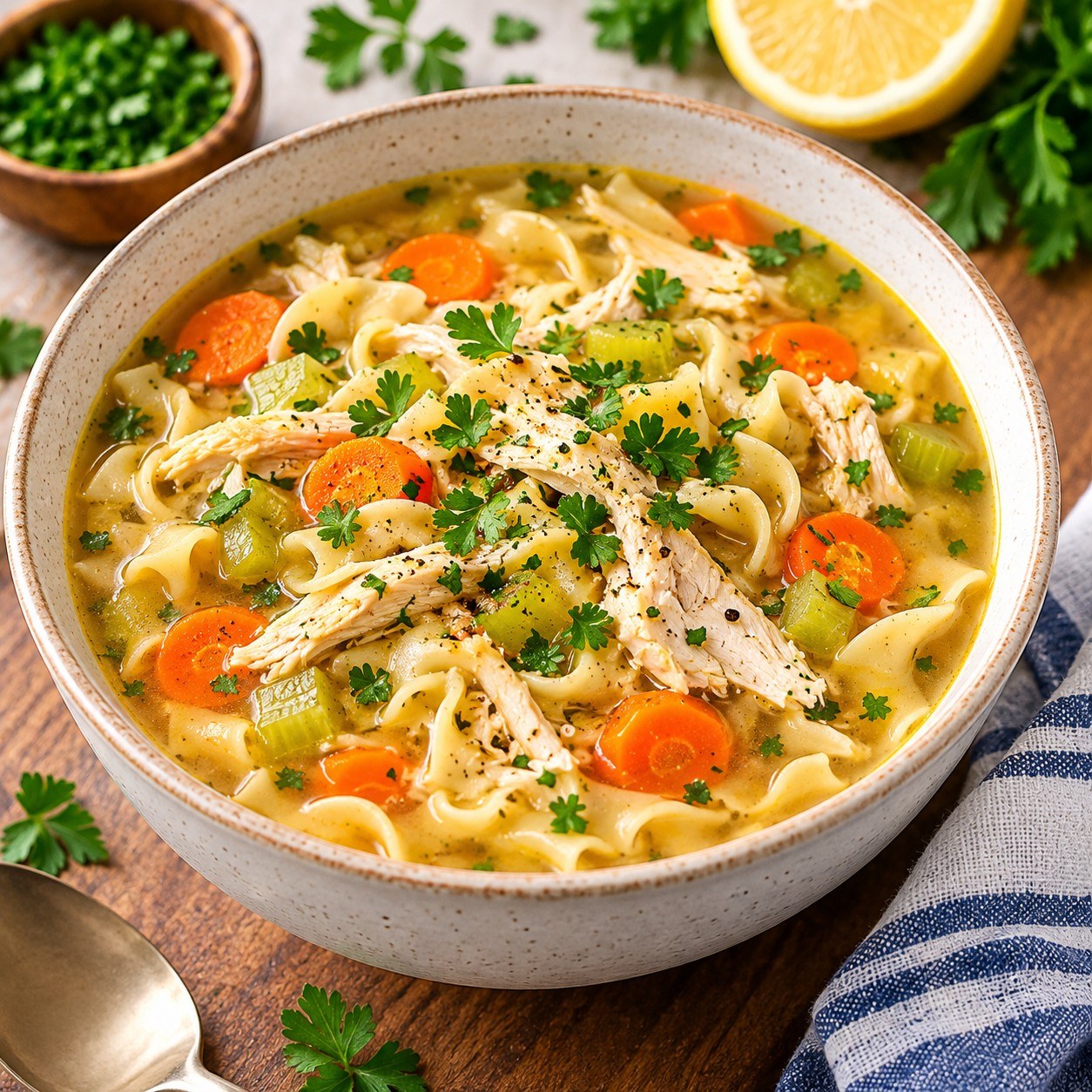
Introduction to Chicken Noodles Soup
A bowl of chicken noodles soup is a simple way to turn everyday ingredients into a warm and satisfying meal. Tender chicken, colorful vegetables, and soft noodles come together in a light but flavorful broth. It works well for lunch, a relaxed family dinner, or a meal you can prepare ahead for busy days.
You may customize the flavor of your homemade chicken noodles soup, which is its best feature. Add more vegetables, choose your favorite noodles, or season the broth with fresh herbs. This easy chicken noodle soup recipe uses basic ingredients and straightforward cooking steps, so you do not need special kitchen skills to get delicious results.
Why You’ll Love This Chicken Noodles Soup Recipe
- Simple ingredients: The combination of chicken, carrots, celery, onion, garlic, and noodles is delicious.
- Homemade flavor: Simmering the ingredients together develops a savory broth without complicated seasoning.
- Simple to modify: Depending on what you have on hand, use other vegetables, noodles, or herbs.
- Family-friendly: The mild flavor makes this soup suitable for a wide range of tastes.
- Meal-prep friendly: Prepare the broth and chicken ahead, then add freshly cooked noodles when serving.
Ingredients for Homemade Chicken Noodles Soup
This recipe makes approximately 6 servings and takes around 1 hour, depending on the chicken and noodles you use.
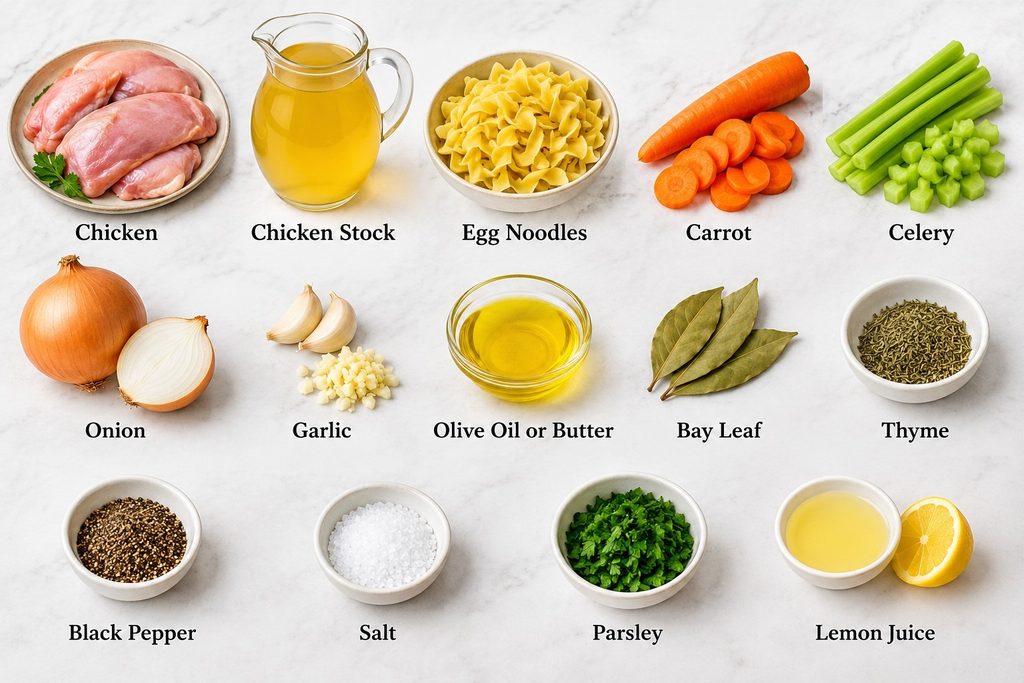
Ingredients
- 500 g (about 1 lb) boneless chicken thighs or chicken breasts
- 1.5 litres (6 cups) chicken stock or water
- 150 g (about 5 oz) egg noodles
- 1 medium carrot, thinly sliced
- 2 celery stalks, chopped
- 1 medium onion, diced
- 2 garlic cloves, minced
- 1 tablespoon olive oil or butter
- 1 bay leaf
- ½ teaspoon dried thyme
- ½ teaspoon black pepper
- Salt, to taste
- 2 tablespoons chopped fresh parsley
- 1 teaspoon lemon juice, optional
Ingredient Notes
Chicken: Thighs generally stay juicy during simmering, while chicken breast offers a leaner option. Both work well in this recipe.
Chicken stock: A good-quality, preferably low-sodium stock gives the soup a savory base. Water also works, although you may need additional seasoning.
Noodles: Egg noodles provide a tender, hearty texture. Regular wheat noodles or suitable gluten-free alternatives are also options.
Vegetables: Carrots, celery, onion, and garlic build the flavor. You can add mushrooms, peas, or sweetcorn for extra variety.
Equipment Needed for Chicken Noodles Soup
Gather these everyday kitchen tools before you begin:
- A large saucepan or soup pot
- A sharp knife and cutting board
- Measuring cups and spoons
- A wooden spoon
- Two forks for shredding the chicken
- A ladle for serving
A pot with enough room for the broth and vegetables helps everything cook evenly.
Step-by-Step Instructions for Chicken Noodles Soup
Step 1: Cook the Chicken
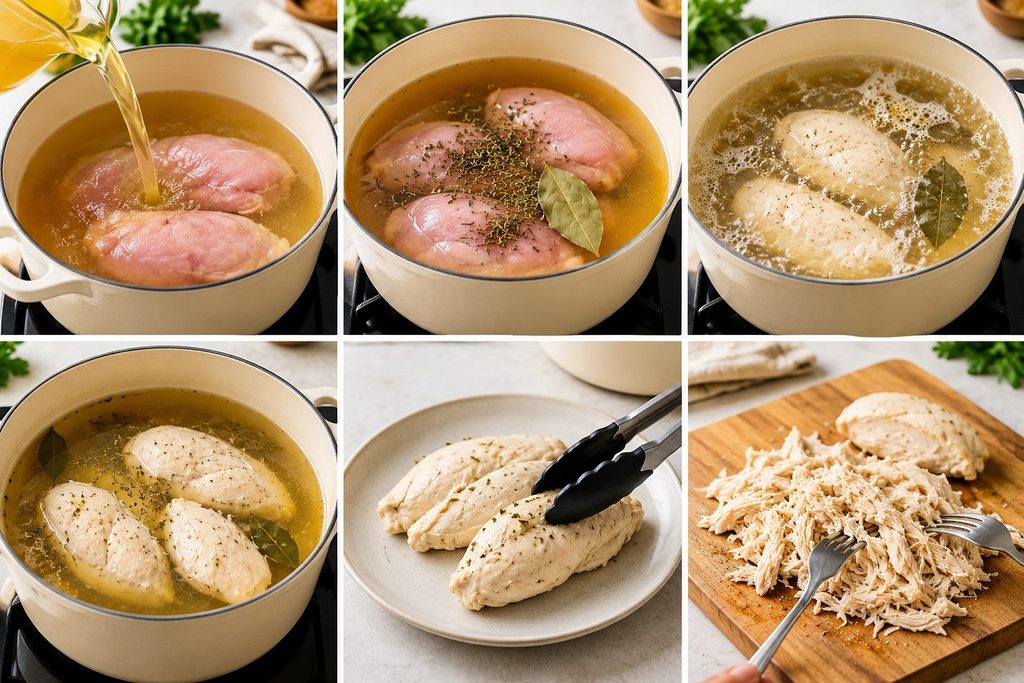
Pour the stock into a large pot with the chicken. Add the dried thyme and bay leaf. After bringing the liquid to a mild boil, lower the heat and simmer until the chicken is cooked through.
The size and cut of the meat determine how long it takes to cook. Make sure the thickest portion reaches 74°C, or 165°F. Before shredding or chopping the chicken into tiny pieces, move it to a plate and give it a short rest.
Step 2: Build the Vegetable Base
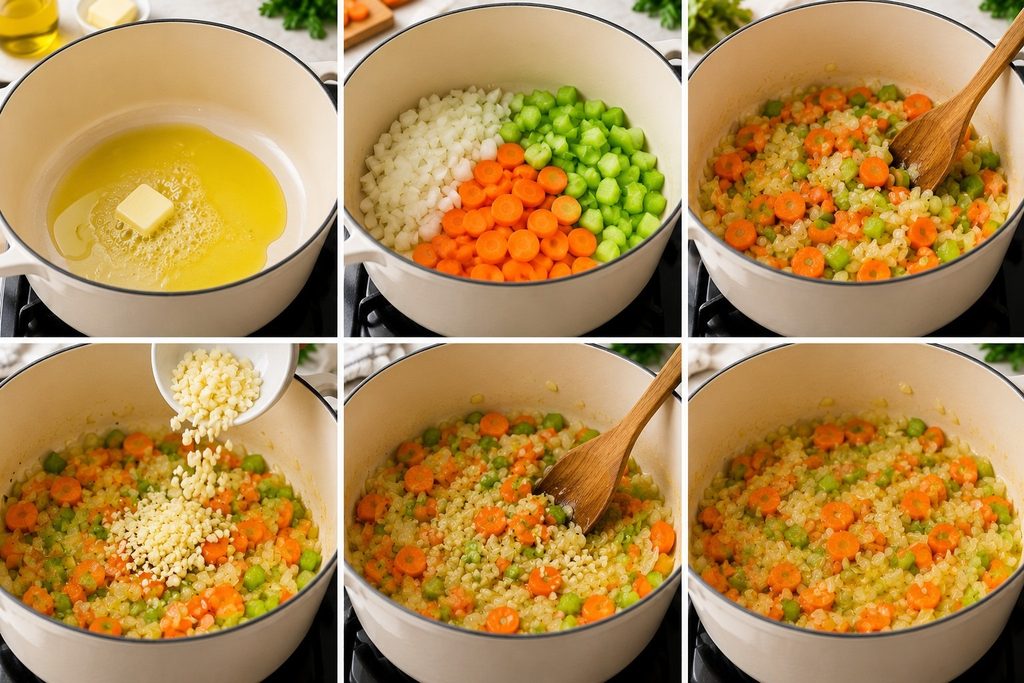
Heat the olive oil or butter in a separate pot, or carefully use the same pot after removing the chicken and broth. Add the onion, carrot, and celery.
Stirring occasionally, cook for about 5 minutes, or until the veggies start to release their perfume and the onion softens. Add garlic and cook it for 30 seconds for better taste. Avoid browning the garlic too much because it can develop a bitter taste.
Step 3: Prepare the Soup Broth
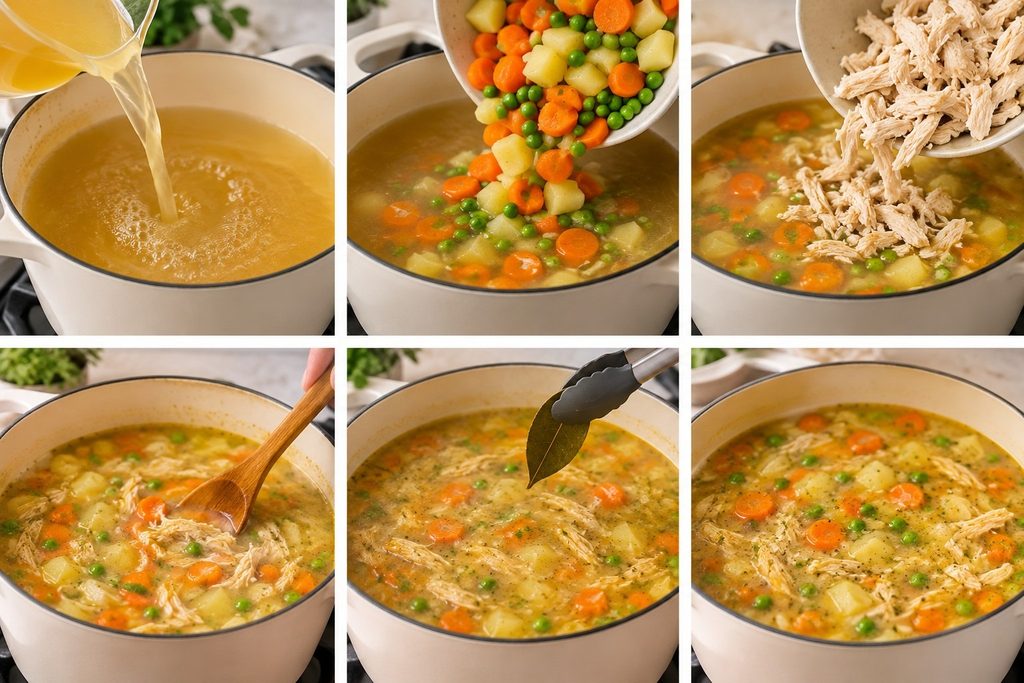
Pour the chicken stock back into the pot if you removed it. Add the cooked vegetables and shredded chicken.
Mix the mixture gently for about 5 to 10 minutes. This gives the ingredients time to share their flavors. Remove the bay leaf before serving.
Step 4: Add the Noodles
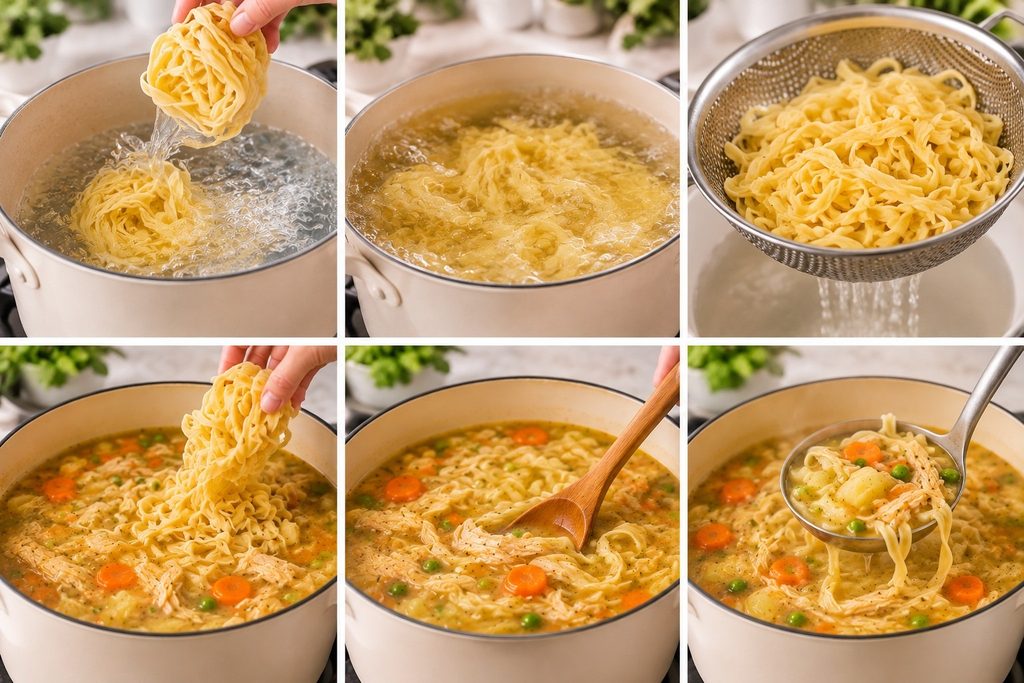
Cook the noodles according to the given steps written on the box. Most egg noodles take around 5 to 8 minutes, but the exact time varies by brand and thickness.
Simmer the soup gently and stir from time to time. Add a little boiling water or stock if the broth gets too low.
Step 5: Season and Serve
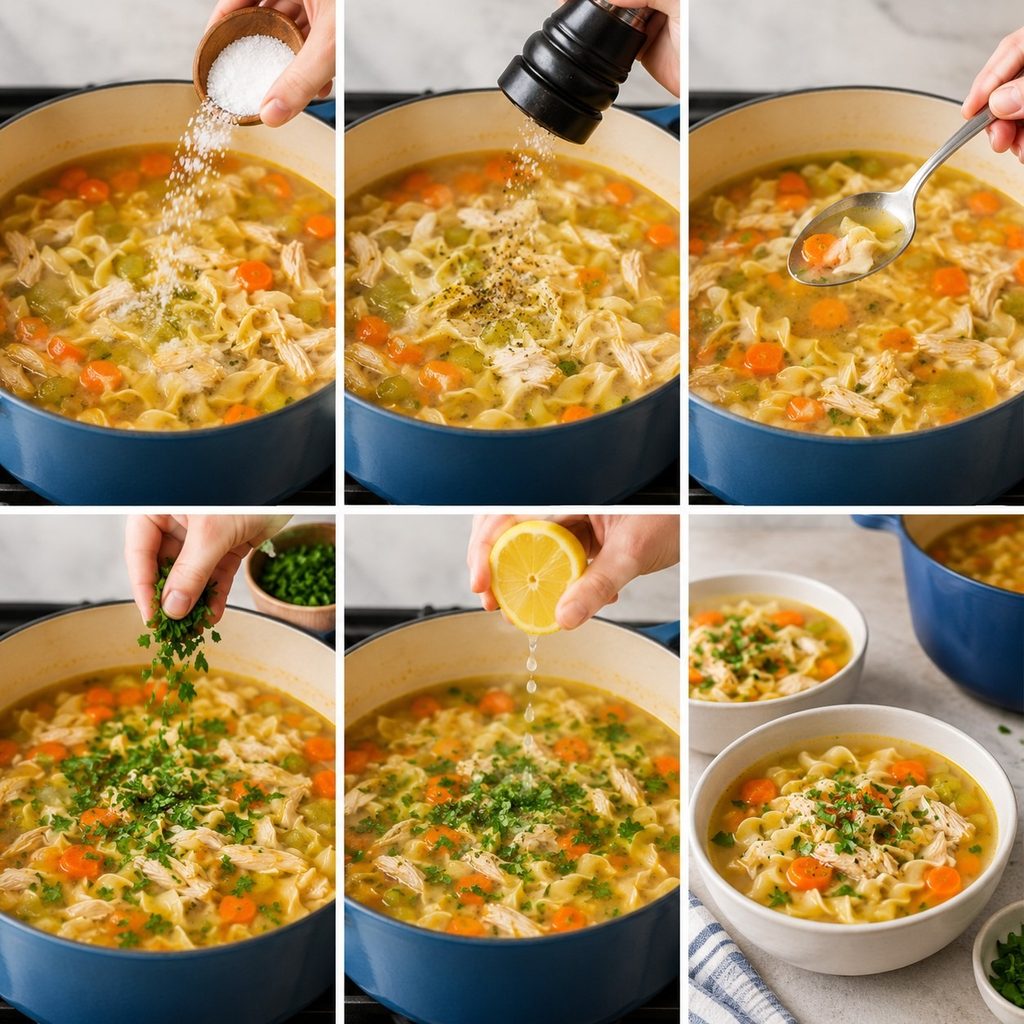
Add salt and black pepper as needed and taste the soup. Stir in the fresh parsley and a little lemon juice if you prefer a brighter flavor.
Ladle the finished soup into bowls and serve while the noodles are tender and the chicken is hot.
Expert Tips for Better Chicken Noodles Soup
- Season gradually: Stock may already contain salt, so taste before adding extra.
- Cut vegetables evenly: Pieces of similar size cook more steadily.
- Avoid overcooking chicken: Check the internal temperature rather than relying only on time.
- Cook noodles separately for meal prep: This helps prevent them from soaking up too much broth.
- Adjust the consistency: Add extra stock for a lighter soup or simmer briefly before adding the noodles if you want a stronger flavor.
- Finish with fresh herbs: Parsley or dill adds freshness without requiring extra seasoning.
Chicken Noodles Soup Recipe Variations
Gluten-Free Chicken Noodles Soup
To prepare gluten-free chicken noodle soup, replace regular noodles with a certified gluten-free variety made from rice, corn, or another suitable grain. Check the stock and seasonings as well, because some packaged products may contain gluten.
Cook the replacement noodles according to the package instructions to prevent them from becoming too soft.
Quick Chicken Noodles Soup With Maruchan Ramen
You can use instant ramen noodles in place of the egg noodles if you like Maruchan ramen. Adhere to the package timing and add them close to the conclusion of cooking
For better control over the flavor, use only part of the seasoning packet or leave it out. The chicken broth, vegetables, and herbs can provide plenty of taste on their own.
Easy Chicken Noodle Soup With Leftover Chicken
Leftover cooked chicken makes this an easy chicken noodle soup for busy evenings. Prepare the vegetable base and heat the stock, then stir in the cooked chicken shortly before adding the noodles.
This method saves time because the chicken does not need to cook from scratch.
Chicken Noodles Soup With Extra Vegetables
Add peas, mushrooms, spinach, or sweetcorn to change the texture and flavor. Choose vegetables that cook quickly, and add delicate greens near the end so they do not become overly soft.
Serving Suggestions for Chicken Noodles Soup
Serve this soup on its own for lunch or pair it with a simple side for dinner.
- Crusty bread for dipping into the broth
- Garlic toast for extra flavor
- A grilled cheese sandwich for a filling meal
- A fresh green salad for a lighter combination
- Toasted baguette slices for a quick family dinner
For children or anyone who prefers mild flavors, serve the soup with less black pepper and let everyone season their own bowl.
Storage and Reheating for Chicken Noodles Soup
Refrigeration: Transfer leftovers into shallow, airtight containers and refrigerate within 2 hours of cooking. Use within 3 to 4 days.
Freezing: Freeze the chicken, vegetables, and broth without noodles for up to 3 months for best quality. Thaw in the refrigerator before reheating.
Reheating: In a pot, reheat the soup until it is scorching hot. Add fresh noodles and cook until tender. If the broth has thickened, add a little water or stock.
For the best leftovers, keep cooked noodles separate from the broth. They continue absorbing liquid during storage and may become too soft.
Common Mistakes to Avoid When Making Chicken Noodles Soup
- Adding noodles too early: They can absorb most of the broth and lose their texture.
- Using too much salt: Taste the stock before seasoning the entire pot.
- Cooking at a rolling boil: A gentle simmer gives you better control over the chicken and vegetables.
- Cutting vegetables into very different sizes: Uneven pieces may cook at different speeds.
- Skipping the final taste test: A small amount of salt, pepper, or lemon juice can improve the balance.
- Freezing the finished soup with noodles: Freeze the broth and chicken separately for a better texture after thawing.
Frequently Asked Questions About Chicken Noodles Soup
1. What Makes a Good Chicken Noodle Soup Recipe?
A good chicken noodle soup recipe balances flavorful broth, tender chicken, vegetables, and noodles that are cooked just until tender. Using quality stock and seasoning gradually helps create a soup with plenty of flavor.
2. Is Homemade Chicken Noodle Soup Better Than Canned Soup?
Homemade soup gives you more control over the ingredients, seasoning, and noodle texture. Campbell’s chicken noodle soup, Swanson chicken noodle soup, and Progresso chicken noodle soup are convenient store-bought alternatives, but their ingredients and nutrition differ. Check individual labels if you are comparing sodium or other dietary needs.
3. How Can I Find Chicken Noodle Soup Near Me?
To find chicken noodle soup near me or chicken soup near me, check local restaurant listings, grocery stores, and food delivery apps. Search for homemade soup if you prefer a freshly prepared meal, or check supermarket listings if you want a packaged option.
4. Can I Make Chicken Noodles Soup Without Egg Noodles?
Yes. You can use regular wheat noodles, rice noodles, or certified gluten-free noodles. Cooking times differ, so follow the package instructions and add the noodles when the broth is nearly ready.
5. Can I Prepare Chicken Noodles Soup in Advance?
Yes. Prepare the broth, chicken, and vegetables ahead of time and refrigerate them in an airtight container. Cook the noodles separately and add them when reheating. This helps preserve the texture and prevents the soup from becoming too thick.
Nutrition Information for Chicken Noodles Soup (Approximate)
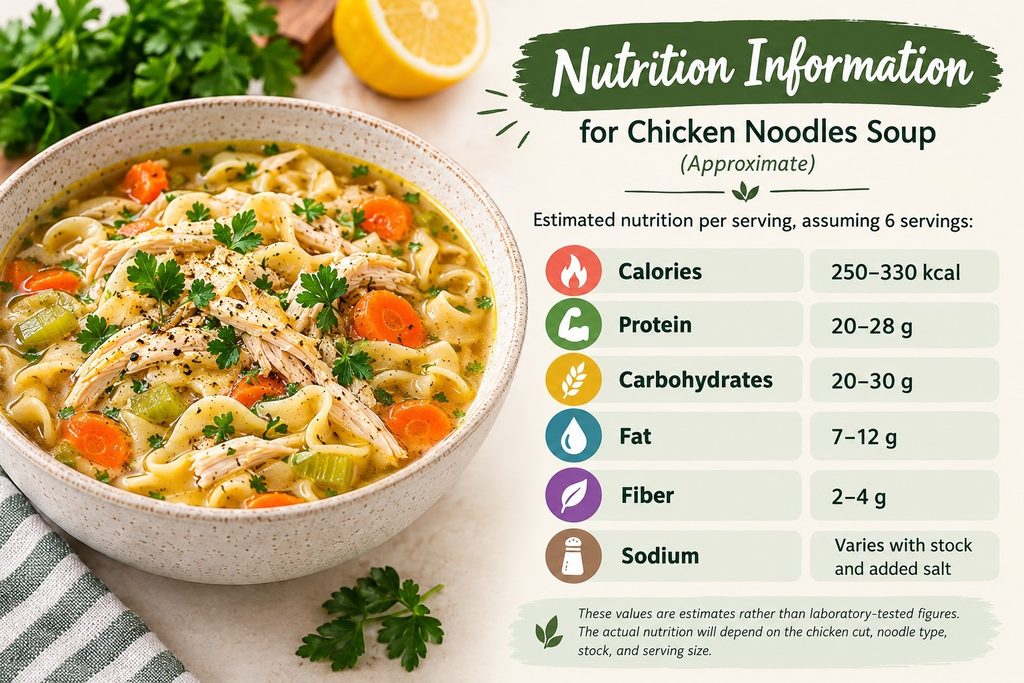
Estimated nutrition per serving, assuming 6 servings:
| Nutrient | Approximate Amount |
| Calories | 250–330 kcal |
| Protein | 20–28 g |
| Carbohydrates | 20–30 g |
| Fat | 7–12 g |
| Fiber | 2–4 g |
| Sodium | Varies with stock and added salt |
These values are estimates rather than laboratory-tested figures. The actual nutrition will depend on the chicken cut, noodle type, stock, and serving size.
Chicken Noodles Soup Recipe Card
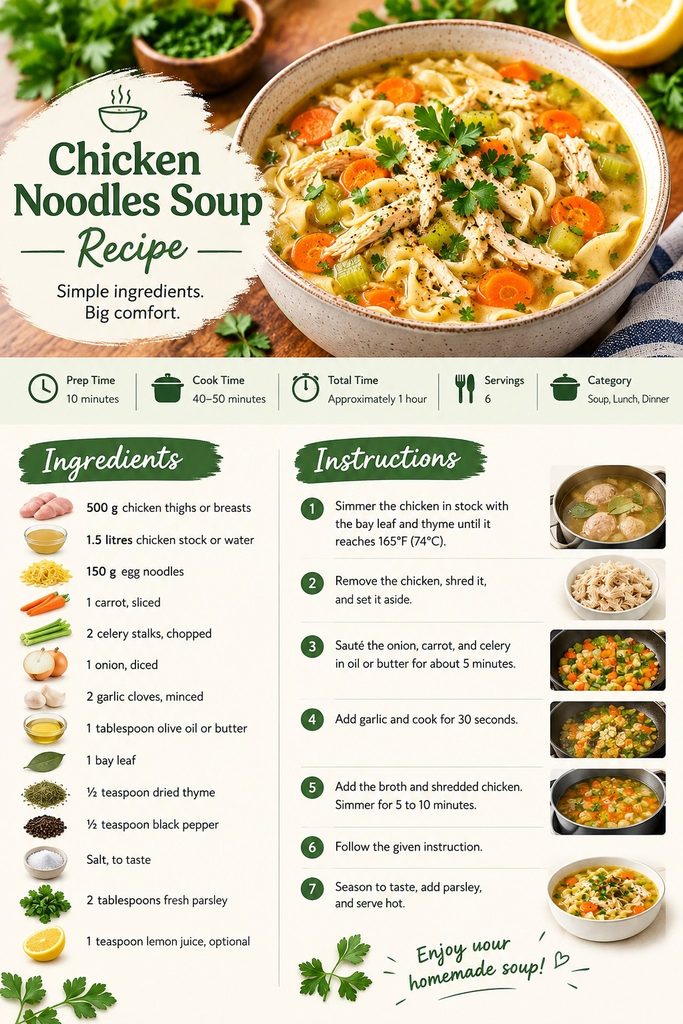
Prep Time: 10 minutes
Cook Time: 40–50 minutes
Total Time: Approximately 1 hour
Servings: 6
Category: Soup, Lunch, Dinner
Ingredients
- 500 g chicken thighs or breasts
- 1.5 litres chicken stock or water
- 150 g egg noodles
- 1 carrot, sliced
- 2 celery stalks, chopped
- 1 onion, diced
- 2 garlic cloves, minced
- 1 tablespoon olive oil or butter
- 1 bay leaf
- ½ teaspoon dried thyme
- ½ teaspoon black pepper
- Salt, to taste
- 2 tablespoons fresh parsley
- 1 teaspoon lemon juice, optional
Instructions
- Simmer the chicken in stock with the bay leaf and thyme until it reaches 165°F (74°C).
- Remove the chicken, shred it, and set it aside.
- Sauté the onion, carrot, and celery in oil or butter for about 5 minutes.
- Add garlic and cook for 30 seconds.
- Add the broth and shredded chicken. Simmer for 5 to 10 minutes.
- Follow the given instructions.
- Season to taste, add parsley, and serve hot.
Conclusion: Enjoy Homemade Chicken Noodles Soup
Homemade chicken noodle soup is a practical recipe that combines everyday ingredients into a warm, satisfying meal. You can keep it traditional with egg noodles and fresh parsley or adjust it with extra vegetables, leftover chicken, ramen, or gluten-free noodles.
For the best results, cook the chicken thoroughly, season the broth gradually, and add the noodles near the end. Prepare a batch for a family dinner or save the broth for a quick meal later in the week. Once you understand the basic method, it is easy to make this comforting soup suit your kitchen and your taste.
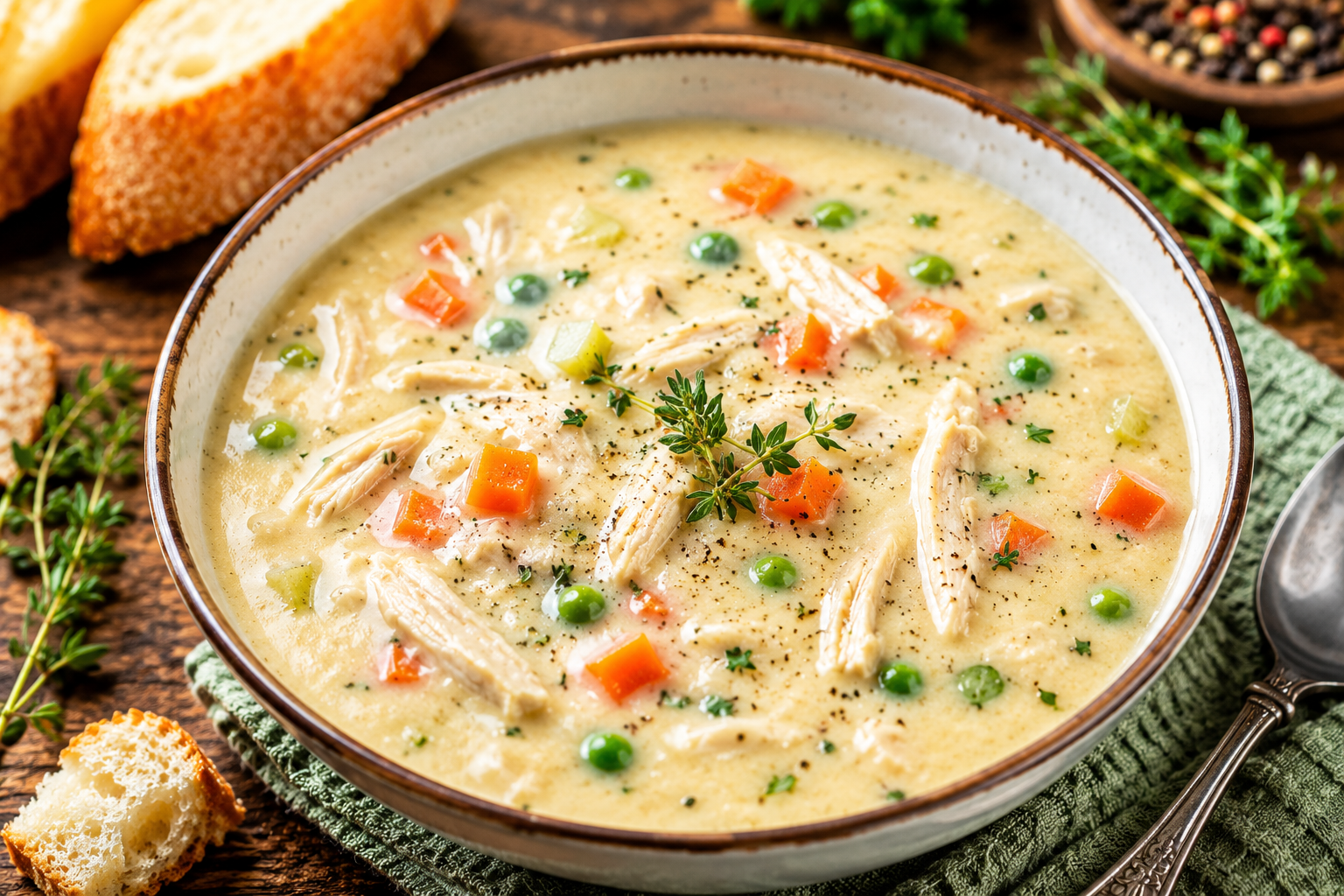
Homemade Cream of Chicken Soup is one of those cozy recipes that proves you do not need a long ingredient list or hours in the kitchen to make something truly satisfying. It is creamy without being overly heavy, packed with tender chicken and vegetables, and seasoned with simple herbs that let the comforting flavor of the broth shine. Most importantly, you can create it from scratch rather than using a can.
This soup is also incredibly useful. Serve it as a complete lunch or light dinner with crusty bread, spoon it over rice, or add noodles for a heartier meal. The recipe comes together in about 30 minutes, making it a practical choice for busy weeknights as well as chilly weekends when you want something warm and comforting.
Why You’ll Love This Recipe
There are plenty of reasons to keep this homemade cream of chicken soup recipe in your regular rotation.
- Easy to make: The recipe uses simple cooking techniques and one main pot.
- Ready in about 30 minutes: It is quick enough for a weeknight dinner.
- Creamy without heavy cream: Milk, butter, and flour create a smooth, rich texture.
- Full of real ingredients: You get chicken, vegetables, broth, and herbs in every bowl.
- Easy to customize: Add noodles, rice, mushrooms, potatoes, or extra vegetables.
- Great for leftovers: The flavor develops nicely after the soup rests.
- Family-friendly: The mild seasoning makes it approachable for both kids and adults.
- Freezer-friendly: You can freeze portions for another day with a few simple precautions.
The biggest difference between homemade and canned soup is the freshness. You can control the amount of salt, choose your favorite vegetables, and adjust the thickness to suit your taste.
Ingredients
Main Ingredients
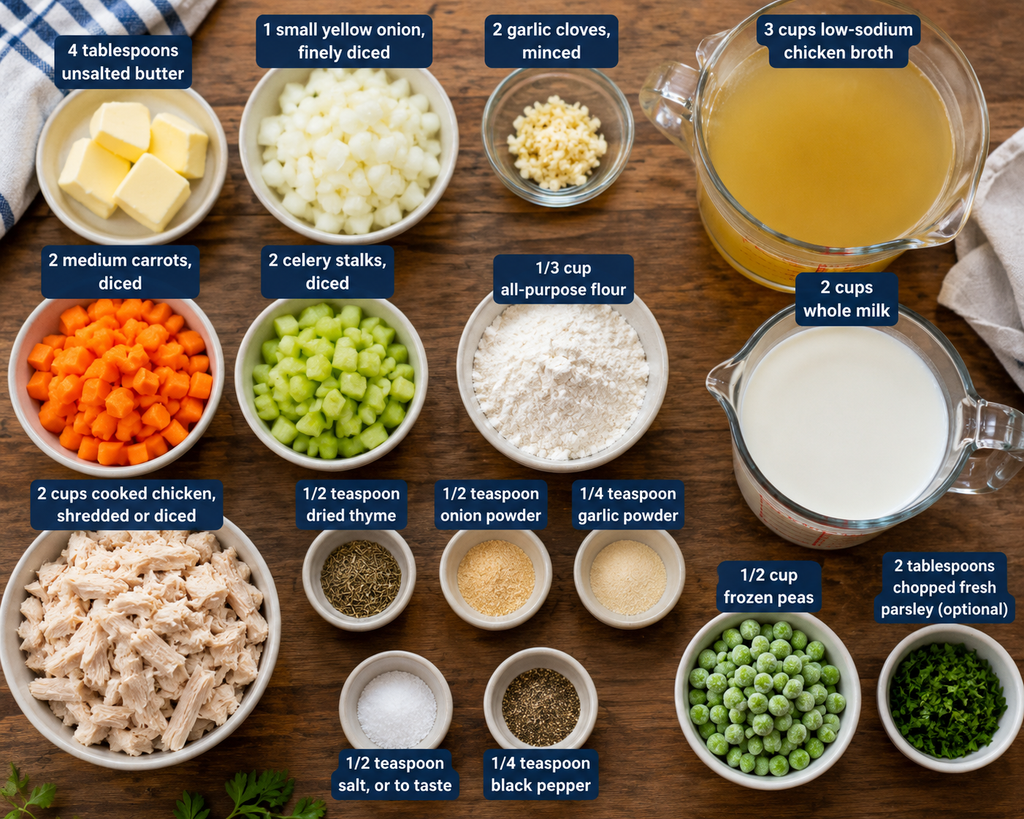
For approximately 4 generous servings, you will need:
- 4 tablespoons unsalted butter
- 1 small yellow onion, finely diced
- 2 garlic cloves, minced
- 2 medium carrots, diced
- 2 celery stalks, diced
- 1/3 cup all-purpose flour
- 3 cups low-sodium chicken broth
- 2 cups whole milk
- 2 cups cooked chicken, shredded or diced
- 1/2 teaspoon dried thyme
- 1/2 teaspoon onion powder
- 1/4 teaspoon garlic powder
- 1/2 teaspoon salt, or to taste
- 1/4 teaspoon black pepper
- 1/2 cup frozen peas
- 2 tablespoons chopped fresh parsley, optional
Ingredient Notes & Substitutions
Chicken: Cooked chicken breast works especially well because it is easy to shred and has a mild flavor. You can also use leftover roasted chicken or rotisserie chicken. Dark meat is another excellent choice if you prefer a richer flavor.
Butter: Butter gives the soup a smooth, rich base and helps cook the flour.
Flour: All-purpose flour thickens the soup and gives it the classic creamy consistency. Whisk it thoroughly into the butter before adding the liquid.
Milk: Whole milk produces the richest texture, but 2% milk works well too. Avoid using skim milk if you want a particularly creamy soup because it contains very little fat.
Chicken broth: Low-sodium chicken broth is a good starting point. Since the chicken, butter, and seasonings also contribute flavor, you can add salt gradually instead of starting with a heavily salted broth.
Vegetables: Onion, carrot, and celery create a classic savory base. You can add mushrooms, corn, potatoes, spinach, or additional peas if you want a more substantial soup.
Thyme: Dried thyme adds a subtle herbal flavor that pairs beautifully with chicken. Fresh thyme can also be used. If using fresh thyme, add a few sprigs while the soup simmers and remove them before serving.
Flour-free option: If you need to avoid wheat, you can use a suitable gluten-free all-purpose flour blend designed for thickening sauces and soups. Results can vary between brands, so add the broth gradually and adjust the thickness as needed.
Equipment Needed for Homemade Cream of Chicken Soup
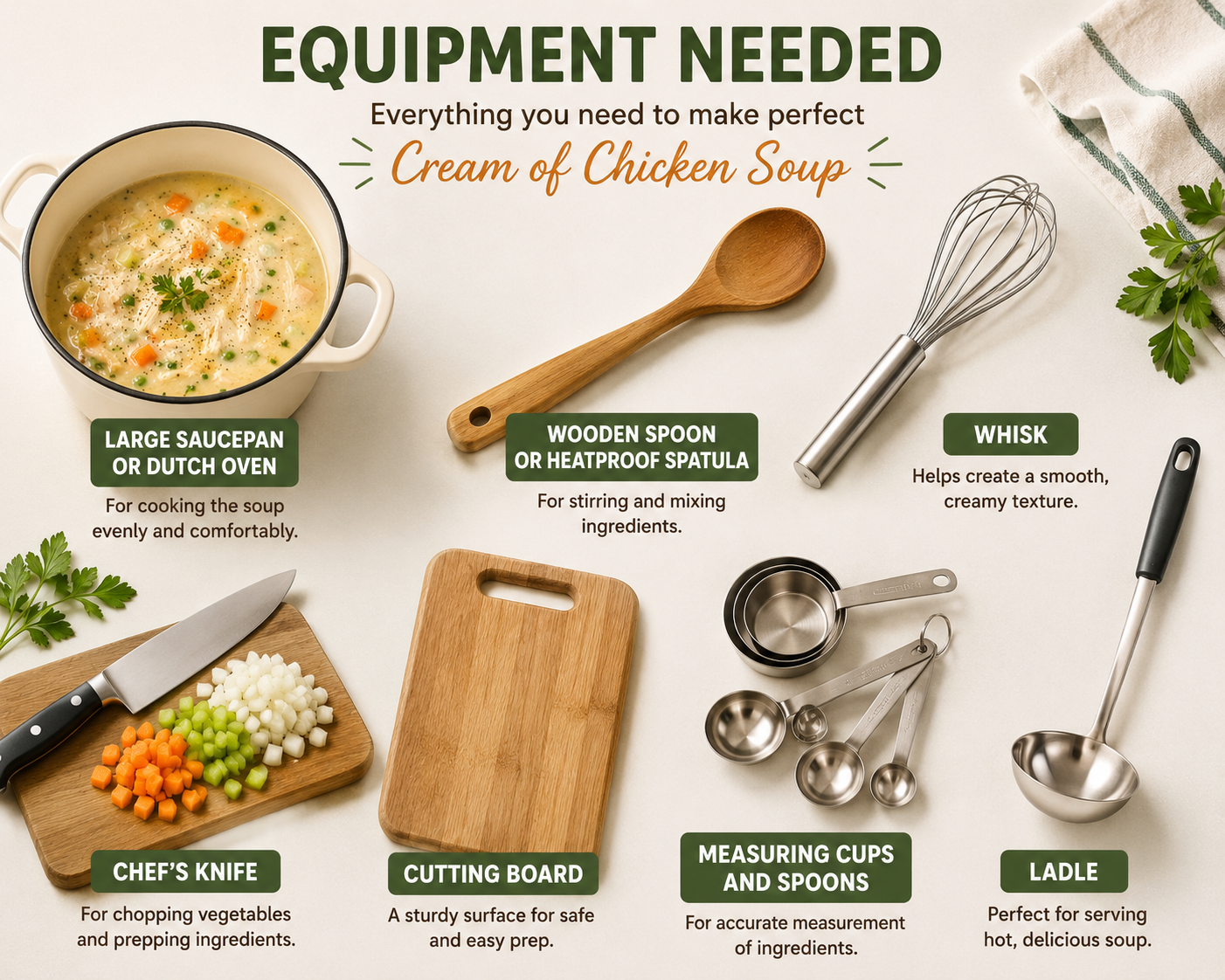
- Large saucepan or Dutch oven
- Wooden spoon or heatproof spatula
- Whisk
- Chef’s knife
- Cutting board
- Measuring cups and spoons
- Ladle
A whisk is especially important because it helps incorporate the flour and broth smoothly, reducing the chance of lumps.
Step-by-Step Instructions
1. Prepare the Chicken and Vegetables for Homemade Cream of Chicken Soup

If you are using leftover or rotisserie chicken, remove any bones and skin and shred or dice the meat into bite-sized pieces.
Finely dice the onion, carrot, and celery. Keeping the vegetables relatively small helps them cook quickly and makes each spoonful easier to eat.
2. Sauté the Aromatics
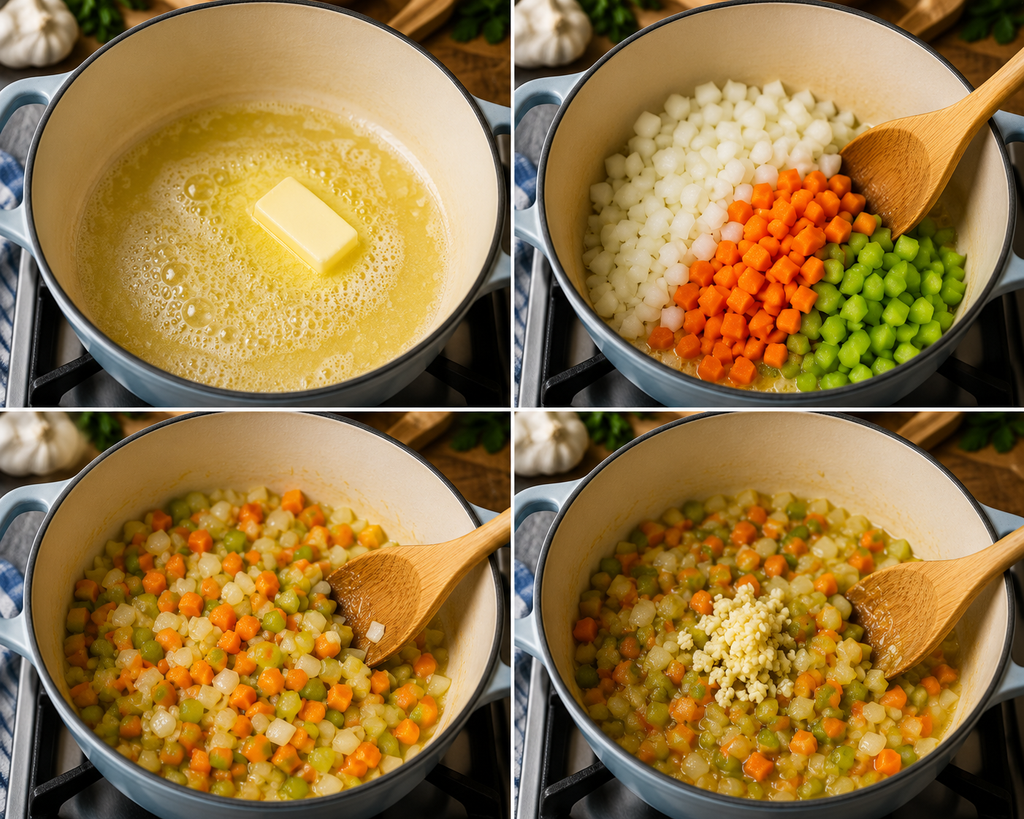
Take a pan and add butter over medium heat.
Once the butter melts, add the onion, carrot, and celery. Cook for about 4 to 5 minutes, stirring occasionally, until the vegetables begin to soften.
Cook for around 30 seconds with the minced garlic.
You do not need to brown the vegetables heavily. The goal is to soften them while developing a gentle savory flavor.
3. Make the Thickening Base
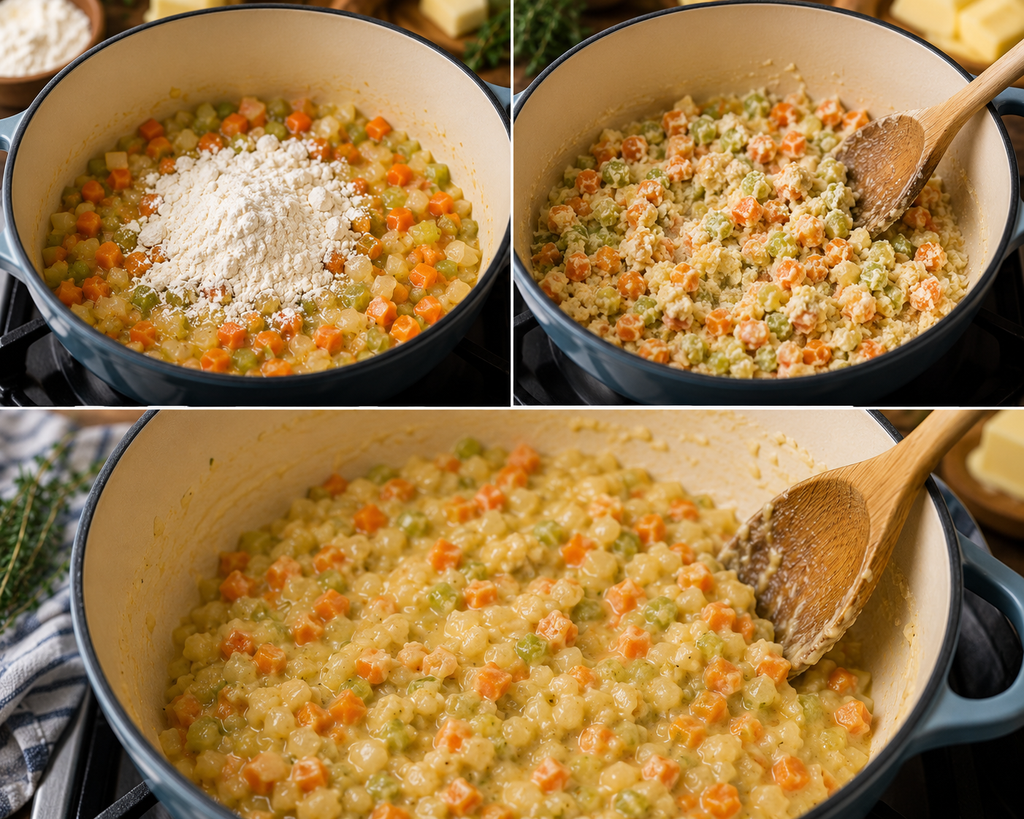
Sprinkle the flour over the softened vegetables and butter.
Stir continuously for about 1 minute. The flour should coat the vegetables and absorb the melted butter.
This short cooking step matters because it removes the raw flour flavor. Do not let the flour become dark brown. A light-colored base is ideal for this soup.
4. Add the Chicken Broth
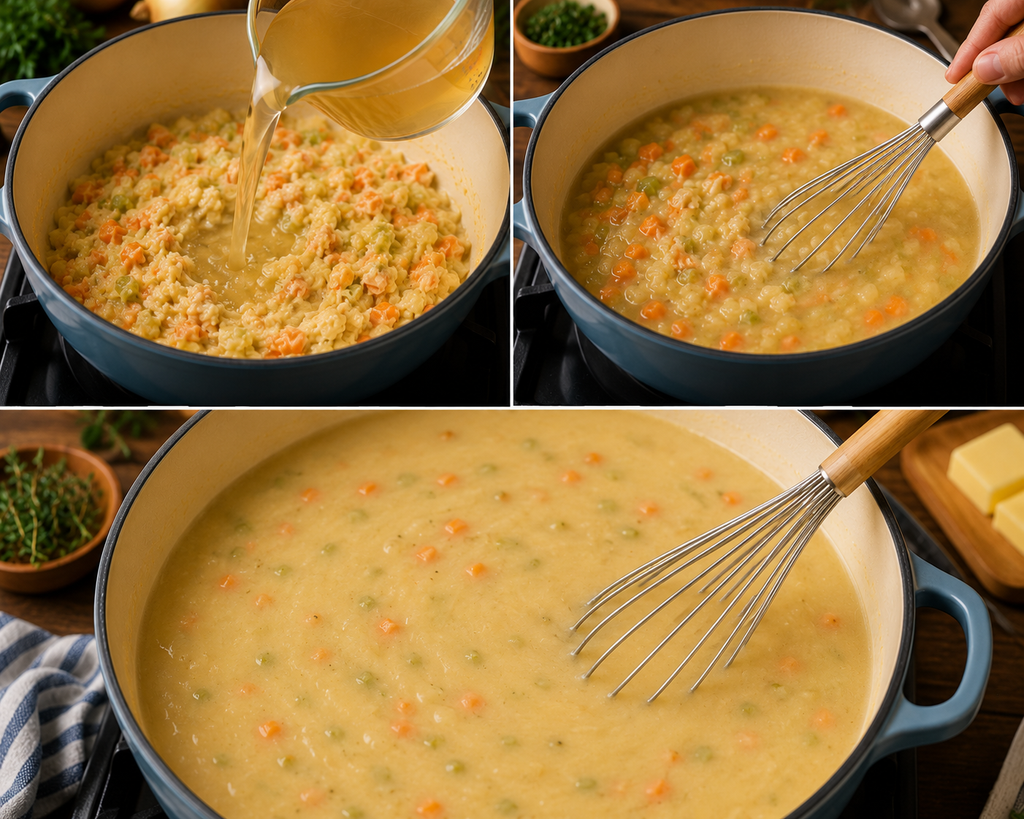
Slowly pour in the chicken broth while whisking constantly.
Add the broth gradually rather than pouring it all in at once. This allows the flour mixture to dissolve evenly and helps prevent lumps.
Once the broth has been incorporated, continue whisking until the mixture looks smooth.
5. Add the Milk
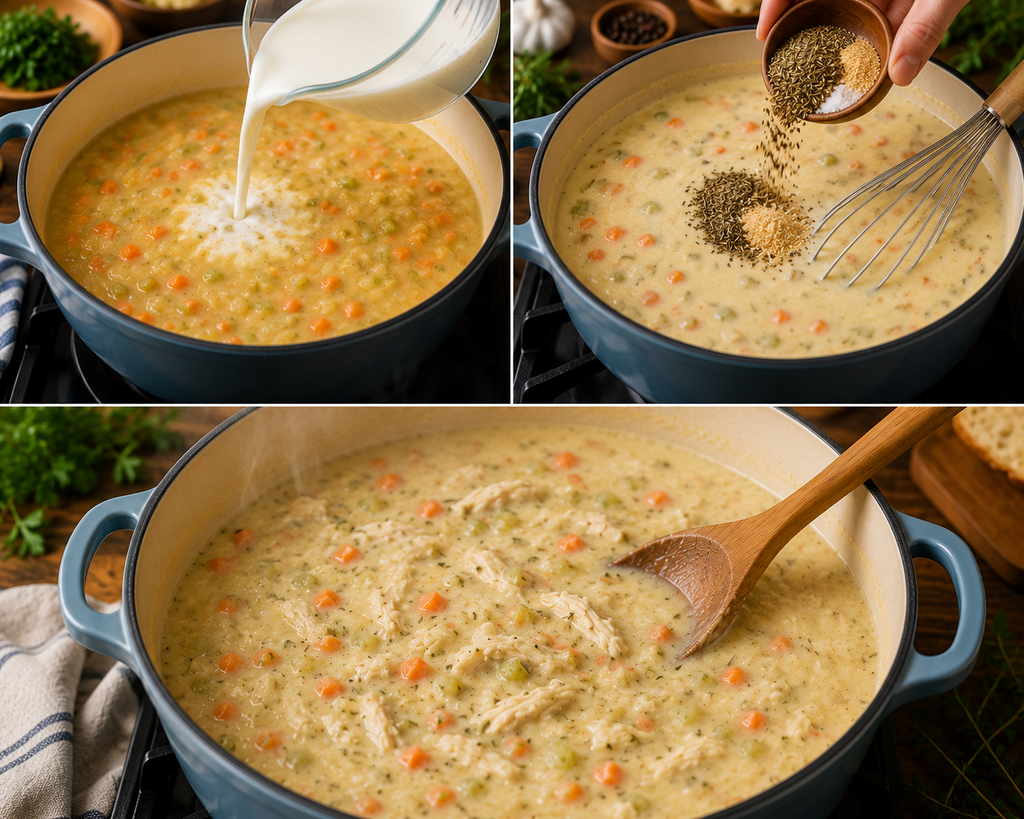
Slowly pour in the milk while stirring.
Add the thyme, onion powder, garlic powder, black pepper, and salt.
Bring the soup to a gentle simmer over medium heat. Avoid a rapid boil because milk can scorch or separate when exposed to excessive heat.
6. Let the Soup Thicken
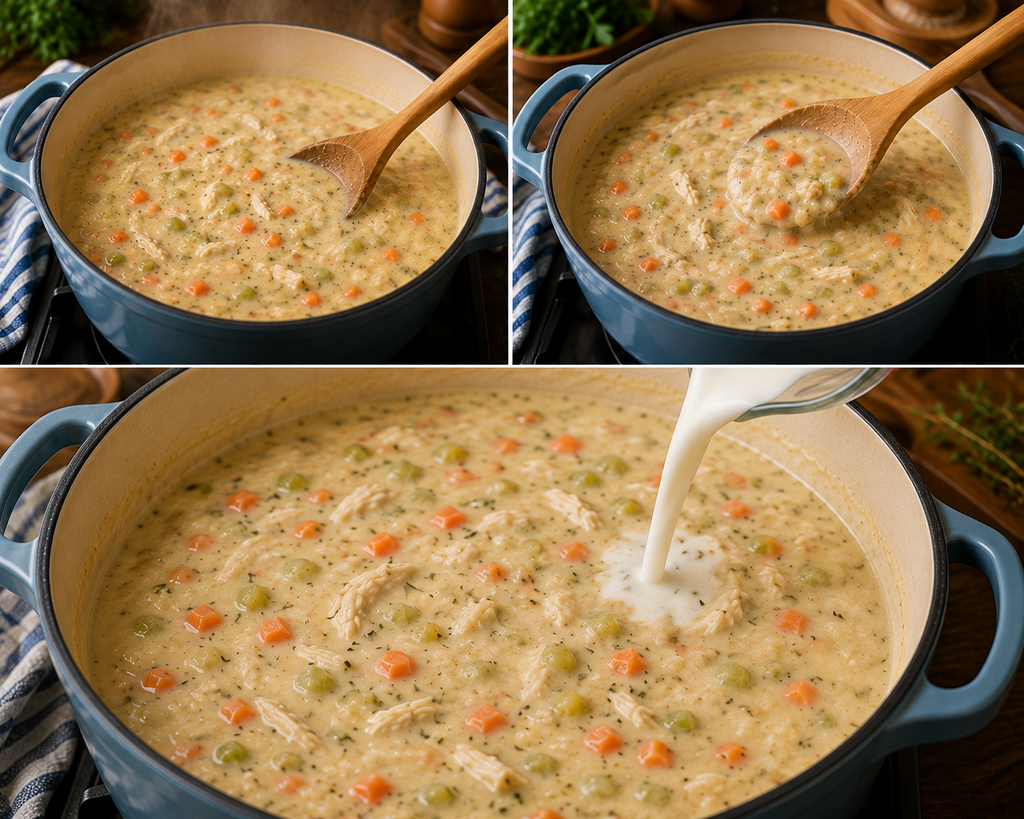
Allow the soup to simmer gently for about 5 to 7 minutes, stirring often.
You will notice the texture changing as the flour thickens the liquid. If it is too thick, add some milk.
7. Add the Chicken and Peas
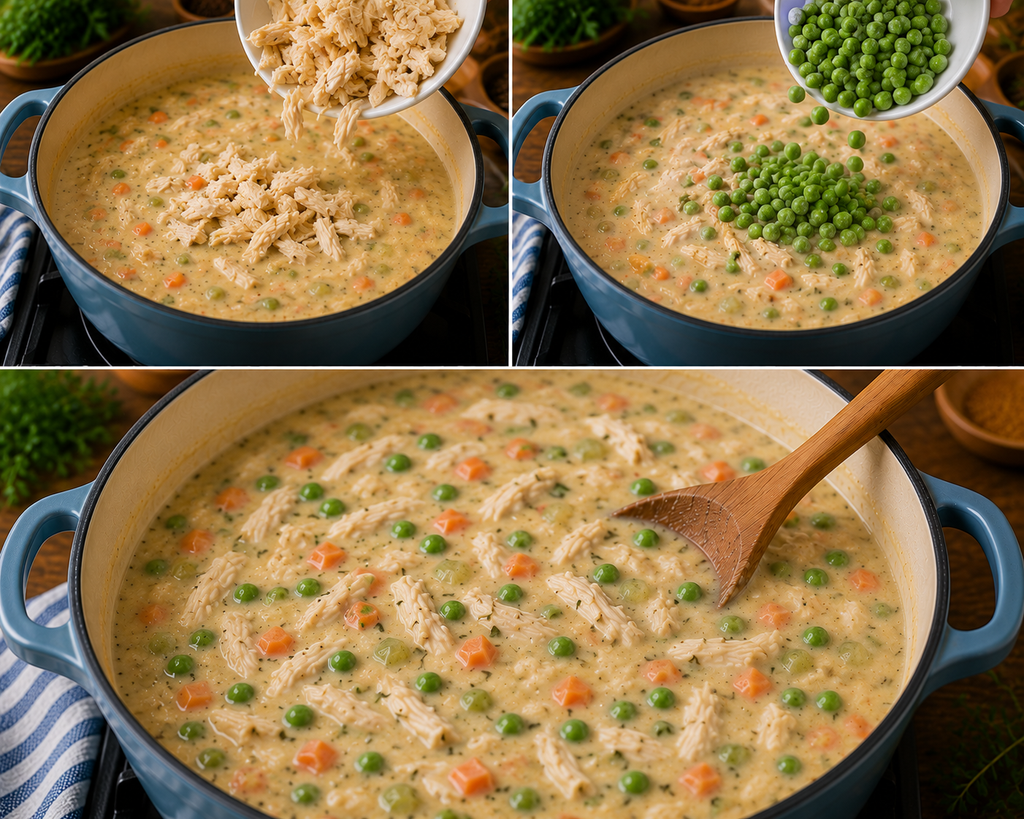
Stir in the cooked chicken and frozen peas.
Continue cooking for approximately 3 to 4 minutes, or until the chicken is heated through and the peas are tender.
Because the chicken is already cooked, it does not need a long cooking time. Overcooking it can make the meat dry.
8. Taste and Adjust
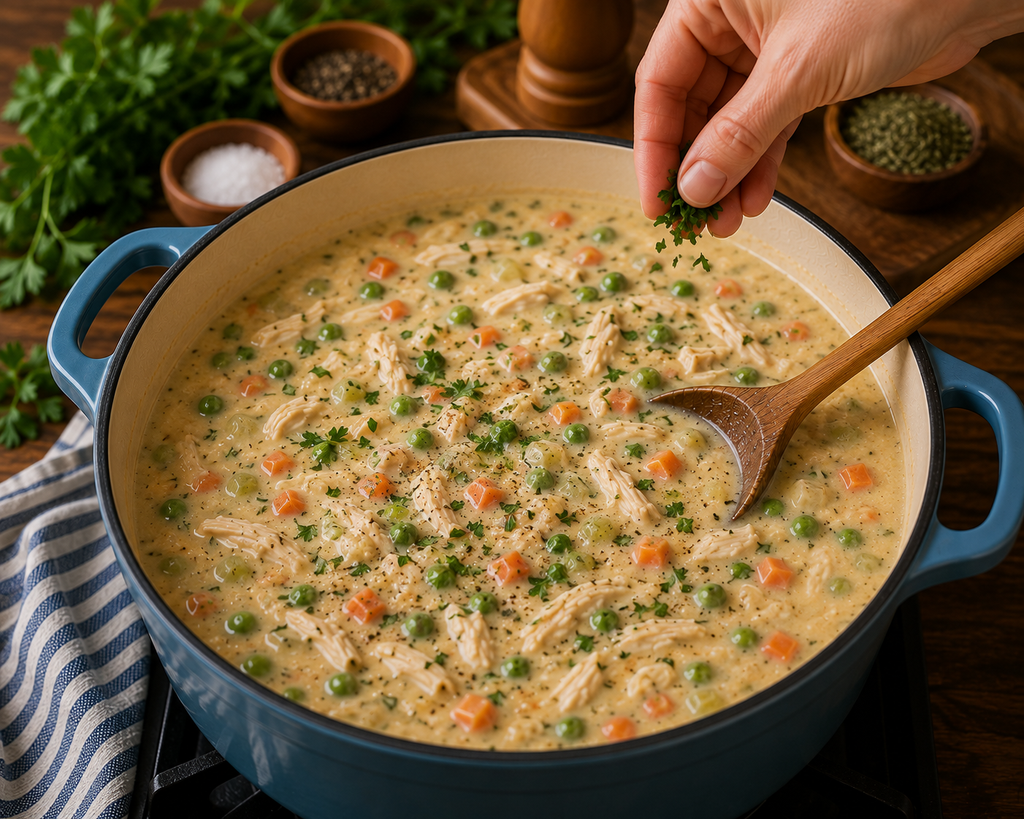
Taste the homemade cream of chicken soup before serving.
Add more salt or black pepper if needed. If you want a stronger herb flavor, add a little more thyme.
Finish with fresh parsley if desired.
9. Serve Warm
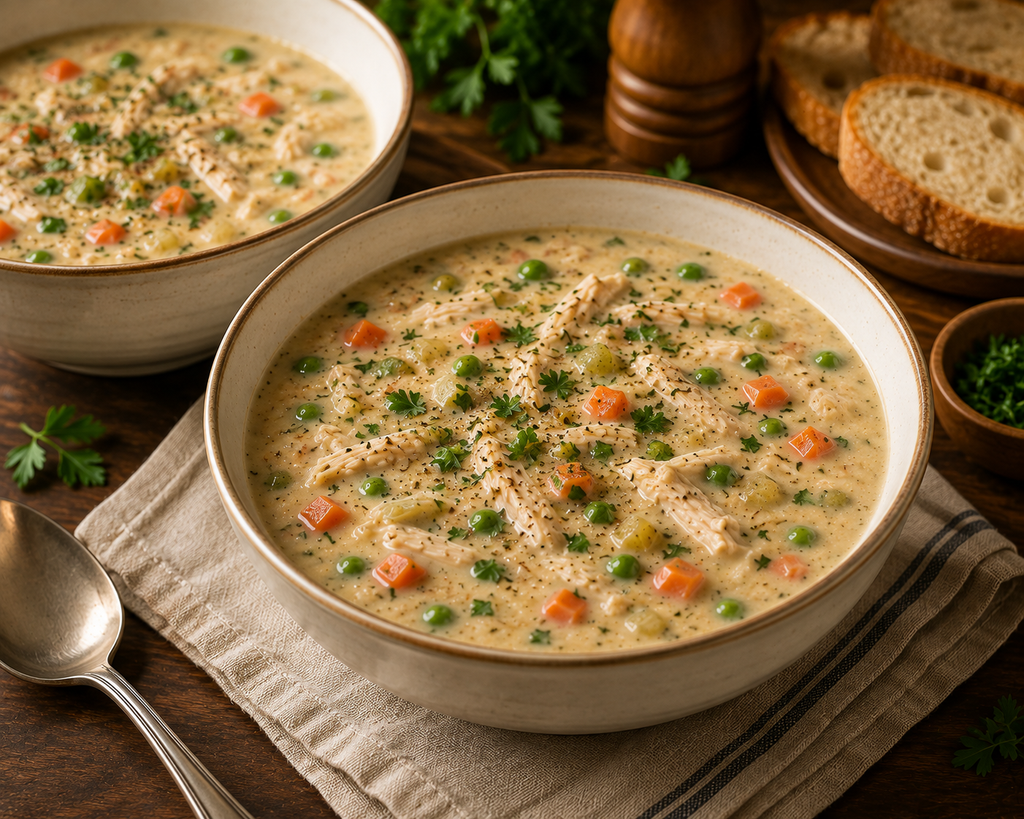
Ladle the homemade cream of chicken soup into bowls and serve immediately.
A little freshly cracked black pepper and chopped parsley on top adds a simple finishing touch.
Expert Tips
Build Flavor Before Adding the Flour
Do not rush the first stage. Giving the onion, carrot, and celery a few minutes to soften creates a much better flavor than simply boiling everything together.
Cook the Flour Briefly
Raw flour can give a soup an unpleasant taste. Cooking it with butter for about a minute helps to remove the flavor while keeping the roux light.
Add Broth Gradually
This is one of the easiest ways to prevent lumps. Pour the broth in slowly while whisking, especially during the first few additions.
Keep the Heat Moderate
A gentle simmer is all you need. High heat can cause the milk to scorch around the bottom of the pan and can make the soup more difficult to control.
Use Cooked Chicken
This recipe is an excellent way to use leftover chicken. Rotisserie chicken is also a convenient shortcut for homemade soup when you want to avoid cooking chicken from scratch.
Adjust the Thickness at the End
Cream soups often continue to thicken slightly as they cool. Your soup may get thicker in the bowl even if it seems excellent in the pot. Keep a little extra broth or milk nearby so you can loosen it if necessary.
Taste Before Adding More Salt
Chicken broth varies considerably in sodium. If you use standard broth instead of low-sodium broth, you may require significantly less salt.
Recipe Variations
Creamy Chicken and Mushroom Soup
Add 1 to 2 cups of sliced mushrooms with the onions, carrots, and celery. Cook until softened before adding the flour.
Mushrooms add an earthy flavor and make the soup feel especially hearty.
Chicken Noodle Soup
Cook your preferred tiny noodles separately and add them to the final soup.
Cooking the noodles separately helps prevent them from absorbing too much of the creamy broth and becoming overly soft.
Chicken and Rice Soup
Add cooked white, brown, or wild rice near the end of cooking.
Rice makes the soup more filling and turns it into a complete comfort-food meal.
Loaded Vegetable Version
Increase the amount of carrots and celery and add vegetables such as corn, green beans, mushrooms, or spinach.
This is a good option when you want a lighter soup with more vegetables in every serving.
Herb Chicken Soup
For a stronger herbal flavor, add fresh parsley, thyme, rosemary, or a small amount of sage.
Use herbs carefully, especially rosemary and sage, because their flavors can become strong quickly.
Serving Suggestions
Homemade cream of chicken soup is satisfying on its own, but a few simple additions can turn it into a complete meal.
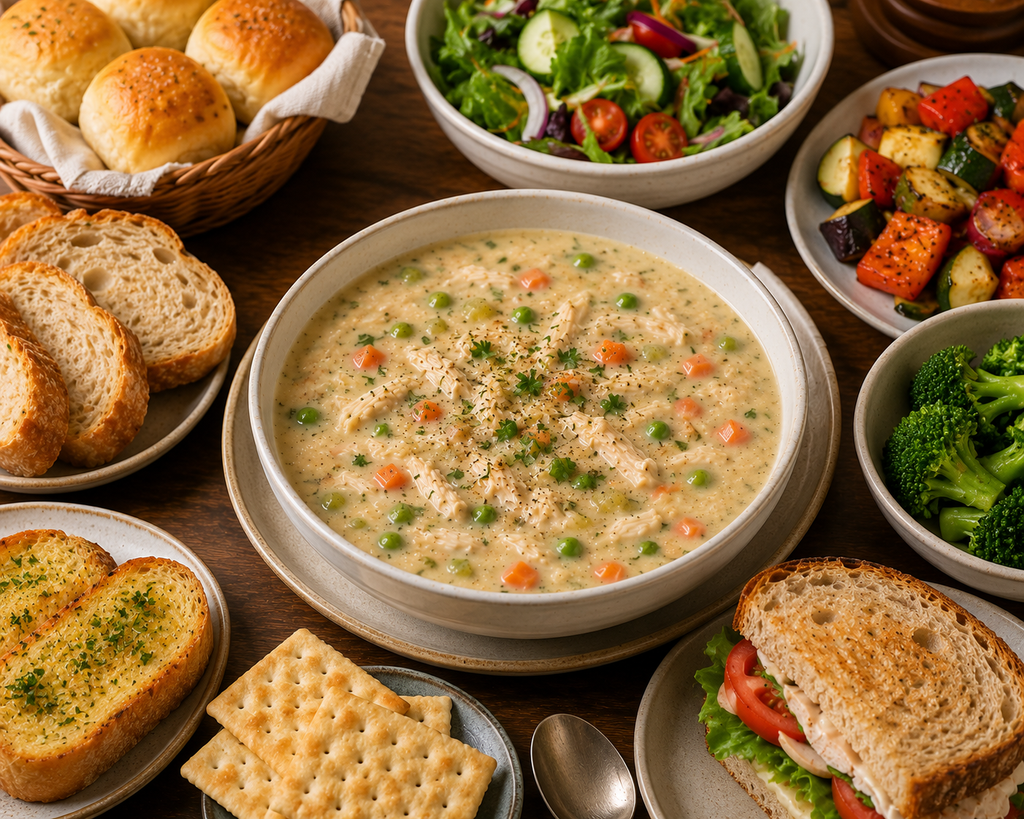
Serve it with:
- Crusty French bread
- Homemade garlic bread
- Toasted sourdough
- Crackers
- Dinner rolls
- A simple green salad
- Roasted vegetables
- Steamed broccoli
- A small sandwich
For a classic presentation, spoon the soup into warm bowls and finish it with fresh parsley and freshly ground black pepper.
If you want extra richness, a small sprinkle of grated Parmesan can work well, although it is completely optional.
For a heartier dinner, stir cooked noodles or rice directly into the soup just before serving.
Storage & Reheating
Refrigerating
Before transferring the leftover soup, try to cool then transfer it.
You can store 3 to 4 days in the refrigerator.
Because this soup contains milk and cooked chicken, it should not be left at room temperature for an extended period.
Freezing
Cream-based soups can sometimes change texture after freezing because dairy may separate slightly during thawing.
If you want to freeze this soup, let it cool completely and portion it into freezer-safe containers, leaving a little space at the top for expansion.
Freeze for up to 2 to 3 months for the best quality.
Thaw the soup in the refrigerator before reheating.
Reheating
Warm the soup gradually in a saucepan over low to medium heat.
Stir continuously and do not bring it to a hard boil.
If the soup has thickened much in the refrigerator, add a dash of chicken broth or milk when reheated. Stir until the original creamy consistency returns.
Common Mistakes to Avoid When Making Cream of Chicken Soup
Adding Chicken Broth Too Fast
Pouring all the chicken broth into the flour and butter mixture at once can create lumps. For a smooth, creamy soup, add the broth slowly while whisking continuously. This helps the flour blend evenly into the liquid.
Using Too Much Flour
When you cook the soup, it looks thin at first. When the cooking process is stopped, you will feel the soup looks thick as it cools. Avoid adding extra flour too quickly. Give the soup a few minutes to reach its proper consistency before making any adjustments.
Bringing the Milk to a Hard Boil
Creamy soups should be cooked gently. A rapid boil can cause the milk to scorch on the bottom of the pan or affect the smooth texture. Keep the heat at a gentle simmer and stir regularly.
Overcooking the Chicken
Since the chicken is already cooked before it goes into the soup, it only needs enough time to warm through. Adding it too early and simmering it for too long can make the chicken dry and chewy.
Adding Too Much Salt
Chicken broth and cooked chicken may already contain a fair amount of sodium. Taste the soup near the end of cooking before adding more salt.
Cutting the Vegetables Too Large
Large chunks of vegetables can take longer to become tender and may make the soup difficult to eat. Dice the onion, carrots, and celery into small, similar-sized pieces so they cook evenly.
Making the Soup Too Thick
The soup naturally becomes thicker as it cools. If it already looks very thick in the pot, stir in a small amount of chicken broth or milk. Add the liquid gradually until you reach the consistency you prefer.
Not Cooking the Flour Properly
Flour needs a short cooking time before the liquid is added. Cooking it with the melted butter for about a minute helps remove the raw flour taste and creates a smoother base for the soup.
Frequently Asked Questions
Can I Use Rotisserie Chicken in Cream of Chicken Soup?
Yes, rotisserie chicken is an easy and flavorful option for homemade cream of chicken soup. After removing the meat, skin, and bones, chop the meat into small bites. Because rotisserie chicken is often seasoned already, taste the finished soup before adding extra salt.
Can I Make Cream of Chicken Soup Without Heavy Cream?
Yes. Heavy cream is not necessary for this recipe. A combination of milk, butter, and flour creates a creamy texture without making the soup overly rich. Whole milk gives the smoothest and richest result, while 2% milk can be used for a slightly lighter version.
What Is the Best Milk for Homemade Cream of Chicken Soup?
Whole milk is the best choice if you want a rich, creamy consistency. However, 2% milk also works very well. Lower-fat milk can be used, but the finished soup may not be quite as creamy. If you want extra richness, you can replace part of the milk with half-and-half.
Can I Use Leftover Cooked Chicken?
Absolutely. This recipe is a great way to use leftover chicken. Shredded roasted chicken, baked chicken breast, grilled chicken, or rotisserie chicken can all be added. Just make sure the chicken is fully cooked before adding it to the soup.
How Can I Make Cream of Chicken Soup Thicker?
First, allow the soup to simmer gently for several minutes because the flour needs time to thicken the broth. If the soup is still too thin, continue cooking it briefly while stirring frequently. Avoid sprinkling dry flour directly into the finished soup, as it can form lumps. If necessary, prepare a small amount of flour and butter mixture separately and whisk it into the soup.
How Can I Thin Homemade Cream of Chicken Soup?
If your soup is thicker than you prefer, add a small amount of chicken broth or milk. Stir over low heat until the liquid is fully incorporated. Add just a little at a time because the soup can become too thin quickly.
Can Homemade Cream of Chicken Soup Be Frozen?
Yes, homemade cream of chicken soup can be frozen. Because it contains dairy, the texture may change slightly after thawing, but gentle reheating and thorough stirring can help bring it back together. Cool the soup, then transfer it to an airtight, freezer-safe container and freeze for 2 to 3 months. Thaw it in the refrigerator before reheating.
Can I Use This Recipe as a Substitute for Condensed Cream of Chicken Soup?
Not exactly. This recipe is designed as a ready-to-eat homemade cream of chicken soup, so it contains more liquid than a concentrated can of condensed soup.
If you are making a casserole or another recipe that specifically calls for condensed cream of chicken soup, use a recipe formulated as a condensed soup substitute. For serving as a warm soup, however, this homemade version is ready to enjoy as written.
Nutrition Information (Approximate)
The following estimates are based on the recipe being divided into four servings. Actual nutrition values will vary depending on the type of milk, chicken, broth, butter, and other ingredients used.
| Nutrient | Approximate Amount Per Serving |
| Calories | 390 kcal |
| Protein | 27 g |
| Carbohydrates | 25 g |
| Total Fat | 21 g |
| Saturated Fat | 11 g |
| Fiber | 3 g |
| Sugar | 7 g |
| Sodium | 650 mg |
For a lower-sodium version, choose low-sodium chicken broth, use unsalted butter, and add salt gradually after tasting.
Recipe Card (Printable Summary)
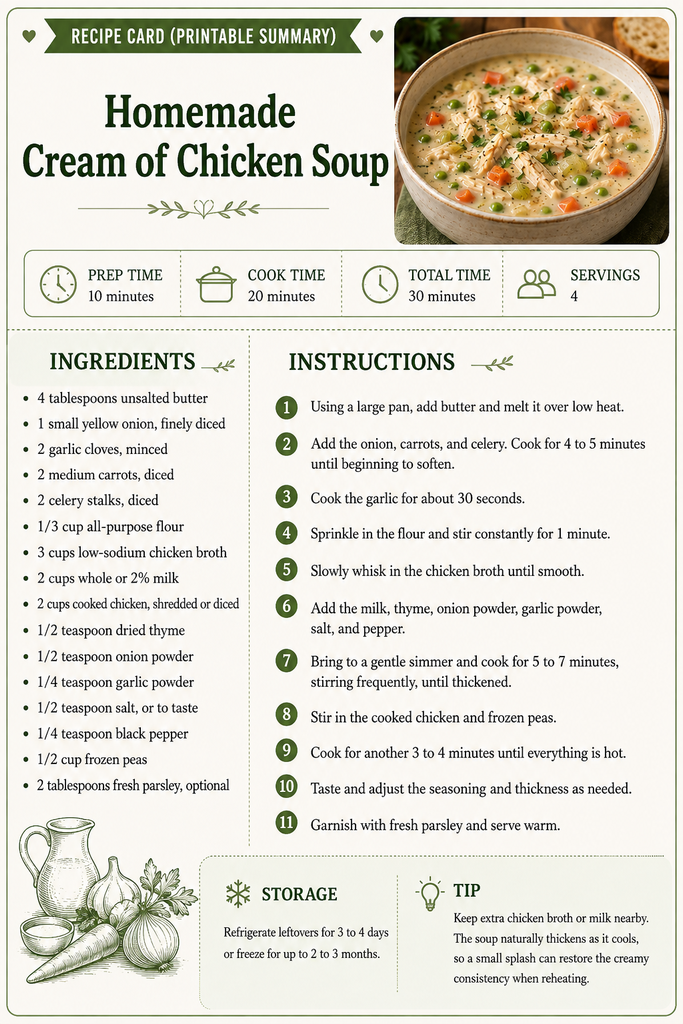
Homemade Cream of Chicken Soup
Prep Time: 10 minutes
Cook Time: 20 minutes
Total Time: 30 minutes
Servings: 4
Ingredients
- 4 tablespoons unsalted butter
- 1 small yellow onion, finely diced
- 2 garlic cloves, minced
- 2 medium carrots, diced
- 2 celery stalks, diced
- 1/3 cup all-purpose flour
- 3 cups low-sodium chicken broth
- 2 cups whole or 2% milk
- 2 cups cooked chicken, shredded or diced
- 1/2 teaspoon dried thyme
- 1/2 teaspoon onion powder
- 1/4 teaspoon garlic powder
- 1/2 teaspoon salt, or to taste
- 1/4 teaspoon black pepper
- 1/2 cup frozen peas
- 2 tablespoons fresh parsley, optional
Instructions
- Using a large pan, add butter and melt it over low heat.
- Add the onion, carrots, and celery. Cook for 4 to 5 minutes until beginning to soften.
- Cook the garlic for about 30 seconds.
- Sprinkle in the flour and stir constantly for 1 minute.
- Slowly whisk in the chicken broth until smooth.
- Add the milk, thyme, onion powder, garlic powder, salt, and pepper.
- Bring to a gentle simmer and cook for 5 to 7 minutes, stirring frequently, until thickened.
- Stir in the cooked chicken and frozen peas.
- Cook for another 3 to 4 minutes until everything is hot.
- Taste and adjust the seasoning and thickness as needed.
- Garnish with fresh parsley and serve warm.
Storage: Refrigerate leftovers for 3 to 4 days or freeze for up to 2 to 3 months.
Tip: Keep extra chicken broth or milk nearby. The soup naturally thickens as it cools, so a small splash can restore the creamy consistency when reheating.
Conclusion
Homemade Cream of Chicken Soup is a simple comfort-food recipe that deserves a place in your regular meal rotation. With tender chicken, flavorful vegetables, a creamy broth, and everyday pantry ingredients, it gives you the cozy taste of a classic chicken soup without requiring complicated techniques.
The best part is how flexible it can be. Keep it simple for a quick lunch, add noodles or rice for a hearty dinner, or change the vegetables and herbs based on what you already have in the kitchen. Once you know how to make the basic version, it becomes an easy starting point for countless comforting meals.
So the next time you have leftover chicken and a few basic ingredients on hand, skip the canned soup and make a warm pot of homemade cream of chicken soup instead.
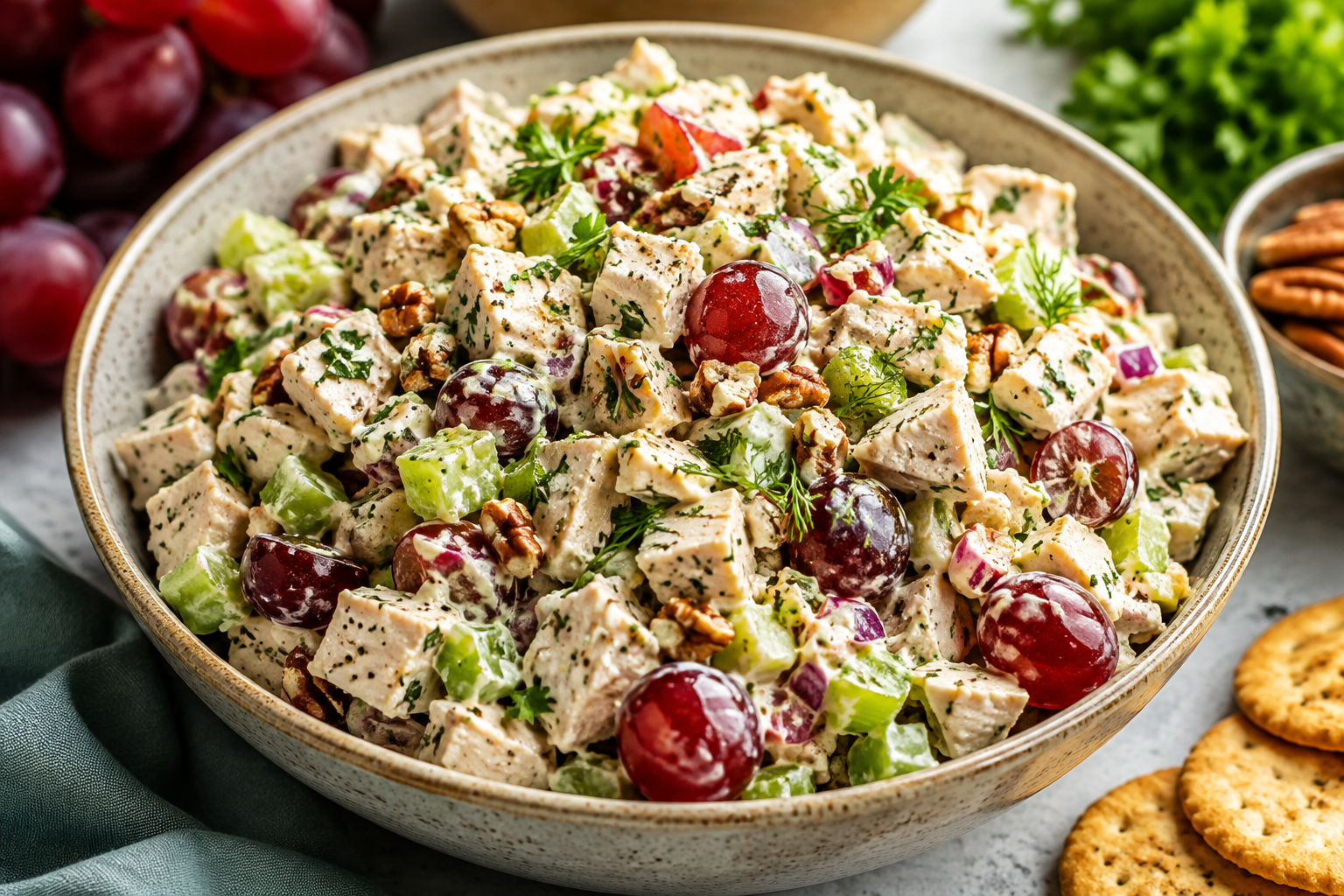
Chicken salad is a cold dish made by combining cooked chicken with a creamy dressing and fresh ingredients like celery, onions, herbs, and seasonings. Depending on the recipe, it may also include grapes, apples, nuts, or dried fruit for extra flavor and texture. The best chicken salad isn’t just creamy. It has a balance of tender chicken, crisp vegetables, and a dressing that brings everything together without overpowering the other ingredients.
One reason chicken salad has remained a favorite for generations is its versatility. You can enjoy it as a sandwich filling, wrap, lettuce cup, salad topping, or dip for crackers and vegetables. It works equally well for a quick weekday lunch, meal prep, picnics, or family gatherings, making it one of the most practical recipes to keep in your collection.
A truly great chicken salad starts with quality ingredients and simple techniques. Using juicy cooked chicken, fresh herbs, and a well-balanced dressing creates better flavor than relying on heavy amounts of mayonnaise alone. With just a few fresh ingredients and the right preparation, you can make a homemade chicken salad that tastes fresher, healthier, and more satisfying than most store-bought versions.
Why Chicken Salad Is a Popular Lunch Choice
Chicken salad has earned its place as a popular lunch because it is quick to prepare, high in protein, and easy to adapt to different tastes and diets. A single batch can be enjoyed in sandwiches, wraps, lettuce cups, or over a bed of greens, making it ideal for busy weekdays and meal prep. Since it is served cold and stores well in the refrigerator for several days, chicken salad offers both convenience and fresh flavor without the need for reheating.
What Makes a Great Chicken Salad?
A great chicken salad starts with juicy, well-cooked chicken and a creamy dressing that complements the ingredients instead of overwhelming them. Crisp vegetables like celery, fresh herbs such as dill or parsley, and a touch of acidity from lemon juice create a balanced flavor and satisfying texture. The final result should be creamy, fresh, and full of crunch, with every ingredient working together to make each bite flavorful and enjoyable.
Why You’ll Love This Chicken Salad Recipe
This chicken salad recipe is designed to be simple enough for busy weekdays while delivering the fresh, homemade flavor you’d expect from a deli favorite. It comes together in about 20 minutes using everyday ingredients, making it a reliable option for quick lunches, meal prep, or light dinners. The combination of tender chicken, crisp vegetables, and a creamy dressing creates a satisfying meal without requiring complicated steps.
Another reason this recipe stands out is how easy it is to customize. You can keep it classic or add ingredients like grapes, apples, nuts, or fresh herbs to match your taste. It also works in sandwiches, wraps, lettuce cups, or over a green salad, so you can enjoy it in different ways throughout the week without getting bored.
Ingredients You’ll Need
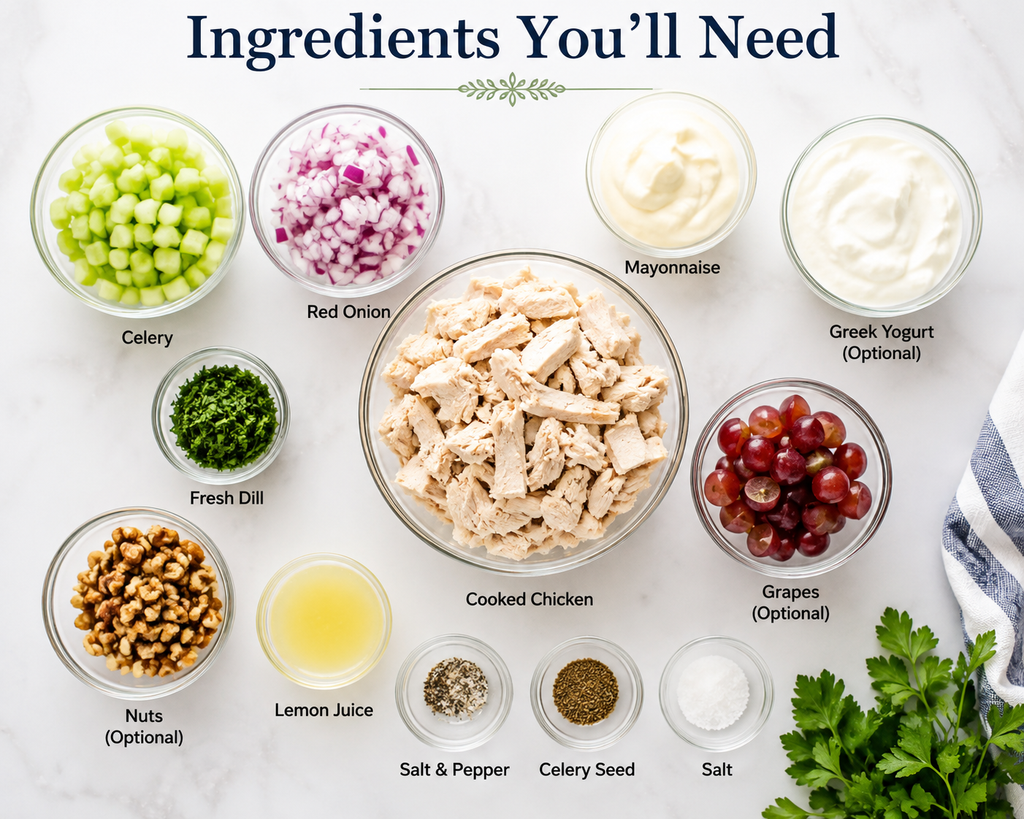
This chicken salad recipe uses simple, easy-to-find ingredients that each play an important role in the final dish. The chicken provides a hearty source of protein, while the creamy dressing adds richness and the fresh vegetables bring crunch and freshness. A few herbs and seasonings tie everything together, creating a balanced flavor that’s both comforting and refreshing.
One of the best things about these ingredients is how flexible they are. You can use rotisserie chicken for convenience, swap part of the mayonnaise for Greek yogurt to lighten the dressing, or add extras like grapes, apples, or toasted nuts to suit your taste. Starting with fresh, high-quality ingredients helps ensure your homemade chicken salad tastes better than most store-bought versions.
Best Chicken to Use
The best chicken for chicken salad is fully cooked, tender, and juicy, as it forms the foundation of both the flavor and texture. Rotisserie chicken is a popular choice because it is convenient and naturally flavorful, while roasted, poached, or grilled chicken also works well when cooked properly. Let the chicken cool completely before mixing it with the dressing, and cut it into bite-sized pieces so every forkful has the perfect balance of chicken and other ingredients.
The Creamy Dressing
A well-balanced dressing is what brings all the ingredients together without masking their natural flavors. This recipe combines mayonnaise with plain Greek yogurt to create a smooth, creamy texture that feels rich but not overly heavy. The mayonnaise adds classic creaminess, while the Greek yogurt provides a light tang and extra protein, making the dressing both flavorful and balanced.
Fresh lemon juice, salt, black pepper, and a pinch of celery seed help brighten the dressing and enhance the chicken’s flavor. Whisk the dressing until smooth before mixing it with the other ingredients, then taste and adjust the seasoning if needed. The goal is to lightly coat each piece of chicken, letting the fresh vegetables and herbs shine in every bite.
Fresh Vegetables and Herbs
Fresh vegetables and herbs add the flavor, color, and crunch that make chicken salad more enjoyable. Crisp celery provides the classic texture, while red onion or scallions add a mild bite without overpowering the dish. Herbs like fresh dill, parsley, or chives brighten the overall flavor and complement the creamy dressing, creating a chicken salad that tastes fresh, balanced, and homemade.
Optional Add-Ins for Extra Flavor
Optional add-ins are an easy way to customize chicken salad without changing its classic appeal. Sweet red grapes, crisp apples, toasted pecans, walnuts, or dried cranberries add extra texture and flavor, while Dijon mustard, fresh tarragon, or chopped parsley give the dressing more depth. Choose just a few additions that complement each other so the chicken remains the star of the dish and every bite stays balanced and satisfying.
How to Make Chicken Salad
Making chicken salad is simple, but following the right order helps create the best texture and flavor. Start by cutting cooled, cooked chicken into bite-sized pieces, then prepare the vegetables by finely chopping the celery, onion, and fresh herbs. In a separate bowl, whisk together the mayonnaise, Greek yogurt, lemon juice, and seasonings until the dressing is smooth and well combined.
Next, gently fold the chicken, vegetables, and dressing together until every piece is lightly coated. Avoid overmixing, as this can break apart the chicken and make the salad less appealing. For the best flavor, cover the bowl and refrigerate the chicken salad for at least 30 minutes before serving, allowing the ingredients to blend and the dressing to fully coat the chicken.
Expert Tips for the Best Chicken Salad
A few simple techniques can take homemade chicken salad from good to exceptional. Always use fully cooled, juicy chicken, chop the ingredients into similar-sized pieces, and mix the dressing separately before combining everything. This helps the flavors blend evenly while giving every bite the perfect balance of chicken, vegetables, and creamy dressing.
For the freshest flavor, let the chicken salad chill in the refrigerator for at least 30 minutes before serving. This resting time allows the seasonings to develop and the dressing to coat the ingredients more evenly. Taste the salad one final time before serving and adjust the salt, pepper, or lemon juice if needed, as small changes can make a noticeable difference in the finished dish.
Get the Perfect Creamy Texture
The secret to a perfectly creamy chicken salad is using just enough dressing to coat the ingredients without making the mixture heavy or soggy. Combining mayonnaise with plain Greek yogurt creates a smooth, rich texture while adding a light tang that keeps the salad fresh. Mixing the dressing separately before adding it to the chicken also helps distribute the flavor evenly.
Another important step is to use cooled chicken, as warm chicken can thin the dressing and create excess moisture. If you’re making the salad ahead of time, reserve a small amount of dressing and stir it in just before serving to restore its creamy consistency. This simple technique keeps the chicken salad fresh, flavorful, and enjoyable even after being refrigerated.
Balance Flavor and Crunch
A great chicken salad combines creamy, savory, fresh, and crunchy elements in every bite. Crisp celery, finely diced onion, and fresh herbs add texture, while ingredients like grapes, apples, or toasted nuts provide a touch of sweetness and extra crunch without overpowering the chicken. Finish with the right amount of salt, black pepper, and lemon juice to enhance the flavors and create a balanced, satisfying salad.
Common Mistakes to Avoid
Small mistakes can affect both the texture and flavor of chicken salad. Mixing the dressing with warm chicken can make it watery, while using too much mayonnaise may overpower the fresh ingredients and create a heavy texture. For the best results, use cooled, juicy chicken, season the salad well, and mix gently to keep the chicken pieces intact. Letting the salad chill before serving also helps the flavors develop and creates a fresher, more balanced taste.
Chicken Salad Recipe Card
| Recipe Details | Information |
| Recipe Name | Chicken Salad Recipe |
| Cuisine | American |
| Course | Lunch, Main Course, Salad |
| Prep Time | 20 minutes |
| Cook Time | 0 minutes (using cooked chicken) |
| Total Time | 20 minutes |
| Servings | 6 servings |
| Calories | Approximately 320 kcal per serving (varies by ingredients) |
Ingredients
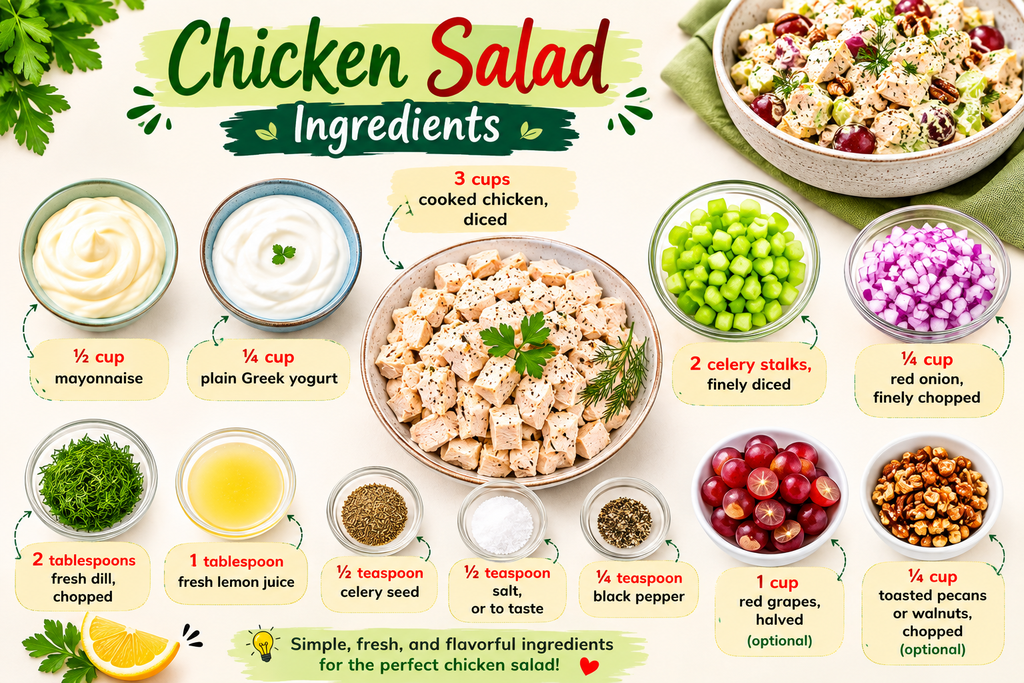
- 3 cups cooked chicken, diced
- ½ cup mayonnaise
- ¼ cup plain Greek yogurt
- 2 celery stalks, finely diced
- ¼ cup red onion, finely chopped
- 2 tablespoons fresh dill, chopped
- 1 tablespoon fresh lemon juice
- ½ teaspoon celery seed
- ½ teaspoon salt, or to taste
- ¼ teaspoon black pepper
- 1 cup red grapes, halved (optional)
- ¼ cup toasted pecans or walnuts, chopped (optional)
Instructions
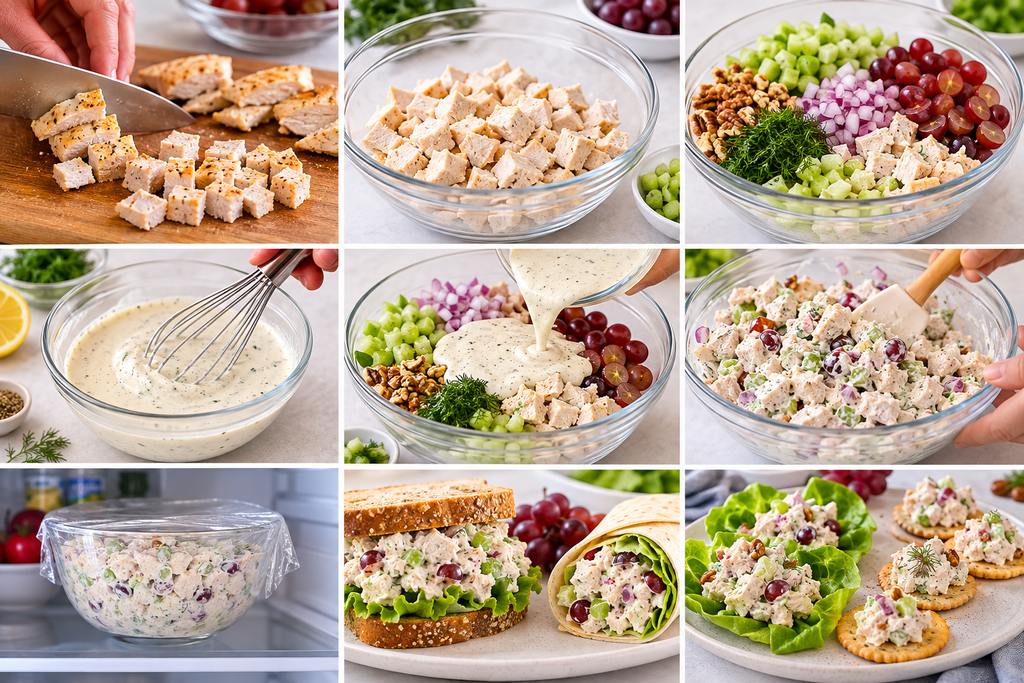
- Cut the cooked chicken into bite-sized pieces and place it in a large mixing bowl.
- Add the celery, red onion, fresh dill, grapes, and nuts if using.
- In a separate bowl, whisk together the mayonnaise, Greek yogurt, lemon juice, celery seed, salt, and black pepper until smooth.
- Pour the dressing over the chicken mixture and gently fold everything together until evenly coated.
- Cover the bowl and refrigerate for at least 30 minutes to allow the flavors to blend.
- Serve chilled in sandwiches, wraps, lettuce cups, over mixed greens, or with crackers.
Notes
- Rotisserie chicken is a convenient and flavorful option.
- Let the chicken cool completely before mixing with the dressing.
- Taste and adjust the seasoning before serving.
- Store leftovers in an airtight container in the refrigerator for 3 to 4 days.
Nutrition Information
The nutritional value of chicken salad can vary depending on the ingredients you use, especially the type and amount of dressing. This recipe provides a good source of lean protein from the chicken, while fresh vegetables add vitamins, minerals, and fiber. Using a combination of mayonnaise and plain Greek yogurt creates a creamy texture while helping reduce the overall fat compared to using mayonnaise alone.
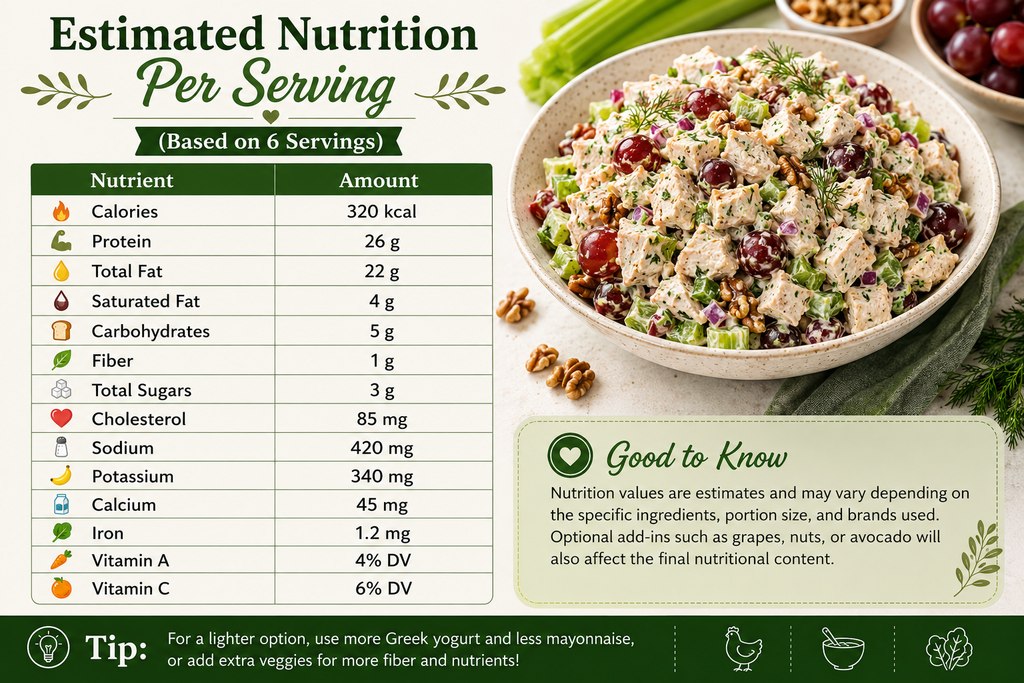
Estimated Nutrition Per Serving (Based on 6 Servings)
| Nutrient | Amount |
| Calories | 320 kcal |
| Protein | 26 g |
| Total Fat | 22 g |
| Saturated Fat | 4 g |
| Carbohydrates | 5 g |
| Fiber | 1 g |
| Total Sugars | 3 g |
| Cholesterol | 85 mg |
| Sodium | 420 mg |
| Potassium | 340 mg |
| Calcium | 45 mg |
| Iron | 1.2 mg |
| Vitamin A | 4% DV |
| Vitamin C | 6% DV |
Note: These nutrition values are estimates and may vary depending on the ingredients, portion size, and brands used. Optional add-ins such as grapes, nuts, or avocado will also affect the final nutritional content.
Easy Ingredient Swaps and Customizations
One of the best things about chicken salad is how easy it is to customize with ingredients you already have. You can replace part or all of the mayonnaise with plain Greek yogurt for a lighter dressing, swap celery for cucumber or bell peppers, or add grapes, apples, dried cranberries, or toasted nuts for extra flavor and texture. These simple substitutions let you tailor the recipe to your taste while keeping the chicken as the star and maintaining a balanced, satisfying salad.
What to Serve with Chicken Salad
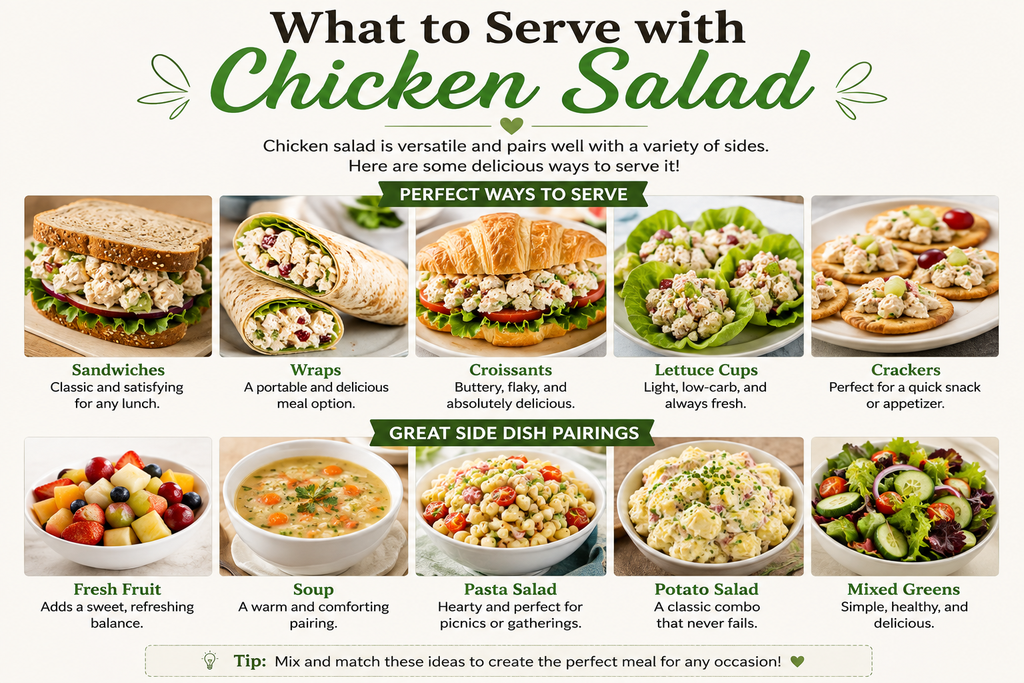
Chicken salad is versatile enough to pair with a variety of sides, making it easy to create a complete meal for any occasion. Serve it in sandwiches, wraps, croissants, or lettuce cups for a satisfying lunch, or enjoy it with crackers, fresh vegetables, or a bed of mixed greens for a lighter option. To round out the meal, pair it with fresh fruit, soup, pasta salad, or potato salad, depending on whether you’re preparing a quick weekday lunch or serving guests at a picnic or gathering.
How to Store and Make Chicken Salad Ahead
Chicken salad is an excellent make-ahead recipe because the flavors become even better after chilling in the refrigerator for a few hours. Store it in an airtight container and keep it refrigerated at 40°F (4°C) or below, where it will stay fresh for 3 to 4 days. If you’re preparing it in advance, wait to add delicate ingredients like avocado or toasted nuts until just before serving to maintain the best texture and flavor.
Can I Use Rotisserie Chicken?
Yes, you can use rotisserie chicken. Simply remove the skin and bones, then cut or shred the meat into bite-sized pieces before mixing it with the dressing. Using rotisserie chicken also saves time, making it a convenient option for quick lunches, meal prep, or busy weeknight meals.
Is It Better to Dice or Shred the Chicken?
Both methods work well, but diced chicken is often the better choice for a classic chicken salad because it creates a heartier texture and helps each bite hold its shape. Shredded chicken blends more evenly with the dressing, resulting in a softer, creamier consistency. Choose the style you prefer, but keep the pieces uniform so the salad has a balanced texture and is easy to eat.
Can I Make Chicken Salad Without Mayonnaise?
Yes, you can make chicken salad without mayonnaise and still achieve a creamy, flavorful result. Plain Greek yogurt is one of the best substitutes because it adds a smooth texture, a slight tang, and extra protein while keeping the salad lighter. You can also use mashed avocado or a dairy-free mayonnaise alternative, then season with lemon juice, herbs, salt, and pepper to maintain a fresh, well-balanced flavor.
How Long Does Chicken Salad Last in the Refrigerator?
When stored in an airtight container in the refrigerator at 40°F (4°C) or below, homemade chicken salad stays fresh for 3 to 4 days. Keep it refrigerated until you’re ready to serve, and avoid leaving it at room temperature for more than 2 hours, or 1 hour in hot weather. If the salad develops an unusual smell, watery texture, or off-flavor, it should be discarded for food safety.
Can You Freeze Chicken Salad?
Freezing chicken salad is generally not recommended because mayonnaise and Greek yogurt can separate after thawing, leaving the dressing watery and the texture less appealing. Fresh vegetables like celery and onions also lose their crispness when frozen. For the best results, freeze only the cooked chicken and prepare the dressing and fresh ingredients after thawing to enjoy a chicken salad with the best flavor and texture.
Can I Make Chicken Salad Ahead of Time?
Yes, chicken salad is an excellent make-ahead meal because the flavors become even better after a few hours in the refrigerator. Preparing it 4 to 24 hours in advance allows the dressing, herbs, and seasonings to blend together, resulting in a richer and more balanced flavor. For the best texture, store it in an airtight container and, if using ingredients like avocado or toasted nuts, add them just before serving to keep them fresh and crisp.
Final Thoughts
This chicken salad recipe proves that a handful of fresh, simple ingredients can create a meal that’s both satisfying and incredibly versatile. With tender chicken, a creamy yet balanced dressing, crisp vegetables, and plenty of customization options, it’s a recipe you can enjoy for quick lunches, meal prep, family gatherings, or light dinners year-round.
The key to great chicken salad is using quality ingredients and keeping the flavors in balance. Start with juicy, cooked chicken, use fresh herbs and crunchy vegetables, and let the salad chill before serving so the flavors have time to develop. Once you’ve mastered the classic version, you can easily make it your own by adding fruits, nuts, or different seasonings to match your taste.
Whether you serve it in a sandwich, wrap, lettuce cup, or over a fresh green salad, this homemade chicken salad is a reliable recipe you’ll want to make again and again. It’s easy to prepare, stores well for meal prep, and delivers fresh, delicious flavor in every bite.

Chicken Noodles Soup: An Easy Homemade Recipe

Easy Chicken Pot Pie Soup Recipe (Creamy And Hearty)

Pineapple Coconut Smoothie Recipe: Creamy And Delicious

Best Butter Chicken Recipe : Creamy And Authentic

Chocolate Dessert Recipes: Rich And Delicious

The Best Homemade BBQ Chicken Pizza Recipe 2026

Simple Fried Chicken Recipe: Crispy, Juicy, and Easy

Healthy Chicken Soup Recipe With Vegetables and Tender Chicken

Chicken Biryani Recipe: Flavorful and Easy to Make

Classic Chicken Salad Recipe – Creamy, Flavorful And Delicious
-
 Baked Chicken4 weeks ago
The Best Homemade BBQ Chicken Pizza Recipe 2026
-
 Chicken Recipes4 weeks ago
Simple Fried Chicken Recipe: Crispy, Juicy, and Easy
-
 Soups and Salad4 weeks ago
Healthy Chicken Soup Recipe With Vegetables and Tender Chicken
-
 Chicken Recipes3 weeks ago
Chicken Biryani Recipe: Flavorful and Easy to Make
-
 Soups and Salad3 weeks ago
Classic Chicken Salad Recipe – Creamy, Flavorful And Delicious
-

 Soups and Salad2 weeks ago
Homemade Cream of Chicken Soup Recipe 2026
-

 Fried Chicken4 weeks ago
Gluten-Free Chicken Nuggets Crispy And Homemade
-

 Chicken Recipes4 weeks ago
Air Fryer Chicken Wings with Crispy, Juicy, and Delicious