
Soups and Salad
Homemade Cream of Chicken Soup Recipe 2026

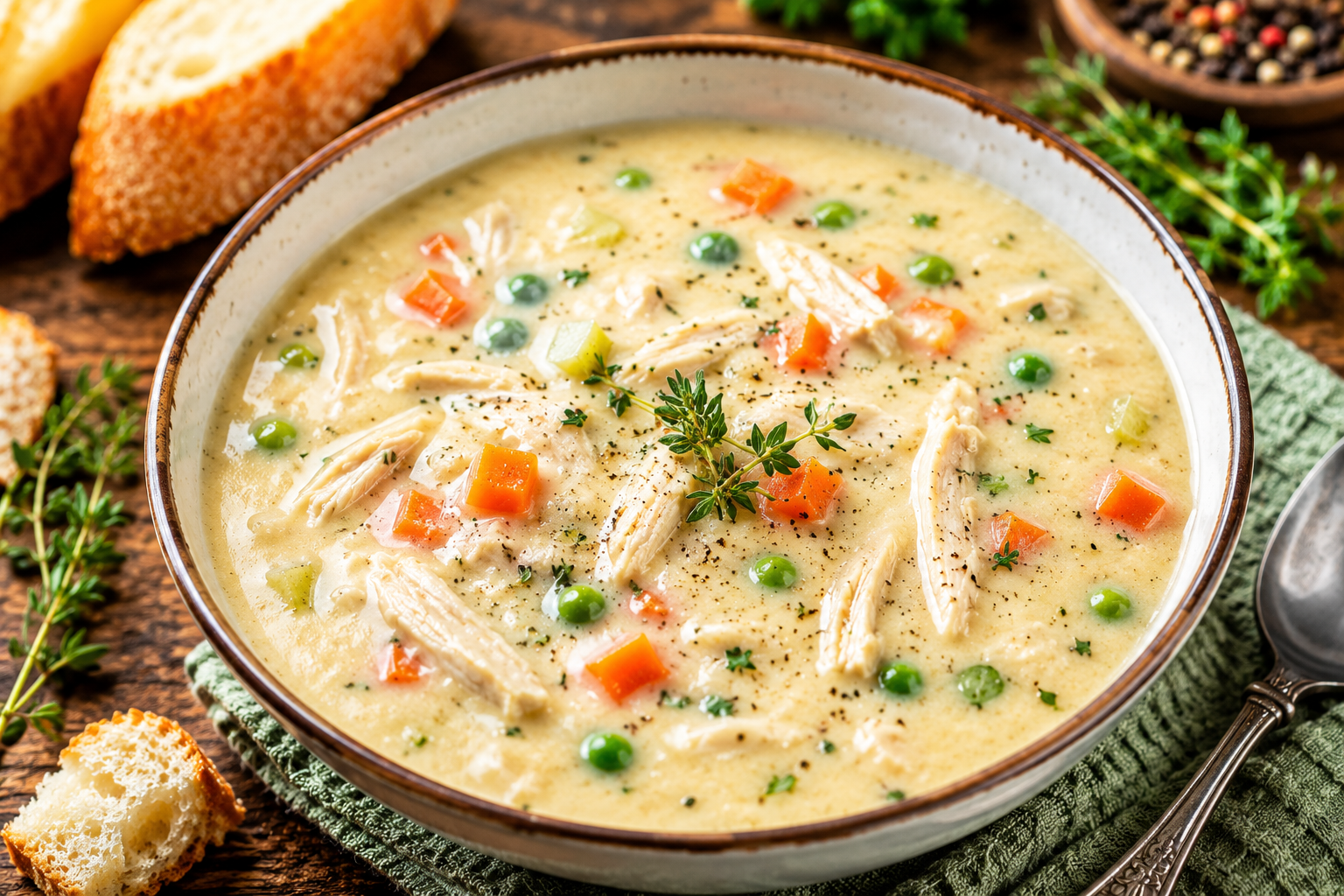
Homemade Cream of Chicken Soup is one of those cozy recipes that proves you do not need a long ingredient list or hours in the kitchen to make something truly satisfying. It is creamy without being overly heavy, packed with tender chicken and vegetables, and seasoned with simple herbs that let the comforting flavor of the broth shine. Most importantly, you can create it from scratch rather than using a can.
This soup is also incredibly useful. Serve it as a complete lunch or light dinner with crusty bread, spoon it over rice, or add noodles for a heartier meal. The recipe comes together in about 30 minutes, making it a practical choice for busy weeknights as well as chilly weekends when you want something warm and comforting.
Why You’ll Love This Recipe
There are plenty of reasons to keep this homemade cream of chicken soup recipe in your regular rotation.
- Easy to make: The recipe uses simple cooking techniques and one main pot.
- Ready in about 30 minutes: It is quick enough for a weeknight dinner.
- Creamy without heavy cream: Milk, butter, and flour create a smooth, rich texture.
- Full of real ingredients: You get chicken, vegetables, broth, and herbs in every bowl.
- Easy to customize: Add noodles, rice, mushrooms, potatoes, or extra vegetables.
- Great for leftovers: The flavor develops nicely after the soup rests.
- Family-friendly: The mild seasoning makes it approachable for both kids and adults.
- Freezer-friendly: You can freeze portions for another day with a few simple precautions.
The biggest difference between homemade and canned soup is the freshness. You can control the amount of salt, choose your favorite vegetables, and adjust the thickness to suit your taste.
Ingredients
Main Ingredients
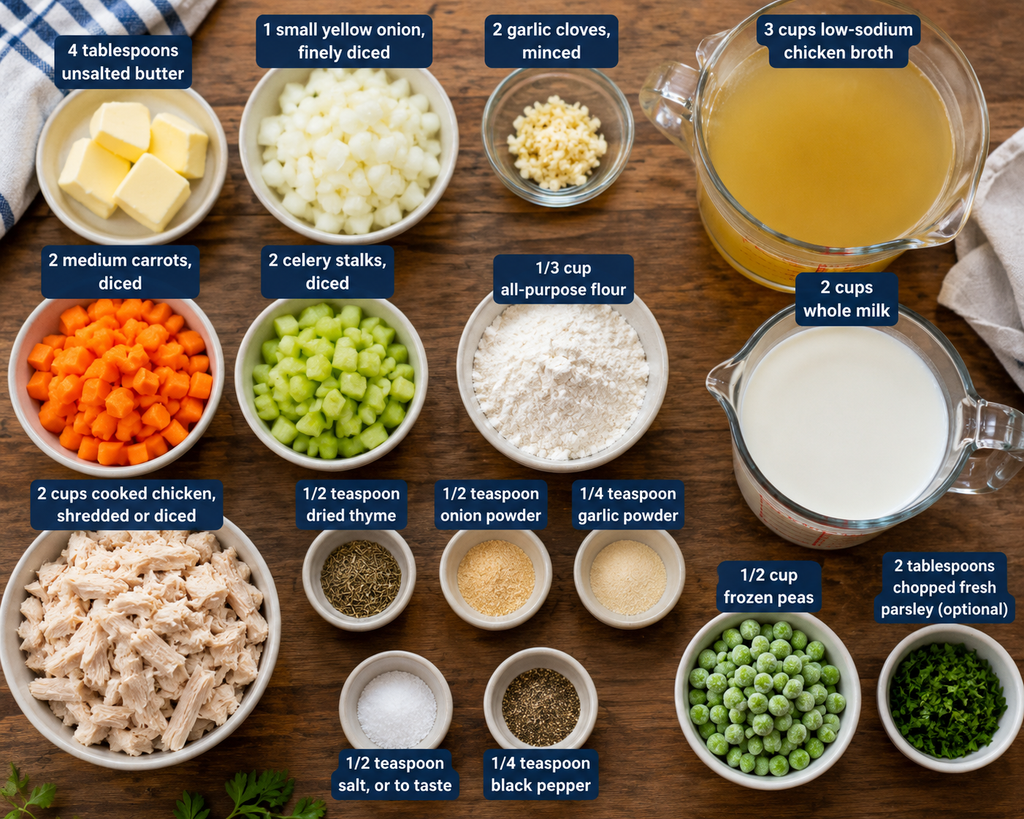
For approximately 4 generous servings, you will need:
- 4 tablespoons unsalted butter
- 1 small yellow onion, finely diced
- 2 garlic cloves, minced
- 2 medium carrots, diced
- 2 celery stalks, diced
- 1/3 cup all-purpose flour
- 3 cups low-sodium chicken broth
- 2 cups whole milk
- 2 cups cooked chicken, shredded or diced
- 1/2 teaspoon dried thyme
- 1/2 teaspoon onion powder
- 1/4 teaspoon garlic powder
- 1/2 teaspoon salt, or to taste
- 1/4 teaspoon black pepper
- 1/2 cup frozen peas
- 2 tablespoons chopped fresh parsley, optional
Ingredient Notes & Substitutions
Chicken: Cooked chicken breast works especially well because it is easy to shred and has a mild flavor. You can also use leftover roasted chicken or rotisserie chicken. Dark meat is another excellent choice if you prefer a richer flavor.
Butter: Butter gives the soup a smooth, rich base and helps cook the flour.
Flour: All-purpose flour thickens the soup and gives it the classic creamy consistency. Whisk it thoroughly into the butter before adding the liquid.
Milk: Whole milk produces the richest texture, but 2% milk works well too. Avoid using skim milk if you want a particularly creamy soup because it contains very little fat.
Chicken broth: Low-sodium chicken broth is a good starting point. Since the chicken, butter, and seasonings also contribute flavor, you can add salt gradually instead of starting with a heavily salted broth.
Vegetables: Onion, carrot, and celery create a classic savory base. You can add mushrooms, corn, potatoes, spinach, or additional peas if you want a more substantial soup.
Thyme: Dried thyme adds a subtle herbal flavor that pairs beautifully with chicken. Fresh thyme can also be used. If using fresh thyme, add a few sprigs while the soup simmers and remove them before serving.
Flour-free option: If you need to avoid wheat, you can use a suitable gluten-free all-purpose flour blend designed for thickening sauces and soups. Results can vary between brands, so add the broth gradually and adjust the thickness as needed.
Equipment Needed for Homemade Cream of Chicken Soup
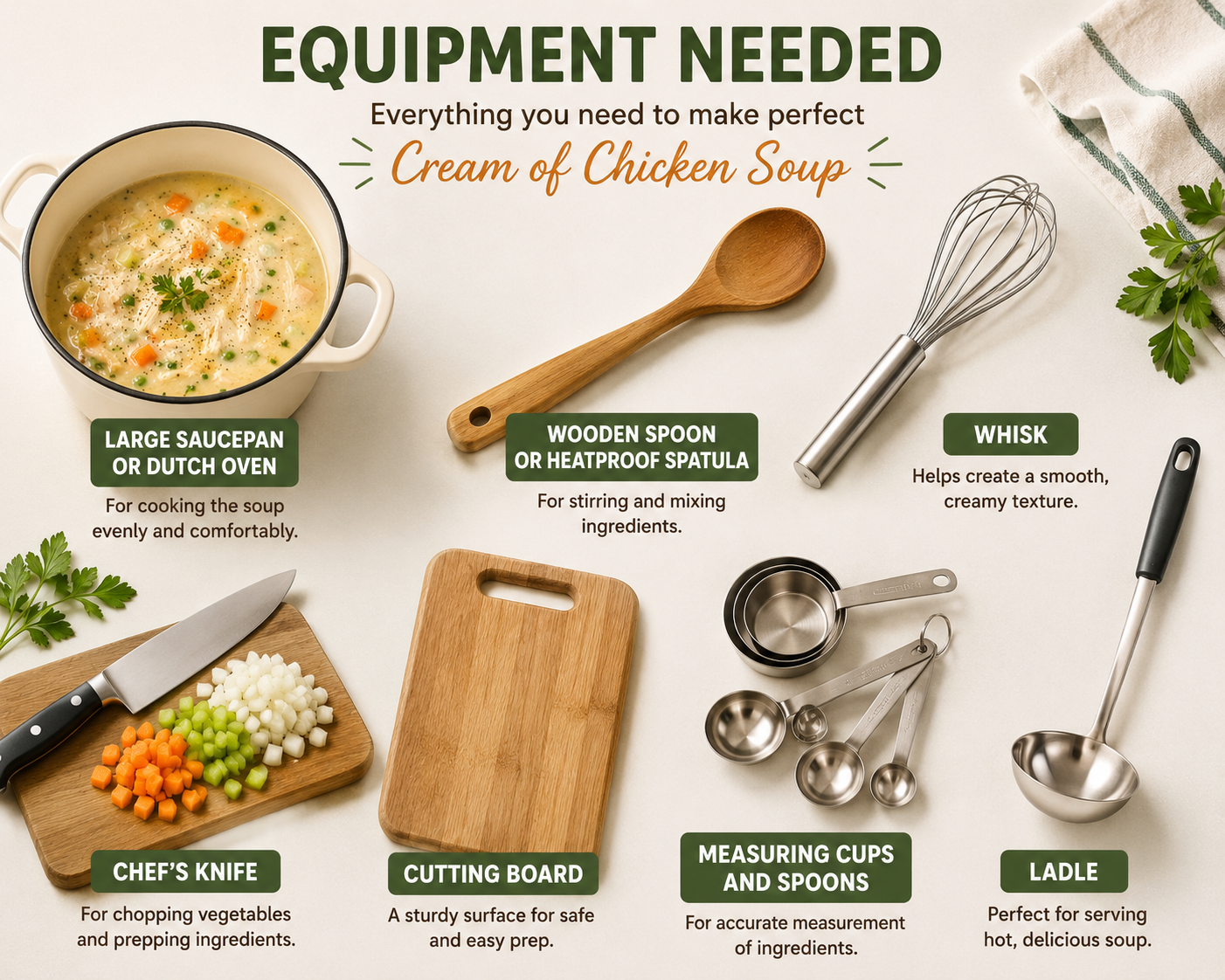
- Large saucepan or Dutch oven
- Wooden spoon or heatproof spatula
- Whisk
- Chef’s knife
- Cutting board
- Measuring cups and spoons
- Ladle
A whisk is especially important because it helps incorporate the flour and broth smoothly, reducing the chance of lumps.
Step-by-Step Instructions
1. Prepare the Chicken and Vegetables for Homemade Cream of Chicken Soup

If you are using leftover or rotisserie chicken, remove any bones and skin and shred or dice the meat into bite-sized pieces.
Finely dice the onion, carrot, and celery. Keeping the vegetables relatively small helps them cook quickly and makes each spoonful easier to eat.
2. Sauté the Aromatics
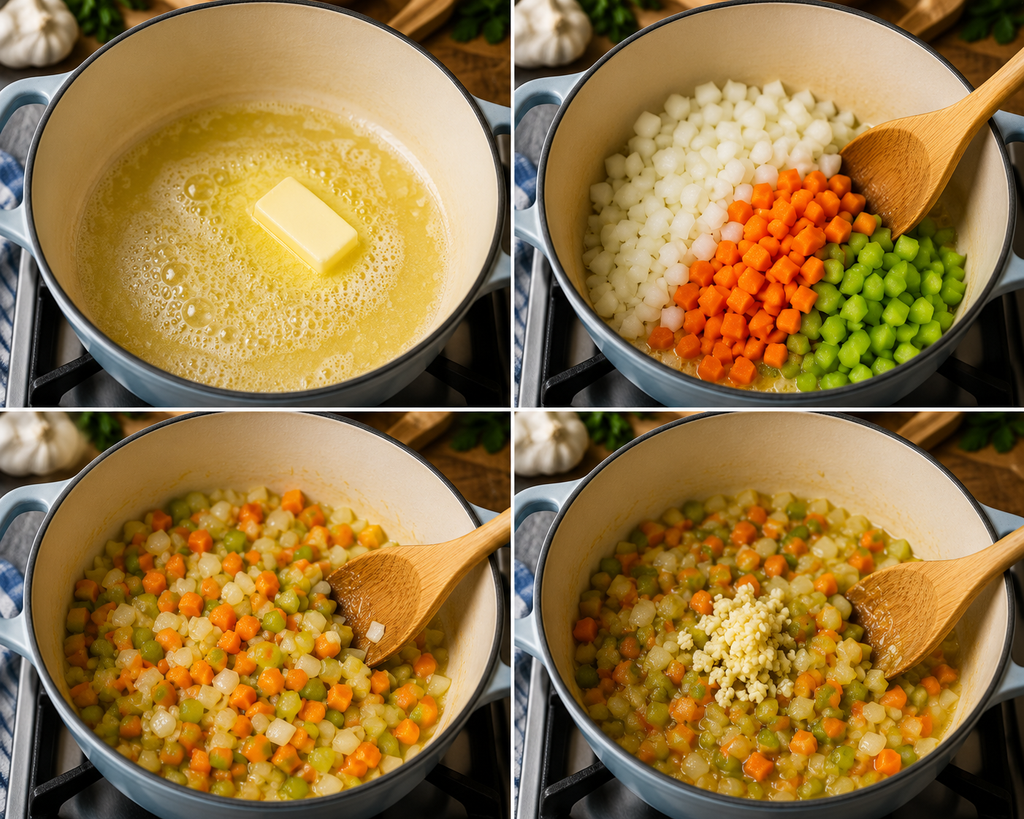
Take a pan and add butter over medium heat.
Once the butter melts, add the onion, carrot, and celery. Cook for about 4 to 5 minutes, stirring occasionally, until the vegetables begin to soften.
Cook for around 30 seconds with the minced garlic.
You do not need to brown the vegetables heavily. The goal is to soften them while developing a gentle savory flavor.
3. Make the Thickening Base
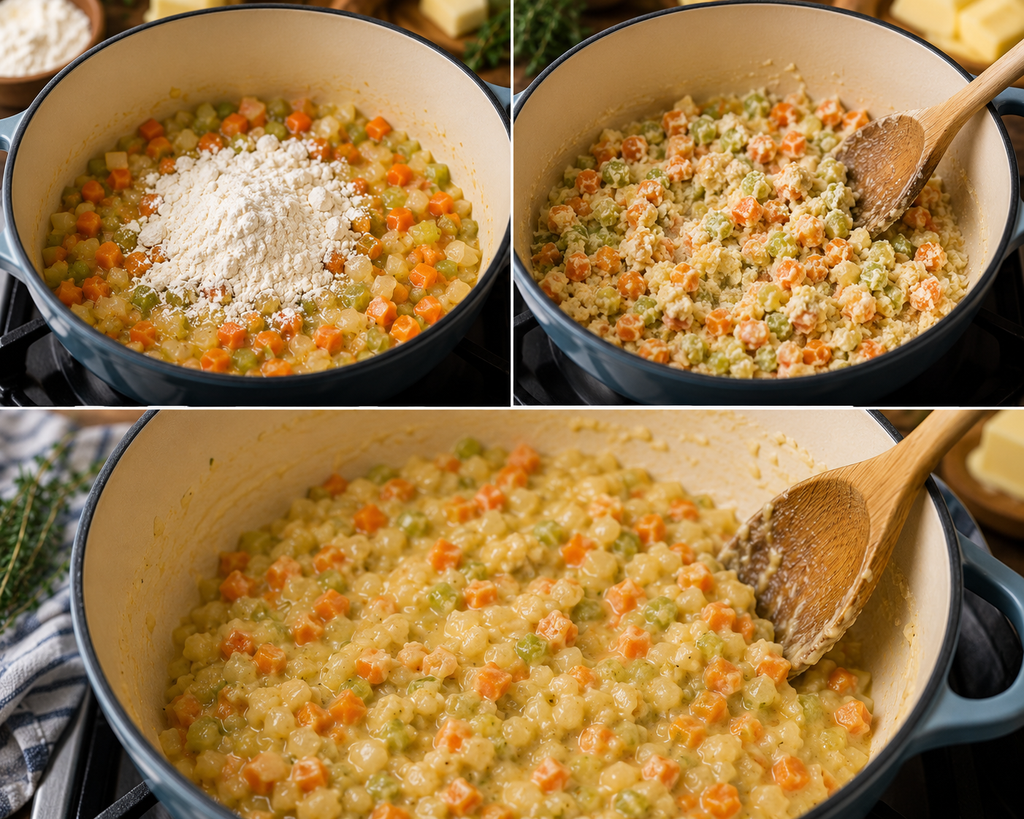
Sprinkle the flour over the softened vegetables and butter.
Stir continuously for about 1 minute. The flour should coat the vegetables and absorb the melted butter.
This short cooking step matters because it removes the raw flour flavor. Do not let the flour become dark brown. A light-colored base is ideal for this soup.
4. Add the Chicken Broth
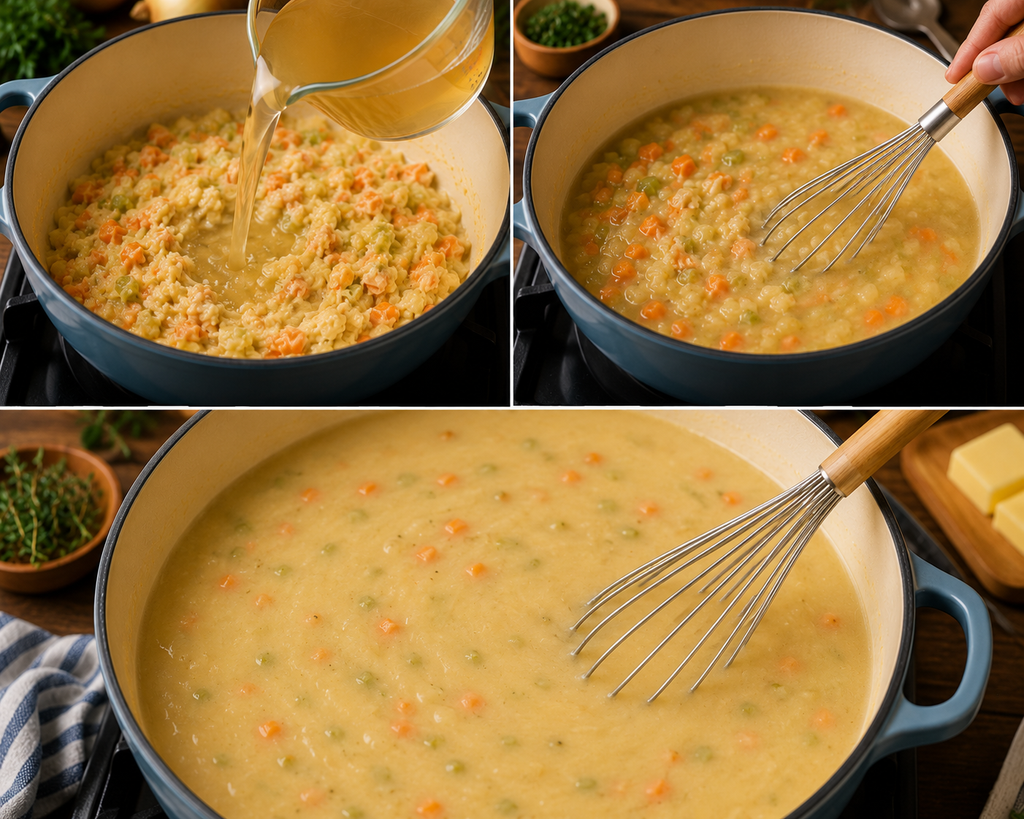
Slowly pour in the chicken broth while whisking constantly.
Add the broth gradually rather than pouring it all in at once. This allows the flour mixture to dissolve evenly and helps prevent lumps.
Once the broth has been incorporated, continue whisking until the mixture looks smooth.
5. Add the Milk
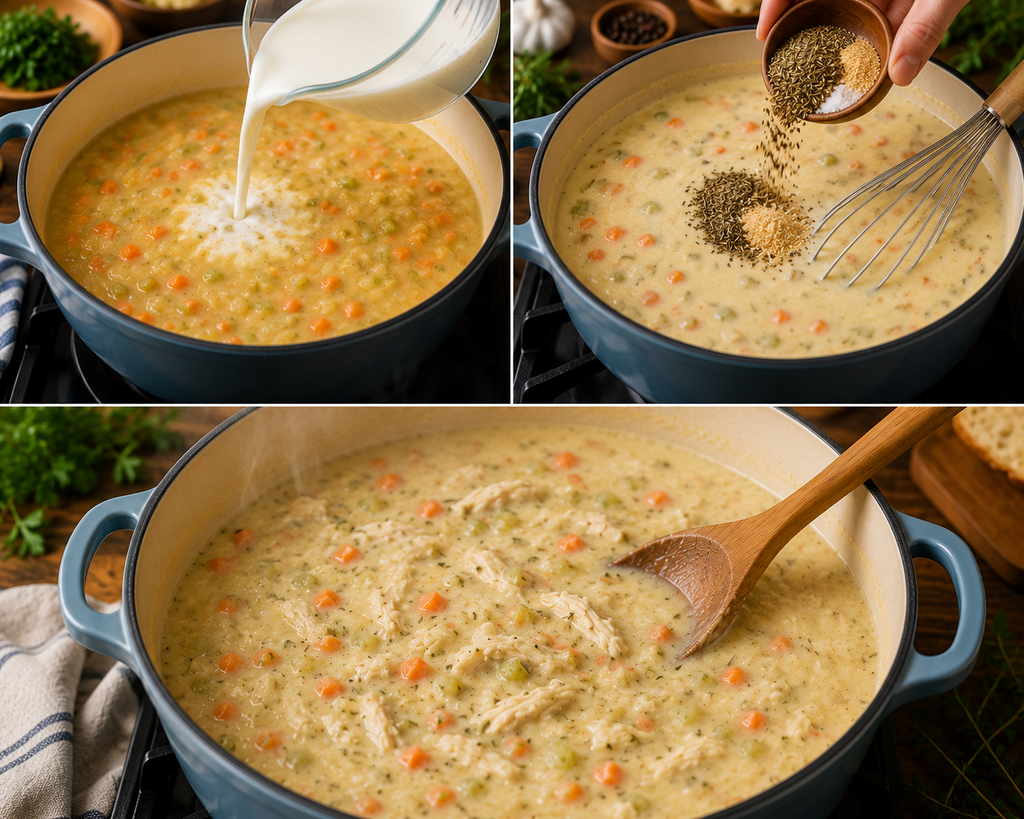
Slowly pour in the milk while stirring.
Add the thyme, onion powder, garlic powder, black pepper, and salt.
Bring the soup to a gentle simmer over medium heat. Avoid a rapid boil because milk can scorch or separate when exposed to excessive heat.
6. Let the Soup Thicken
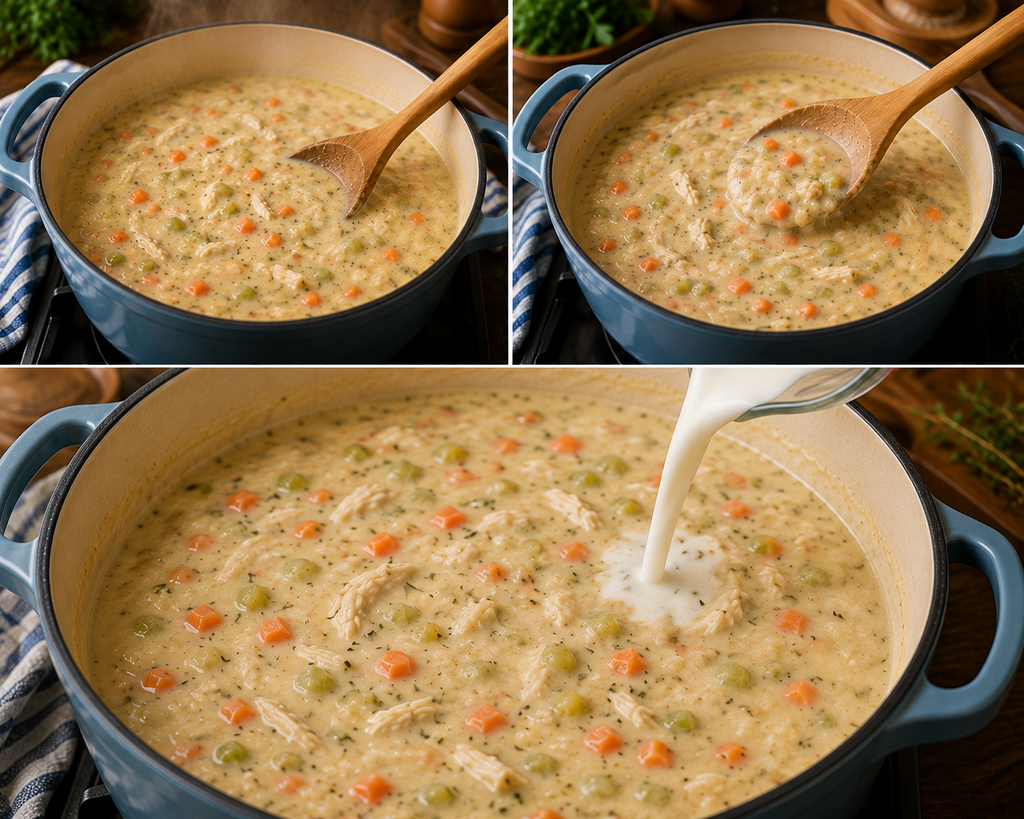
Allow the soup to simmer gently for about 5 to 7 minutes, stirring often.
You will notice the texture changing as the flour thickens the liquid. If it is too thick, add some milk.
7. Add the Chicken and Peas
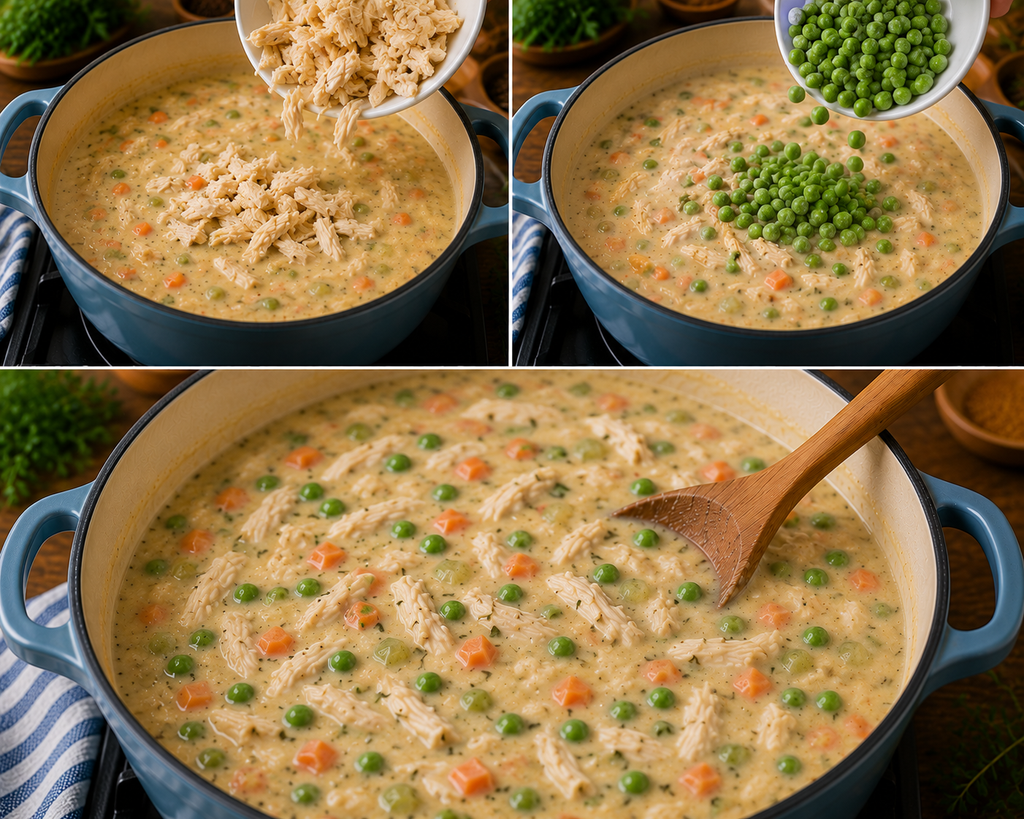
Stir in the cooked chicken and frozen peas.
Continue cooking for approximately 3 to 4 minutes, or until the chicken is heated through and the peas are tender.
Because the chicken is already cooked, it does not need a long cooking time. Overcooking it can make the meat dry.
8. Taste and Adjust
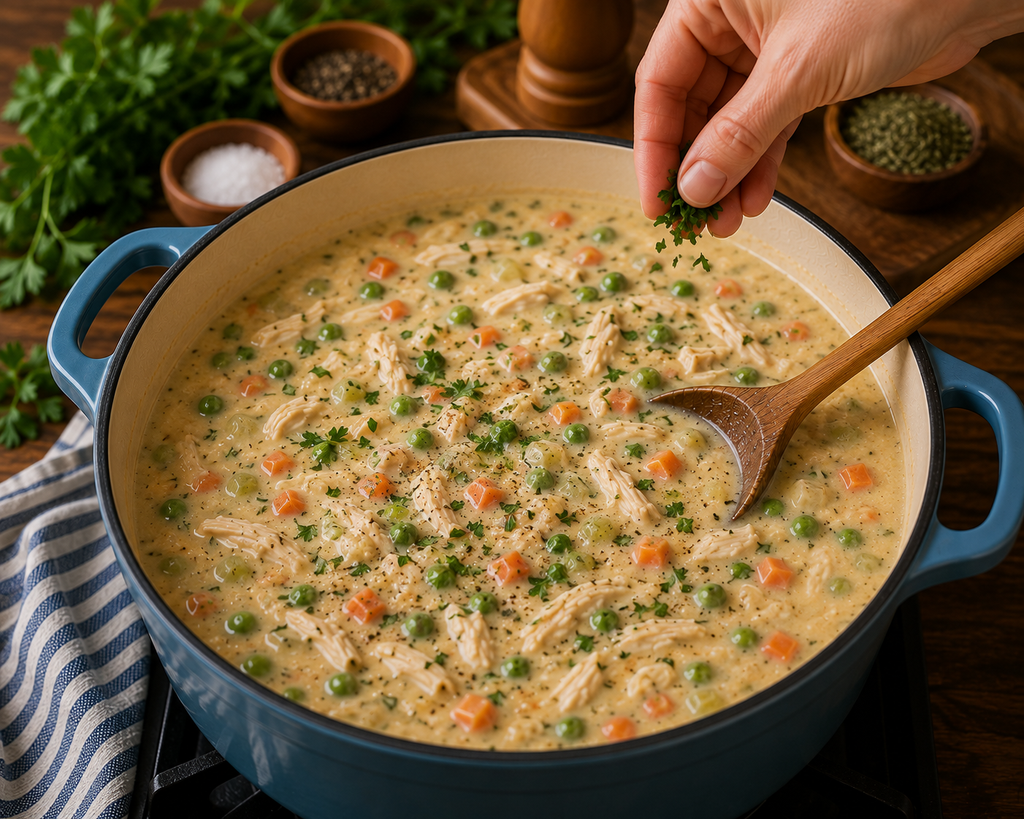
Taste the homemade cream of chicken soup before serving.
Add more salt or black pepper if needed. If you want a stronger herb flavor, add a little more thyme.
Finish with fresh parsley if desired.
9. Serve Warm
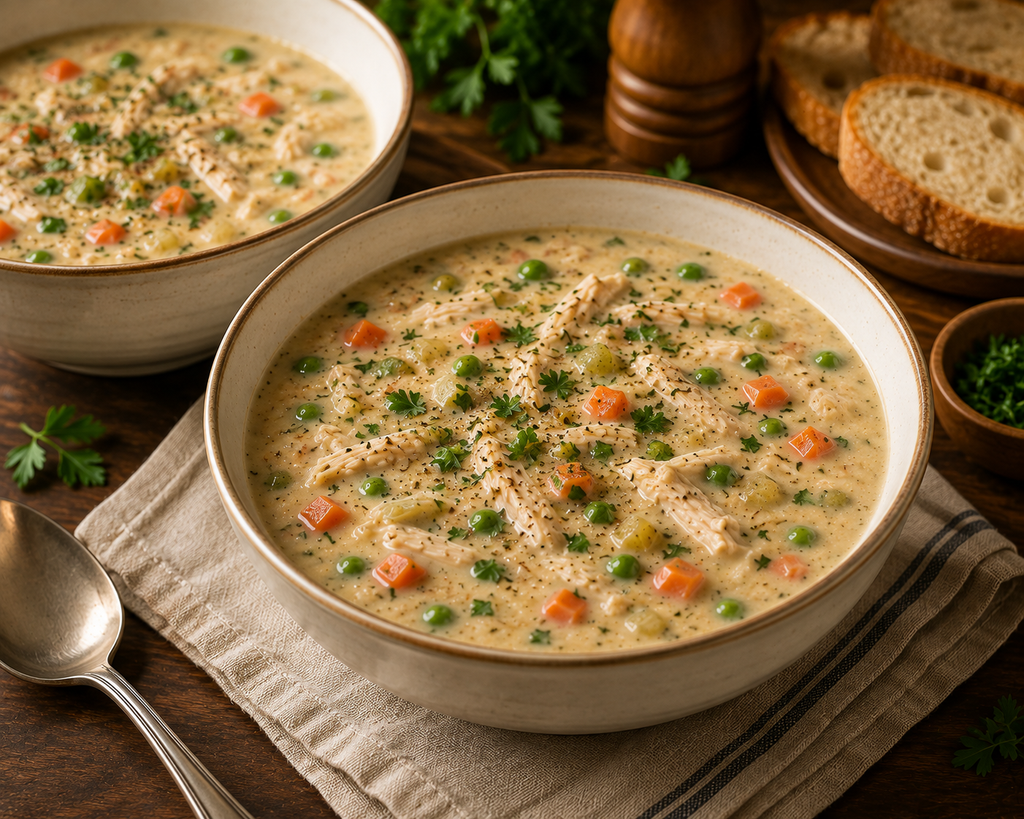
Ladle the homemade cream of chicken soup into bowls and serve immediately.
A little freshly cracked black pepper and chopped parsley on top adds a simple finishing touch.
Expert Tips
Build Flavor Before Adding the Flour
Do not rush the first stage. Giving the onion, carrot, and celery a few minutes to soften creates a much better flavor than simply boiling everything together.
Cook the Flour Briefly
Raw flour can give a soup an unpleasant taste. Cooking it with butter for about a minute helps to remove the flavor while keeping the roux light.
Add Broth Gradually
This is one of the easiest ways to prevent lumps. Pour the broth in slowly while whisking, especially during the first few additions.
Keep the Heat Moderate
A gentle simmer is all you need. High heat can cause the milk to scorch around the bottom of the pan and can make the soup more difficult to control.
Use Cooked Chicken
This recipe is an excellent way to use leftover chicken. Rotisserie chicken is also a convenient shortcut for homemade soup when you want to avoid cooking chicken from scratch.
Adjust the Thickness at the End
Cream soups often continue to thicken slightly as they cool. Your soup may get thicker in the bowl even if it seems excellent in the pot. Keep a little extra broth or milk nearby so you can loosen it if necessary.
Taste Before Adding More Salt
Chicken broth varies considerably in sodium. If you use standard broth instead of low-sodium broth, you may require significantly less salt.
Recipe Variations
Creamy Chicken and Mushroom Soup
Add 1 to 2 cups of sliced mushrooms with the onions, carrots, and celery. Cook until softened before adding the flour.
Mushrooms add an earthy flavor and make the soup feel especially hearty.
Chicken Noodle Soup
Cook your preferred tiny noodles separately and add them to the final soup.
Cooking the noodles separately helps prevent them from absorbing too much of the creamy broth and becoming overly soft.
Chicken and Rice Soup
Add cooked white, brown, or wild rice near the end of cooking.
Rice makes the soup more filling and turns it into a complete comfort-food meal.
Loaded Vegetable Version
Increase the amount of carrots and celery and add vegetables such as corn, green beans, mushrooms, or spinach.
This is a good option when you want a lighter soup with more vegetables in every serving.
Herb Chicken Soup
For a stronger herbal flavor, add fresh parsley, thyme, rosemary, or a small amount of sage.
Use herbs carefully, especially rosemary and sage, because their flavors can become strong quickly.
Serving Suggestions
Homemade cream of chicken soup is satisfying on its own, but a few simple additions can turn it into a complete meal.
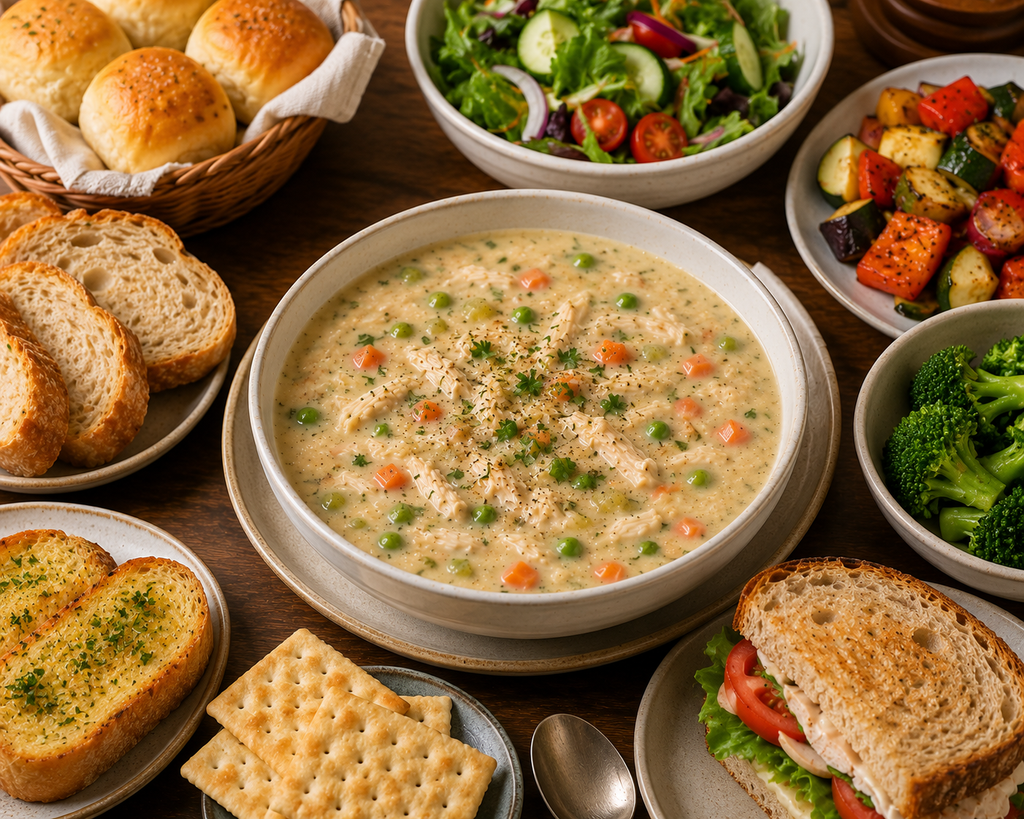
Serve it with:
- Crusty French bread
- Homemade garlic bread
- Toasted sourdough
- Crackers
- Dinner rolls
- A simple green salad
- Roasted vegetables
- Steamed broccoli
- A small sandwich
For a classic presentation, spoon the soup into warm bowls and finish it with fresh parsley and freshly ground black pepper.
If you want extra richness, a small sprinkle of grated Parmesan can work well, although it is completely optional.
For a heartier dinner, stir cooked noodles or rice directly into the soup just before serving.
Storage & Reheating
Refrigerating
Before transferring the leftover soup, try to cool then transfer it.
You can store 3 to 4 days in the refrigerator.
Because this soup contains milk and cooked chicken, it should not be left at room temperature for an extended period.
Freezing
Cream-based soups can sometimes change texture after freezing because dairy may separate slightly during thawing.
If you want to freeze this soup, let it cool completely and portion it into freezer-safe containers, leaving a little space at the top for expansion.
Freeze for up to 2 to 3 months for the best quality.
Thaw the soup in the refrigerator before reheating.
Reheating
Warm the soup gradually in a saucepan over low to medium heat.
Stir continuously and do not bring it to a hard boil.
If the soup has thickened much in the refrigerator, add a dash of chicken broth or milk when reheated. Stir until the original creamy consistency returns.
Common Mistakes to Avoid When Making Cream of Chicken Soup
Adding Chicken Broth Too Fast
Pouring all the chicken broth into the flour and butter mixture at once can create lumps. For a smooth, creamy soup, add the broth slowly while whisking continuously. This helps the flour blend evenly into the liquid.
Using Too Much Flour
When you cook the soup, it looks thin at first. When the cooking process is stopped, you will feel the soup looks thick as it cools. Avoid adding extra flour too quickly. Give the soup a few minutes to reach its proper consistency before making any adjustments.
Bringing the Milk to a Hard Boil
Creamy soups should be cooked gently. A rapid boil can cause the milk to scorch on the bottom of the pan or affect the smooth texture. Keep the heat at a gentle simmer and stir regularly.
Overcooking the Chicken
Since the chicken is already cooked before it goes into the soup, it only needs enough time to warm through. Adding it too early and simmering it for too long can make the chicken dry and chewy.
Adding Too Much Salt
Chicken broth and cooked chicken may already contain a fair amount of sodium. Taste the soup near the end of cooking before adding more salt.
Cutting the Vegetables Too Large
Large chunks of vegetables can take longer to become tender and may make the soup difficult to eat. Dice the onion, carrots, and celery into small, similar-sized pieces so they cook evenly.
Making the Soup Too Thick
The soup naturally becomes thicker as it cools. If it already looks very thick in the pot, stir in a small amount of chicken broth or milk. Add the liquid gradually until you reach the consistency you prefer.
Not Cooking the Flour Properly
Flour needs a short cooking time before the liquid is added. Cooking it with the melted butter for about a minute helps remove the raw flour taste and creates a smoother base for the soup.
Frequently Asked Questions
Can I Use Rotisserie Chicken in Cream of Chicken Soup?
Yes, rotisserie chicken is an easy and flavorful option for homemade cream of chicken soup. After removing the meat, skin, and bones, chop the meat into small bites. Because rotisserie chicken is often seasoned already, taste the finished soup before adding extra salt.
Can I Make Cream of Chicken Soup Without Heavy Cream?
Yes. Heavy cream is not necessary for this recipe. A combination of milk, butter, and flour creates a creamy texture without making the soup overly rich. Whole milk gives the smoothest and richest result, while 2% milk can be used for a slightly lighter version.
What Is the Best Milk for Homemade Cream of Chicken Soup?
Whole milk is the best choice if you want a rich, creamy consistency. However, 2% milk also works very well. Lower-fat milk can be used, but the finished soup may not be quite as creamy. If you want extra richness, you can replace part of the milk with half-and-half.
Can I Use Leftover Cooked Chicken?
Absolutely. This recipe is a great way to use leftover chicken. Shredded roasted chicken, baked chicken breast, grilled chicken, or rotisserie chicken can all be added. Just make sure the chicken is fully cooked before adding it to the soup.
How Can I Make Cream of Chicken Soup Thicker?
First, allow the soup to simmer gently for several minutes because the flour needs time to thicken the broth. If the soup is still too thin, continue cooking it briefly while stirring frequently. Avoid sprinkling dry flour directly into the finished soup, as it can form lumps. If necessary, prepare a small amount of flour and butter mixture separately and whisk it into the soup.
How Can I Thin Homemade Cream of Chicken Soup?
If your soup is thicker than you prefer, add a small amount of chicken broth or milk. Stir over low heat until the liquid is fully incorporated. Add just a little at a time because the soup can become too thin quickly.
Can Homemade Cream of Chicken Soup Be Frozen?
Yes, homemade cream of chicken soup can be frozen. Because it contains dairy, the texture may change slightly after thawing, but gentle reheating and thorough stirring can help bring it back together. Cool the soup, then transfer it to an airtight, freezer-safe container and freeze for 2 to 3 months. Thaw it in the refrigerator before reheating.
Can I Use This Recipe as a Substitute for Condensed Cream of Chicken Soup?
Not exactly. This recipe is designed as a ready-to-eat homemade cream of chicken soup, so it contains more liquid than a concentrated can of condensed soup.
If you are making a casserole or another recipe that specifically calls for condensed cream of chicken soup, use a recipe formulated as a condensed soup substitute. For serving as a warm soup, however, this homemade version is ready to enjoy as written.
Nutrition Information (Approximate)
The following estimates are based on the recipe being divided into four servings. Actual nutrition values will vary depending on the type of milk, chicken, broth, butter, and other ingredients used.
| Nutrient | Approximate Amount Per Serving |
| Calories | 390 kcal |
| Protein | 27 g |
| Carbohydrates | 25 g |
| Total Fat | 21 g |
| Saturated Fat | 11 g |
| Fiber | 3 g |
| Sugar | 7 g |
| Sodium | 650 mg |
For a lower-sodium version, choose low-sodium chicken broth, use unsalted butter, and add salt gradually after tasting.
Recipe Card (Printable Summary)
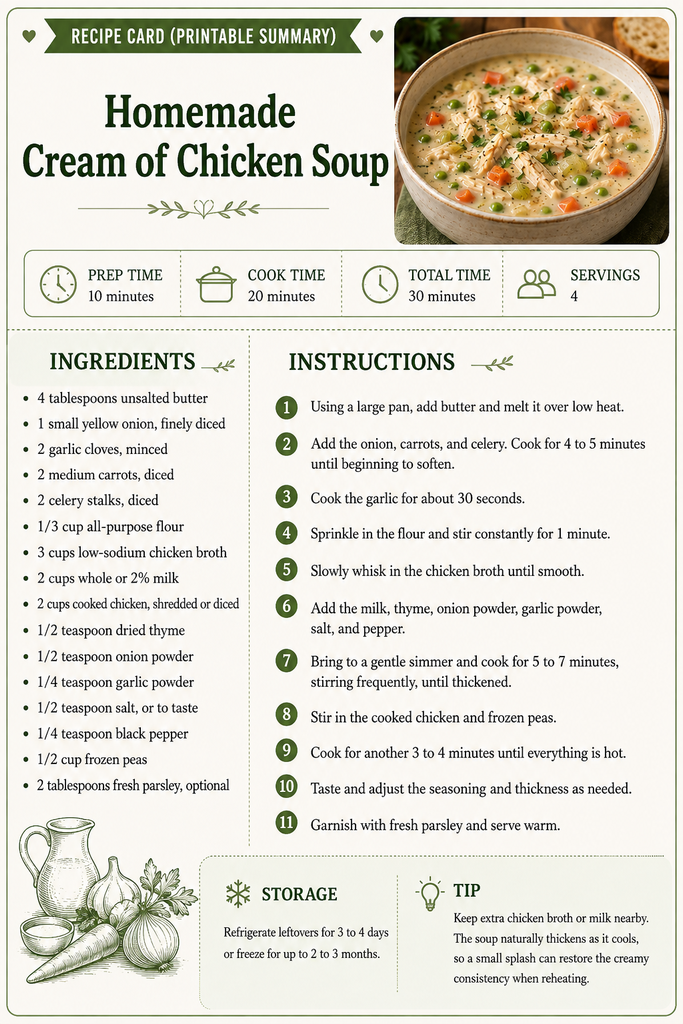
Homemade Cream of Chicken Soup
Prep Time: 10 minutes
Cook Time: 20 minutes
Total Time: 30 minutes
Servings: 4
Ingredients
- 4 tablespoons unsalted butter
- 1 small yellow onion, finely diced
- 2 garlic cloves, minced
- 2 medium carrots, diced
- 2 celery stalks, diced
- 1/3 cup all-purpose flour
- 3 cups low-sodium chicken broth
- 2 cups whole or 2% milk
- 2 cups cooked chicken, shredded or diced
- 1/2 teaspoon dried thyme
- 1/2 teaspoon onion powder
- 1/4 teaspoon garlic powder
- 1/2 teaspoon salt, or to taste
- 1/4 teaspoon black pepper
- 1/2 cup frozen peas
- 2 tablespoons fresh parsley, optional
Instructions
- Using a large pan, add butter and melt it over low heat.
- Add the onion, carrots, and celery. Cook for 4 to 5 minutes until beginning to soften.
- Cook the garlic for about 30 seconds.
- Sprinkle in the flour and stir constantly for 1 minute.
- Slowly whisk in the chicken broth until smooth.
- Add the milk, thyme, onion powder, garlic powder, salt, and pepper.
- Bring to a gentle simmer and cook for 5 to 7 minutes, stirring frequently, until thickened.
- Stir in the cooked chicken and frozen peas.
- Cook for another 3 to 4 minutes until everything is hot.
- Taste and adjust the seasoning and thickness as needed.
- Garnish with fresh parsley and serve warm.
Storage: Refrigerate leftovers for 3 to 4 days or freeze for up to 2 to 3 months.
Tip: Keep extra chicken broth or milk nearby. The soup naturally thickens as it cools, so a small splash can restore the creamy consistency when reheating.
Conclusion
Homemade Cream of Chicken Soup is a simple comfort-food recipe that deserves a place in your regular meal rotation. With tender chicken, flavorful vegetables, a creamy broth, and everyday pantry ingredients, it gives you the cozy taste of a classic chicken soup without requiring complicated techniques.
The best part is how flexible it can be. Keep it simple for a quick lunch, add noodles or rice for a hearty dinner, or change the vegetables and herbs based on what you already have in the kitchen. Once you know how to make the basic version, it becomes an easy starting point for countless comforting meals.
So the next time you have leftover chicken and a few basic ingredients on hand, skip the canned soup and make a warm pot of homemade cream of chicken soup instead.
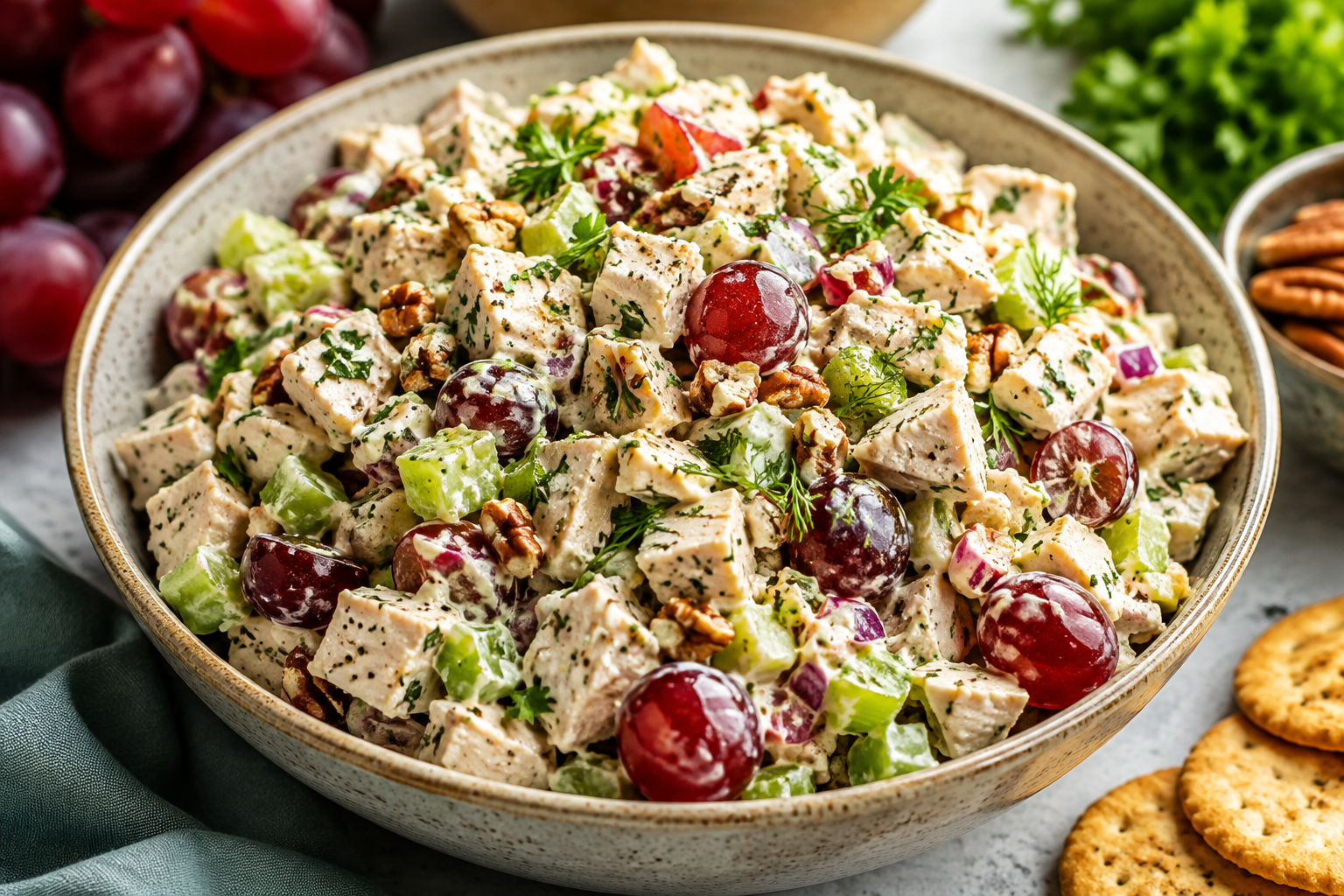
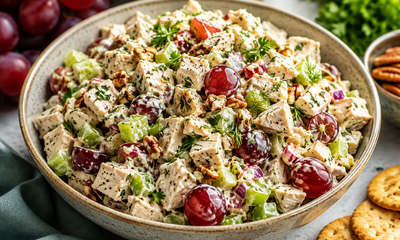
Chicken salad is a cold dish made by combining cooked chicken with a creamy dressing and fresh ingredients like celery, onions, herbs, and seasonings. Depending on the recipe, it may also include grapes, apples, nuts, or dried fruit for extra flavor and texture. The best chicken salad isn’t just creamy. It has a balance of tender chicken, crisp vegetables, and a dressing that brings everything together without overpowering the other ingredients.
One reason chicken salad has remained a favorite for generations is its versatility. You can enjoy it as a sandwich filling, wrap, lettuce cup, salad topping, or dip for crackers and vegetables. It works equally well for a quick weekday lunch, meal prep, picnics, or family gatherings, making it one of the most practical recipes to keep in your collection.
A truly great chicken salad starts with quality ingredients and simple techniques. Using juicy cooked chicken, fresh herbs, and a well-balanced dressing creates better flavor than relying on heavy amounts of mayonnaise alone. With just a few fresh ingredients and the right preparation, you can make a homemade chicken salad that tastes fresher, healthier, and more satisfying than most store-bought versions.
Why Chicken Salad Is a Popular Lunch Choice
Chicken salad has earned its place as a popular lunch because it is quick to prepare, high in protein, and easy to adapt to different tastes and diets. A single batch can be enjoyed in sandwiches, wraps, lettuce cups, or over a bed of greens, making it ideal for busy weekdays and meal prep. Since it is served cold and stores well in the refrigerator for several days, chicken salad offers both convenience and fresh flavor without the need for reheating.
What Makes a Great Chicken Salad?
A great chicken salad starts with juicy, well-cooked chicken and a creamy dressing that complements the ingredients instead of overwhelming them. Crisp vegetables like celery, fresh herbs such as dill or parsley, and a touch of acidity from lemon juice create a balanced flavor and satisfying texture. The final result should be creamy, fresh, and full of crunch, with every ingredient working together to make each bite flavorful and enjoyable.
Why You’ll Love This Chicken Salad Recipe
This chicken salad recipe is designed to be simple enough for busy weekdays while delivering the fresh, homemade flavor you’d expect from a deli favorite. It comes together in about 20 minutes using everyday ingredients, making it a reliable option for quick lunches, meal prep, or light dinners. The combination of tender chicken, crisp vegetables, and a creamy dressing creates a satisfying meal without requiring complicated steps.
Another reason this recipe stands out is how easy it is to customize. You can keep it classic or add ingredients like grapes, apples, nuts, or fresh herbs to match your taste. It also works in sandwiches, wraps, lettuce cups, or over a green salad, so you can enjoy it in different ways throughout the week without getting bored.
Ingredients You’ll Need
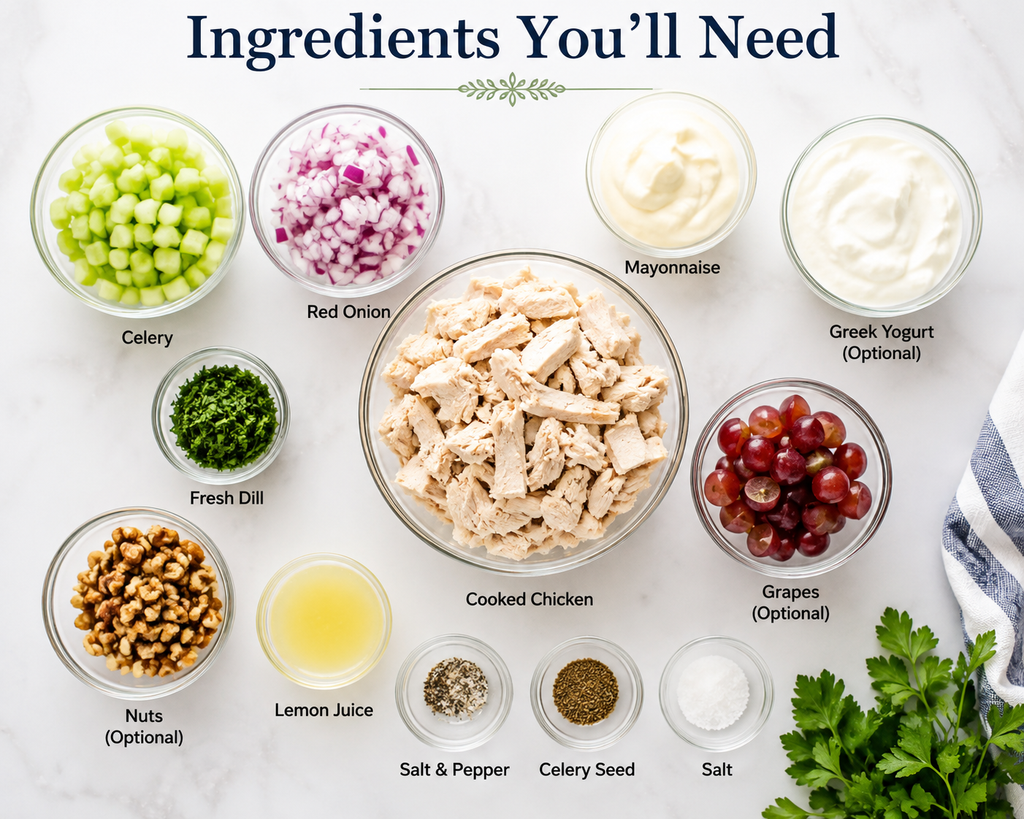
This chicken salad recipe uses simple, easy-to-find ingredients that each play an important role in the final dish. The chicken provides a hearty source of protein, while the creamy dressing adds richness and the fresh vegetables bring crunch and freshness. A few herbs and seasonings tie everything together, creating a balanced flavor that’s both comforting and refreshing.
One of the best things about these ingredients is how flexible they are. You can use rotisserie chicken for convenience, swap part of the mayonnaise for Greek yogurt to lighten the dressing, or add extras like grapes, apples, or toasted nuts to suit your taste. Starting with fresh, high-quality ingredients helps ensure your homemade chicken salad tastes better than most store-bought versions.
Best Chicken to Use
The best chicken for chicken salad is fully cooked, tender, and juicy, as it forms the foundation of both the flavor and texture. Rotisserie chicken is a popular choice because it is convenient and naturally flavorful, while roasted, poached, or grilled chicken also works well when cooked properly. Let the chicken cool completely before mixing it with the dressing, and cut it into bite-sized pieces so every forkful has the perfect balance of chicken and other ingredients.
The Creamy Dressing
A well-balanced dressing is what brings all the ingredients together without masking their natural flavors. This recipe combines mayonnaise with plain Greek yogurt to create a smooth, creamy texture that feels rich but not overly heavy. The mayonnaise adds classic creaminess, while the Greek yogurt provides a light tang and extra protein, making the dressing both flavorful and balanced.
Fresh lemon juice, salt, black pepper, and a pinch of celery seed help brighten the dressing and enhance the chicken’s flavor. Whisk the dressing until smooth before mixing it with the other ingredients, then taste and adjust the seasoning if needed. The goal is to lightly coat each piece of chicken, letting the fresh vegetables and herbs shine in every bite.
Fresh Vegetables and Herbs
Fresh vegetables and herbs add the flavor, color, and crunch that make chicken salad more enjoyable. Crisp celery provides the classic texture, while red onion or scallions add a mild bite without overpowering the dish. Herbs like fresh dill, parsley, or chives brighten the overall flavor and complement the creamy dressing, creating a chicken salad that tastes fresh, balanced, and homemade.
Optional Add-Ins for Extra Flavor
Optional add-ins are an easy way to customize chicken salad without changing its classic appeal. Sweet red grapes, crisp apples, toasted pecans, walnuts, or dried cranberries add extra texture and flavor, while Dijon mustard, fresh tarragon, or chopped parsley give the dressing more depth. Choose just a few additions that complement each other so the chicken remains the star of the dish and every bite stays balanced and satisfying.
How to Make Chicken Salad
Making chicken salad is simple, but following the right order helps create the best texture and flavor. Start by cutting cooled, cooked chicken into bite-sized pieces, then prepare the vegetables by finely chopping the celery, onion, and fresh herbs. In a separate bowl, whisk together the mayonnaise, Greek yogurt, lemon juice, and seasonings until the dressing is smooth and well combined.
Next, gently fold the chicken, vegetables, and dressing together until every piece is lightly coated. Avoid overmixing, as this can break apart the chicken and make the salad less appealing. For the best flavor, cover the bowl and refrigerate the chicken salad for at least 30 minutes before serving, allowing the ingredients to blend and the dressing to fully coat the chicken.
Expert Tips for the Best Chicken Salad
A few simple techniques can take homemade chicken salad from good to exceptional. Always use fully cooled, juicy chicken, chop the ingredients into similar-sized pieces, and mix the dressing separately before combining everything. This helps the flavors blend evenly while giving every bite the perfect balance of chicken, vegetables, and creamy dressing.
For the freshest flavor, let the chicken salad chill in the refrigerator for at least 30 minutes before serving. This resting time allows the seasonings to develop and the dressing to coat the ingredients more evenly. Taste the salad one final time before serving and adjust the salt, pepper, or lemon juice if needed, as small changes can make a noticeable difference in the finished dish.
Get the Perfect Creamy Texture
The secret to a perfectly creamy chicken salad is using just enough dressing to coat the ingredients without making the mixture heavy or soggy. Combining mayonnaise with plain Greek yogurt creates a smooth, rich texture while adding a light tang that keeps the salad fresh. Mixing the dressing separately before adding it to the chicken also helps distribute the flavor evenly.
Another important step is to use cooled chicken, as warm chicken can thin the dressing and create excess moisture. If you’re making the salad ahead of time, reserve a small amount of dressing and stir it in just before serving to restore its creamy consistency. This simple technique keeps the chicken salad fresh, flavorful, and enjoyable even after being refrigerated.
Balance Flavor and Crunch
A great chicken salad combines creamy, savory, fresh, and crunchy elements in every bite. Crisp celery, finely diced onion, and fresh herbs add texture, while ingredients like grapes, apples, or toasted nuts provide a touch of sweetness and extra crunch without overpowering the chicken. Finish with the right amount of salt, black pepper, and lemon juice to enhance the flavors and create a balanced, satisfying salad.
Common Mistakes to Avoid
Small mistakes can affect both the texture and flavor of chicken salad. Mixing the dressing with warm chicken can make it watery, while using too much mayonnaise may overpower the fresh ingredients and create a heavy texture. For the best results, use cooled, juicy chicken, season the salad well, and mix gently to keep the chicken pieces intact. Letting the salad chill before serving also helps the flavors develop and creates a fresher, more balanced taste.
Chicken Salad Recipe Card
| Recipe Details | Information |
| Recipe Name | Chicken Salad Recipe |
| Cuisine | American |
| Course | Lunch, Main Course, Salad |
| Prep Time | 20 minutes |
| Cook Time | 0 minutes (using cooked chicken) |
| Total Time | 20 minutes |
| Servings | 6 servings |
| Calories | Approximately 320 kcal per serving (varies by ingredients) |
Ingredients
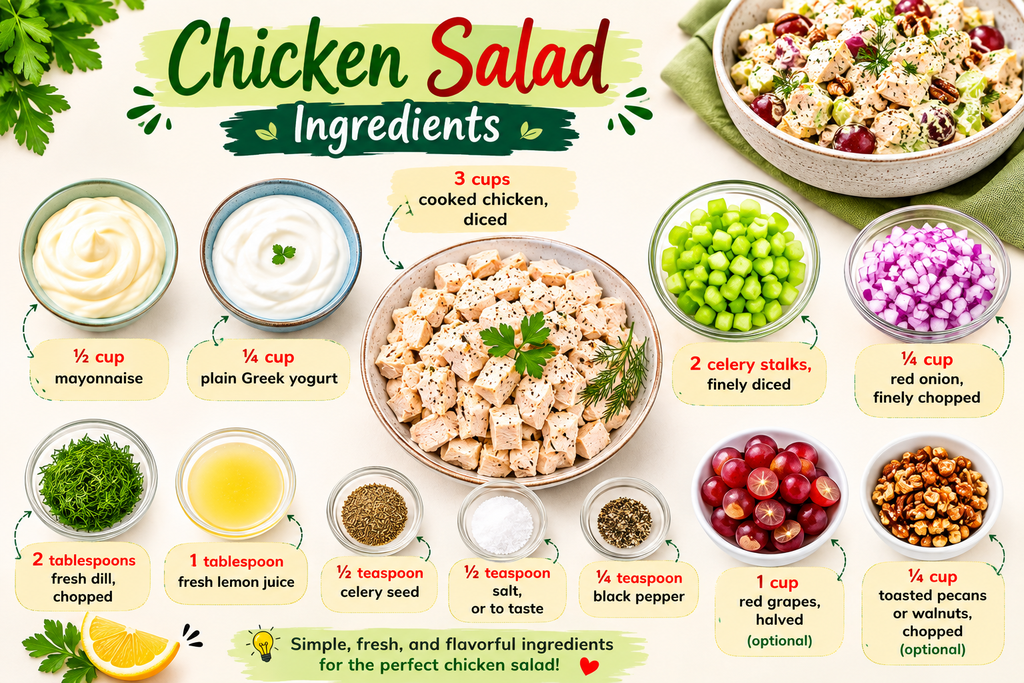
- 3 cups cooked chicken, diced
- ½ cup mayonnaise
- ¼ cup plain Greek yogurt
- 2 celery stalks, finely diced
- ¼ cup red onion, finely chopped
- 2 tablespoons fresh dill, chopped
- 1 tablespoon fresh lemon juice
- ½ teaspoon celery seed
- ½ teaspoon salt, or to taste
- ¼ teaspoon black pepper
- 1 cup red grapes, halved (optional)
- ¼ cup toasted pecans or walnuts, chopped (optional)
Instructions
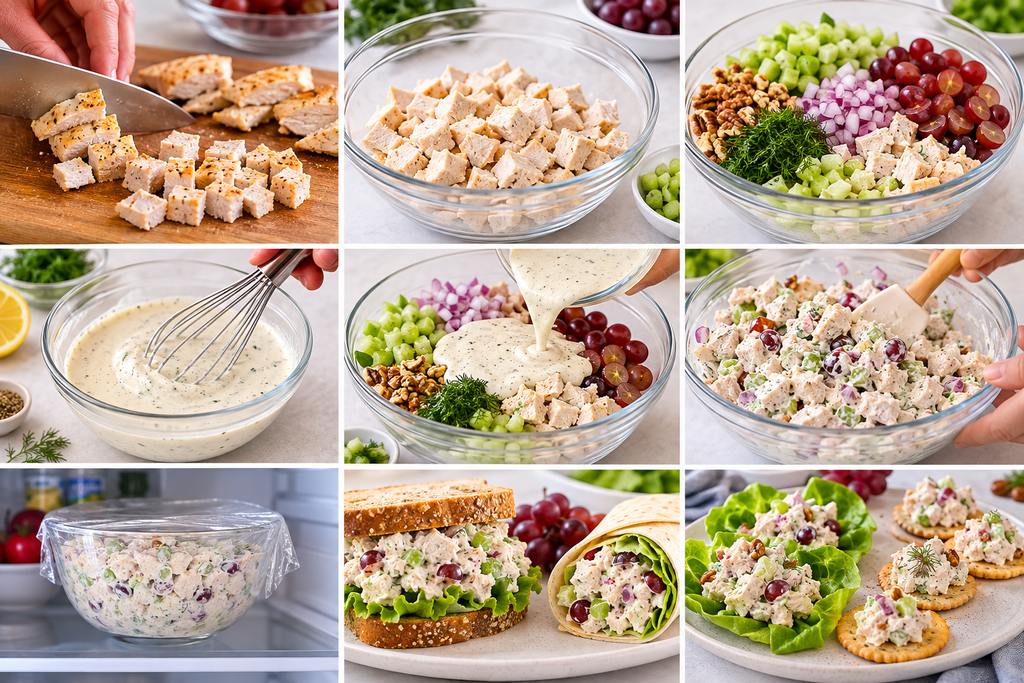
- Cut the cooked chicken into bite-sized pieces and place it in a large mixing bowl.
- Add the celery, red onion, fresh dill, grapes, and nuts if using.
- In a separate bowl, whisk together the mayonnaise, Greek yogurt, lemon juice, celery seed, salt, and black pepper until smooth.
- Pour the dressing over the chicken mixture and gently fold everything together until evenly coated.
- Cover the bowl and refrigerate for at least 30 minutes to allow the flavors to blend.
- Serve chilled in sandwiches, wraps, lettuce cups, over mixed greens, or with crackers.
Notes
- Rotisserie chicken is a convenient and flavorful option.
- Let the chicken cool completely before mixing with the dressing.
- Taste and adjust the seasoning before serving.
- Store leftovers in an airtight container in the refrigerator for 3 to 4 days.
Nutrition Information
The nutritional value of chicken salad can vary depending on the ingredients you use, especially the type and amount of dressing. This recipe provides a good source of lean protein from the chicken, while fresh vegetables add vitamins, minerals, and fiber. Using a combination of mayonnaise and plain Greek yogurt creates a creamy texture while helping reduce the overall fat compared to using mayonnaise alone.
Estimated Nutrition Per Serving (Based on 6 Servings)
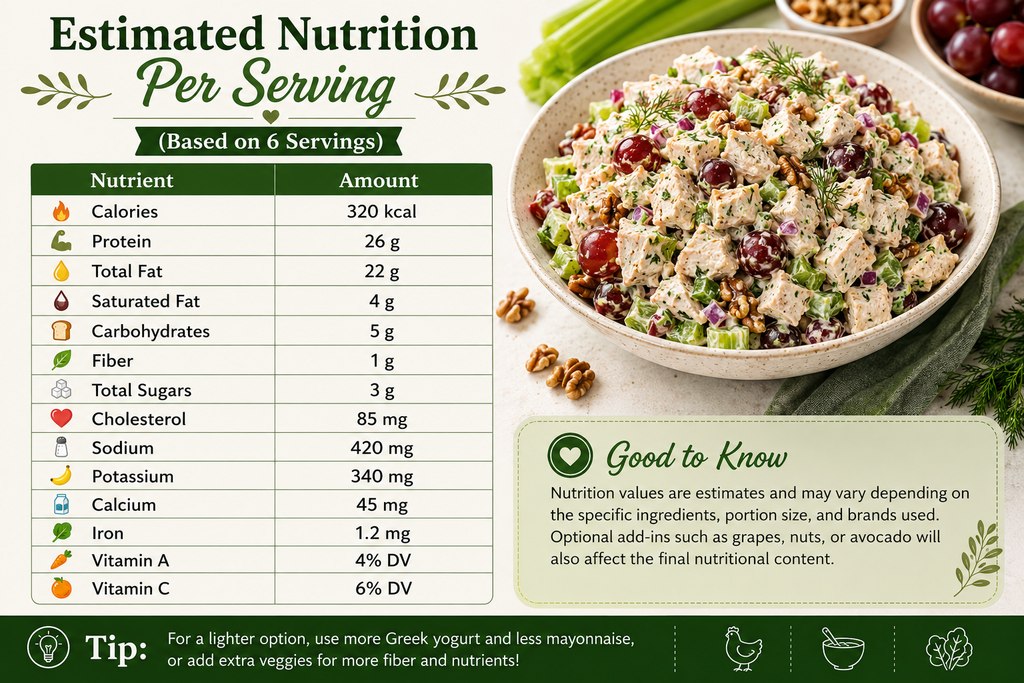
| Nutrient | Amount |
| Calories | 320 kcal |
| Protein | 26 g |
| Total Fat | 22 g |
| Saturated Fat | 4 g |
| Carbohydrates | 5 g |
| Fiber | 1 g |
| Total Sugars | 3 g |
| Cholesterol | 85 mg |
| Sodium | 420 mg |
| Potassium | 340 mg |
| Calcium | 45 mg |
| Iron | 1.2 mg |
| Vitamin A | 4% DV |
| Vitamin C | 6% DV |
Note: These nutrition values are estimates and may vary depending on the ingredients, portion size, and brands used. Optional add-ins such as grapes, nuts, or avocado will also affect the final nutritional content.
Easy Ingredient Swaps and Customizations
One of the best things about chicken salad is how easy it is to customize with ingredients you already have. You can replace part or all of the mayonnaise with plain Greek yogurt for a lighter dressing, swap celery for cucumber or bell peppers, or add grapes, apples, dried cranberries, or toasted nuts for extra flavor and texture. These simple substitutions let you tailor the recipe to your taste while keeping the chicken as the star and maintaining a balanced, satisfying salad.
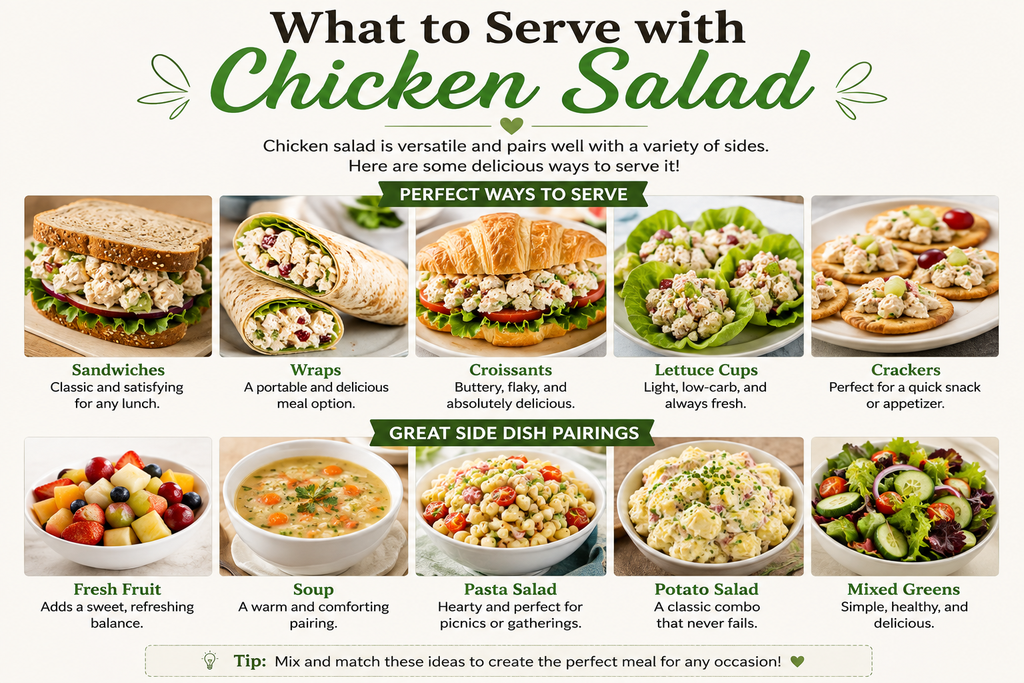
What to Serve with Chicken Salad
Chicken salad is versatile enough to pair with a variety of sides, making it easy to create a complete meal for any occasion. Serve it in sandwiches, wraps, croissants, or lettuce cups for a satisfying lunch, or enjoy it with crackers, fresh vegetables, or a bed of mixed greens for a lighter option. To round out the meal, pair it with fresh fruit, soup, pasta salad, or potato salad, depending on whether you’re preparing a quick weekday lunch or serving guests at a picnic or gathering.
How to Store and Make Chicken Salad Ahead
Chicken salad is an excellent make-ahead recipe because the flavors become even better after chilling in the refrigerator for a few hours. Store it in an airtight container and keep it refrigerated at 40°F (4°C) or below, where it will stay fresh for 3 to 4 days. If you’re preparing it in advance, wait to add delicate ingredients like avocado or toasted nuts until just before serving to maintain the best texture and flavor.
Can I Use Rotisserie Chicken?
Yes, you can use rotisserie chicken. Simply remove the skin and bones, then cut or shred the meat into bite-sized pieces before mixing it with the dressing. Using rotisserie chicken also saves time, making it a convenient option for quick lunches, meal prep, or busy weeknight meals.
Is It Better to Dice or Shred the Chicken?
Both methods work well, but diced chicken is often the better choice for a classic chicken salad because it creates a heartier texture and helps each bite hold its shape. Shredded chicken blends more evenly with the dressing, resulting in a softer, creamier consistency. Choose the style you prefer, but keep the pieces uniform so the salad has a balanced texture and is easy to eat.
Can I Make Chicken Salad Without Mayonnaise?
Yes, you can make chicken salad without mayonnaise and still achieve a creamy, flavorful result. Plain Greek yogurt is one of the best substitutes because it adds a smooth texture, a slight tang, and extra protein while keeping the salad lighter. You can also use mashed avocado or a dairy-free mayonnaise alternative, then season with lemon juice, herbs, salt, and pepper to maintain a fresh, well-balanced flavor.
How Long Does Chicken Salad Last in the Refrigerator?
When stored in an airtight container in the refrigerator at 40°F (4°C) or below, homemade chicken salad stays fresh for 3 to 4 days. Keep it refrigerated until you’re ready to serve, and avoid leaving it at room temperature for more than 2 hours, or 1 hour in hot weather. If the salad develops an unusual smell, watery texture, or off-flavor, it should be discarded for food safety.
Can You Freeze Chicken Salad?
Freezing chicken salad is generally not recommended because mayonnaise and Greek yogurt can separate after thawing, leaving the dressing watery and the texture less appealing. Fresh vegetables like celery and onions also lose their crispness when frozen. For the best results, freeze only the cooked chicken and prepare the dressing and fresh ingredients after thawing to enjoy a chicken salad with the best flavor and texture.
Can I Make Chicken Salad Ahead of Time?
Yes, chicken salad is an excellent make-ahead meal because the flavors become even better after a few hours in the refrigerator. Preparing it 4 to 24 hours in advance allows the dressing, herbs, and seasonings to blend together, resulting in a richer and more balanced flavor. For the best texture, store it in an airtight container and, if using ingredients like avocado or toasted nuts, add them just before serving to keep them fresh and crisp.
Final Thoughts
This chicken salad recipe proves that a handful of fresh, simple ingredients can create a meal that’s both satisfying and incredibly versatile. With tender chicken, a creamy yet balanced dressing, crisp vegetables, and plenty of customization options, it’s a recipe you can enjoy for quick lunches, meal prep, family gatherings, or light dinners year-round.
The key to great chicken salad is using quality ingredients and keeping the flavors in balance. Start with juicy, cooked chicken, use fresh herbs and crunchy vegetables, and let the salad chill before serving so the flavors have time to develop. Once you’ve mastered the classic version, you can easily make it your own by adding fruits, nuts, or different seasonings to match your taste.
Whether you serve it in a sandwich, wrap, lettuce cup, or over a fresh green salad, this homemade chicken salad is a reliable recipe you’ll want to make again and again. It’s easy to prepare, stores well for meal prep, and delivers fresh, delicious flavor in every bite.
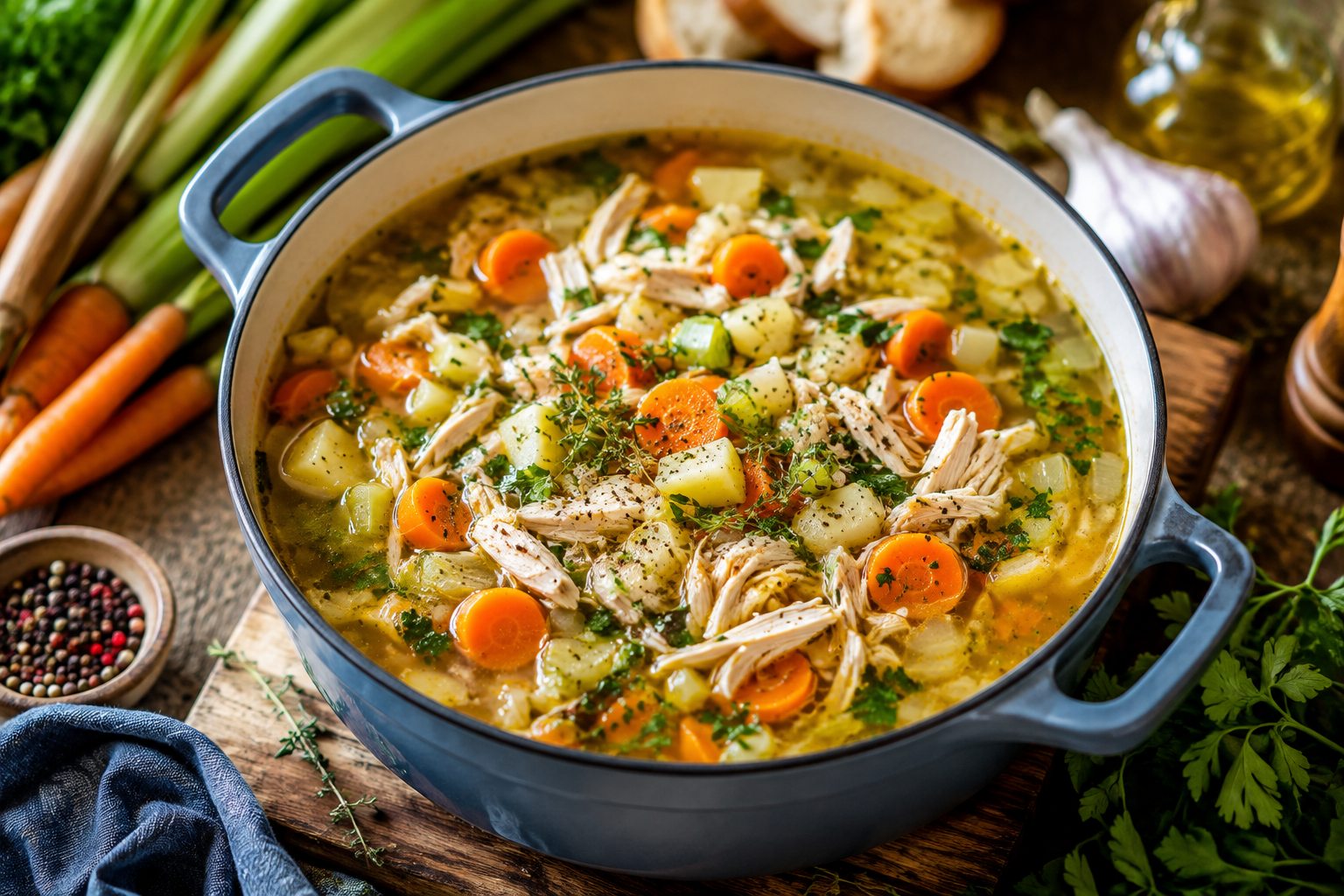
There is something especially comforting about a warm bowl of Healthy Chicken Soup Recipe With Vegetables. When the weather turns cold, or you simply want an easy, nourishing meal, this healthy chicken soup is one of those recipes worth keeping in your regular rotation. It combines tender chicken, colorful vegetables, fresh herbs, and a flavorful broth without relying on heavy cream, flour, or complicated cooking techniques.
You can use chicken thighs or breasts, swap vegetables for what you have in the refrigerator, and add rice, noodles, beans, or grains when you want something more filling. The soup starts with sautéed aromatics for a deeper flavor, then everything gently simmers together until the chicken is tender and the vegetables are perfectly cooked. The result is a simple homemade soup that tastes far better than something poured from a can.
Why You’ll Love Healthy Chicken Soup Recipe With Vegetables
There are plenty of reasons to make a healthy chicken soup recipe, but this version has a few features that make it especially practical.
- Easy to make: Most of the cooking happens in one large pot.
- Packed with vegetables: Carrots, celery, cabbage, mushrooms, and other vegetables add flavor, texture, and color.
- Protein-rich: Chicken makes the soup satisfying enough to serve as a complete meal.
- No flour required: The broth stays light and flavorful without a traditional flour-based thickener.
- Easy to customize: Add noodles, rice, beans, potatoes, or extra vegetables depending on your preference.
- Great for leftovers: The flavor develops nicely after sitting in the refrigerator.
- Freezer-friendly: You can make a larger batch and freeze portions for another day.
- Naturally comforting: A hot bowl of homemade broth, tender chicken, and vegetables is hard to beat on a chilly day.
Ingredients for Healthy Chicken Soup Recipe
Main Ingredients
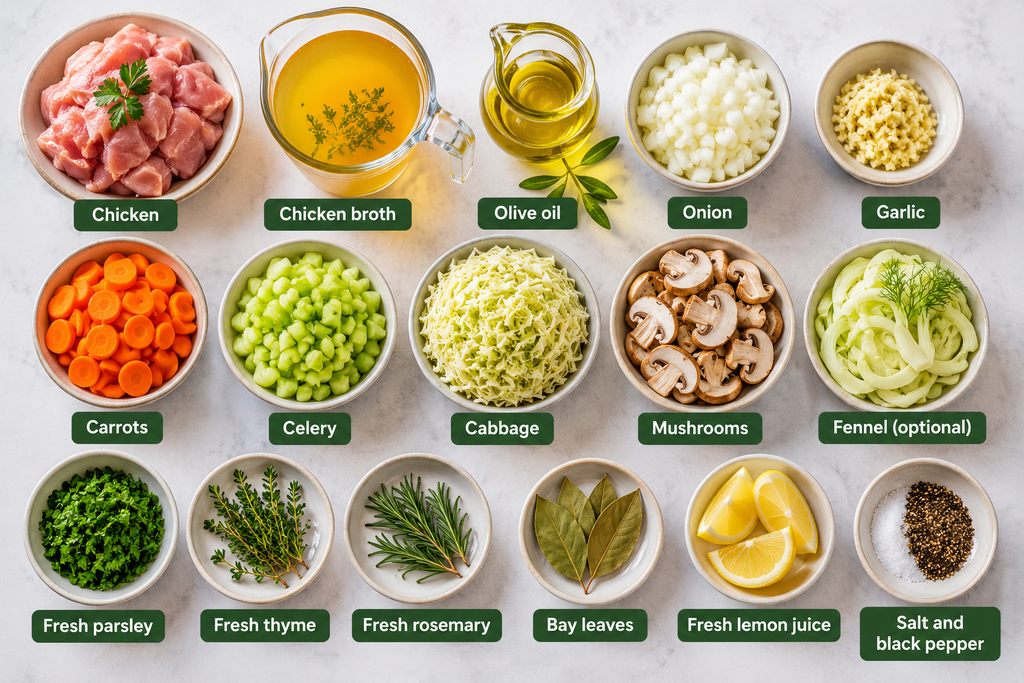
For this healthy chicken soup recipe with vegetables, you’ll need a straightforward combination of chicken, vegetables, aromatics, broth, and herbs.
- Chicken: Use boneless and skinless chicken thighs for juicy and tasty meat, or chicken breasts if you want a leaner choice.
- Chicken broth: Homemade or good-quality low-sodium chicken broth works well.
- Olive oil: It’s used to cook the vegetables and creates the first layer of flavor.
- Onion: Adds sweetness and depth to the broth.
- Garlic: Fresh garlic gives the soup a stronger, more aromatic flavor.
- Carrots: Add natural sweetness and a pleasant texture.
- Celery: Provides a classic savory base for chicken soup.
- Cabbage: Shredded cabbage adds plenty of volume and a mild sweetness.
- Mushrooms: Shiitake, cremini, or button mushrooms add earthy flavor.
- Fennel: Optional, but its mild anise-like flavor works surprisingly well with chicken.
- Fresh parsley: Added toward the end for freshness.
- Fresh thyme: Gives the broth a classic herbal flavor.
- Fresh rosemary: Use a small amount because its flavor can be quite strong.
- Bay leaves: They add a gentle depth of flavor as the soup cooks.
- Fresh lemon juice: A small squeeze at the end brightens the entire soup.
- Salt and black pepper: Essential for balancing the broth.
Ingredient Notes & Substitutions
Chicken thighs vs. chicken breasts: Chicken thighs contain more fat and tend to stay juicy during simmering. Chicken breasts are a good choice if you prefer leaner meat, but avoid overcooking them because they can become dry.
Fresh vs. dried herbs: Fresh herbs provide the best flavor, but dried thyme can be used when necessary. As a general rule, use less dried herb than fresh because dried herbs are more concentrated.
Low-sodium broth: This is particularly useful because it gives you better control over the final salt level. Taste the soup near the end and adjust gradually.
Vegetables: You don’t need to follow the vegetable list exactly. Zucchini, spinach, green beans, peas, leeks, potatoes, and mushrooms can all work.
Garlic: Fresh minced garlic gives the strongest flavor. If you’re making a low-FODMAP version, garlic-infused oil can provide garlic flavor without adding minced garlic.
Creamy option: For a creamy soup without flour, cook potatoes in the broth and blend some of them with a little broth until smooth. Stir the mixture back into the pot.
Equipment Needed for Healthy Chicken Soup Recipe
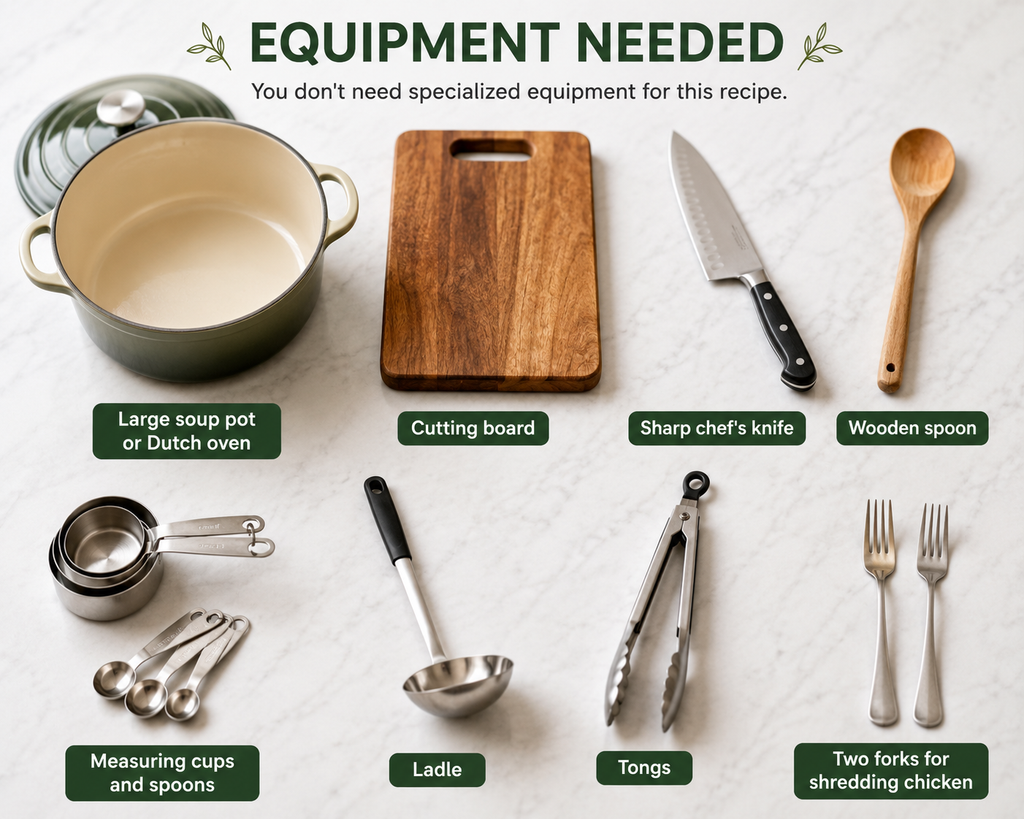
You don’t need specialized equipment for this recipe.
- Large soup pot or Dutch oven
- Cutting board
- Sharp chef’s knife
- Wooden spoon
- Measuring cups and spoons
- Ladle
- Tongs
- Two forks for shredding the chicken
If you’re making the optional potato-thickened creamy version, you’ll also need a high-speed blender.
Step-by-Step Instructions
1. Prepare the Ingredients for Healthy Chicken Soup Recipe
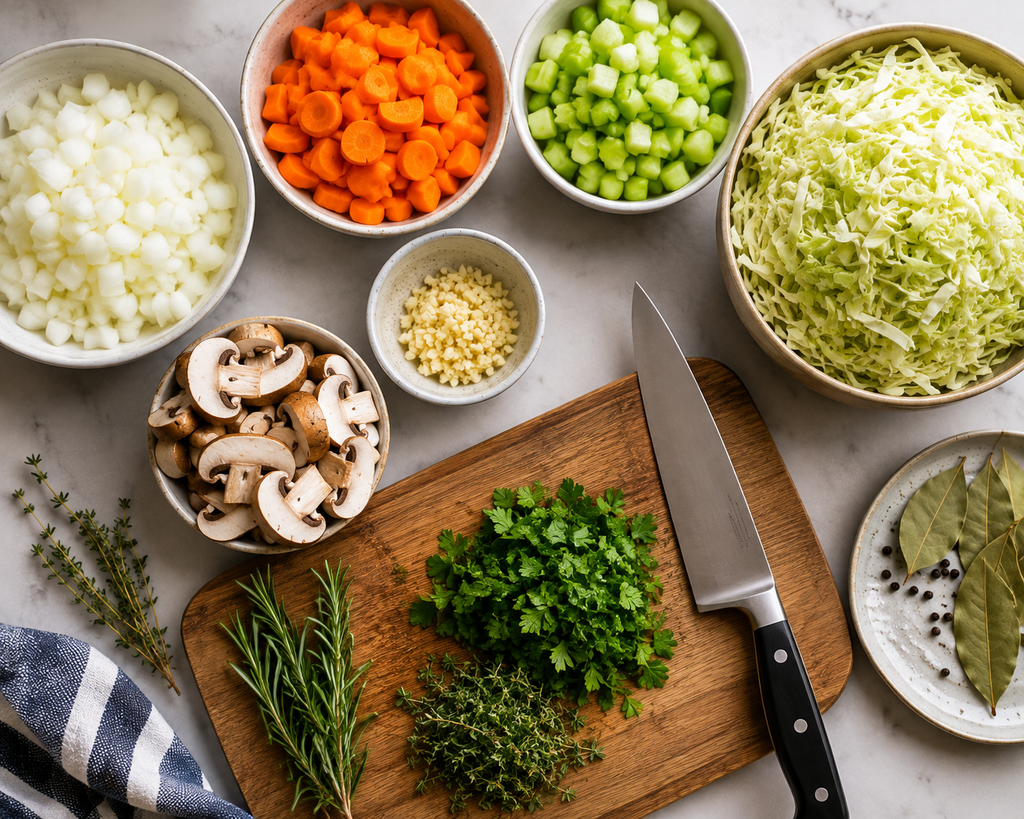
Before turning on the stove, chop the onion, carrots, celery, cabbage, and mushrooms. Mince the garlic and prepare the fresh herbs.
Having everything ready before you begin makes the cooking process much easier, especially because the vegetables are added at different stages.
2. Sauté the Aromatics
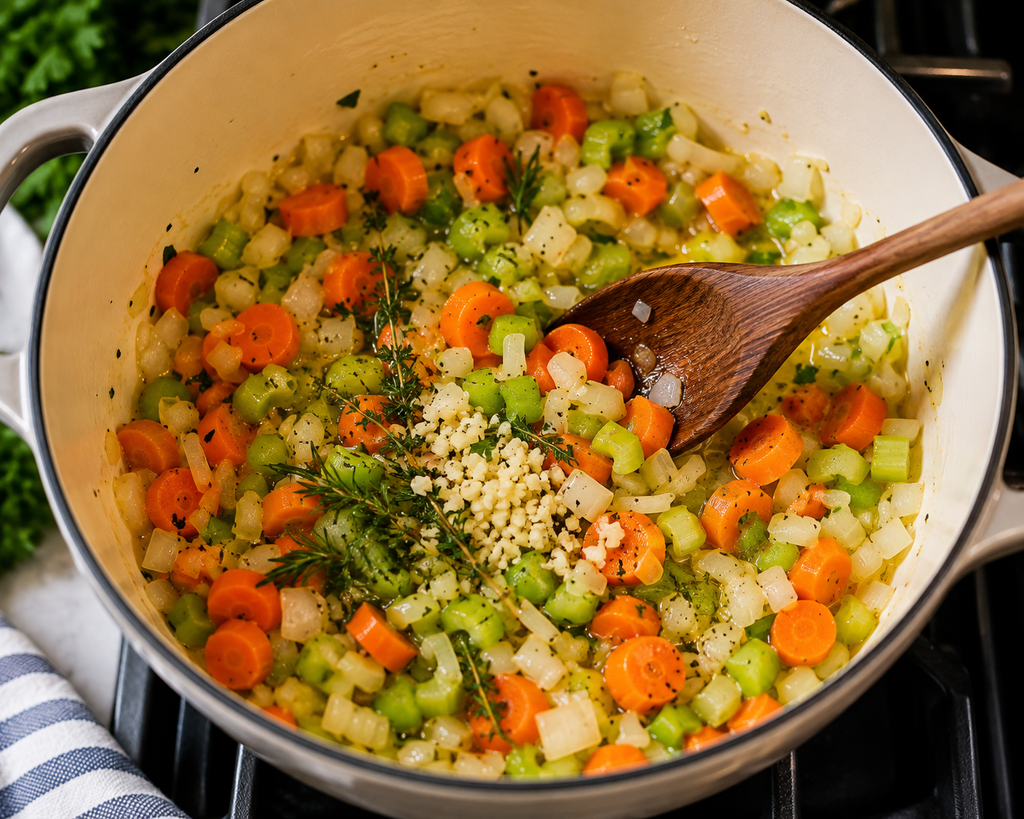
Olive oil is heated in the pan over a low flame. Add the onion, carrots, and celery.
Cook for around 4 to 5 minutes, stirring now and then, until the vegetables start to get softer. Add the garlic, thyme, rosemary, salt, and black pepper.
Cook for another 30 to 60 seconds, just until the garlic becomes fragrant.
Don’t rush this stage. Sautéing the vegetables before adding the broth gives the soup a much deeper flavor than simply boiling everything together.
3. Add the Remaining Vegetables
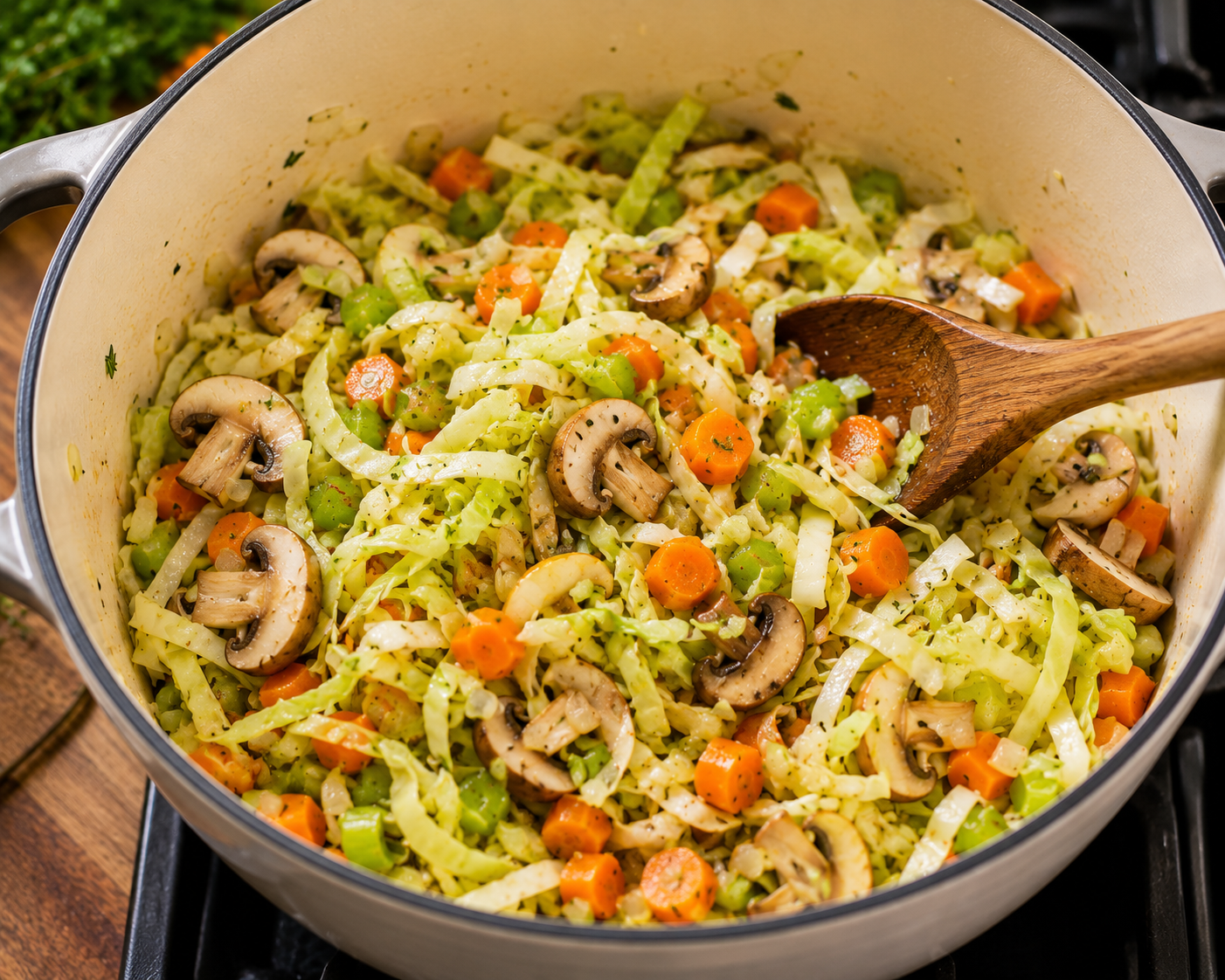
Stir in the cabbage, mushrooms, and fennel if using. Cook for another 2 to 3 minutes. The vegetables don’t need to be fully cooked at this point because they will continue cooking in the broth.
4. Add the Chicken and Broth
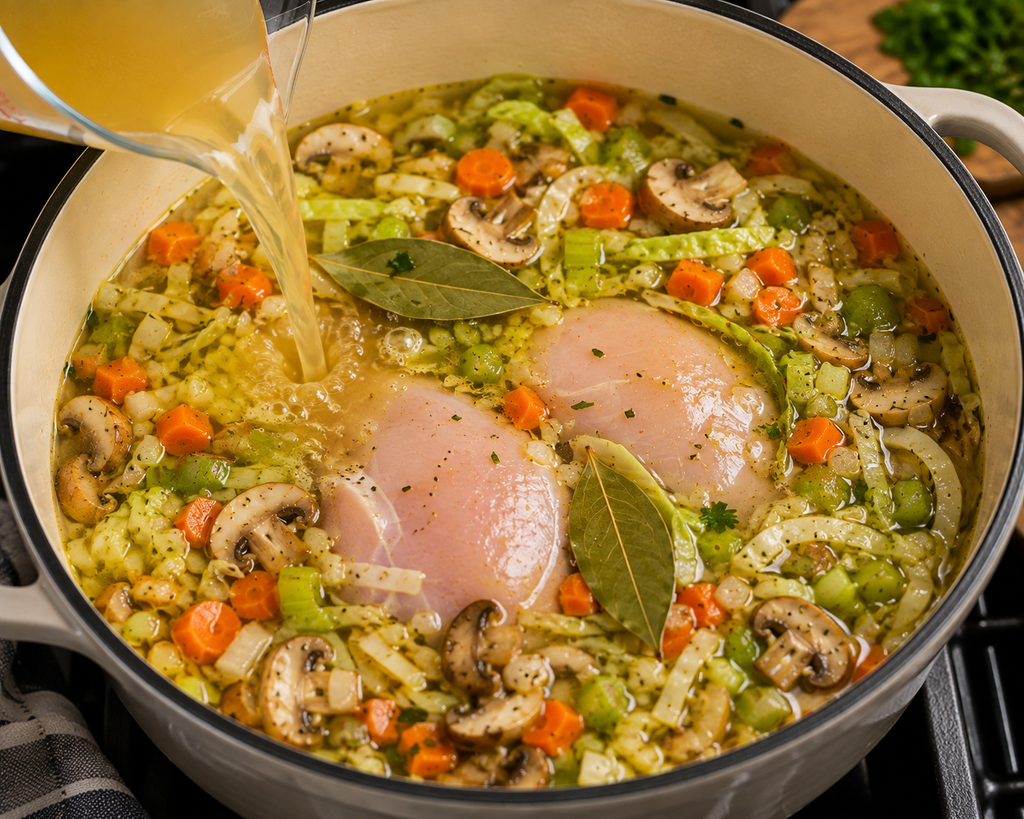
Put the chicken broth into the pot and include the bay leaves. Place the chicken thighs or breasts into the pot. Heat the mixture until it starts to boil softly, then lower the heat right away.
You want the soup to simmer rather than boil aggressively. A gentle simmer helps the chicken cook evenly and keeps the broth from becoming unnecessarily cloudy.
5. Simmer Until the Chicken Is Cooked
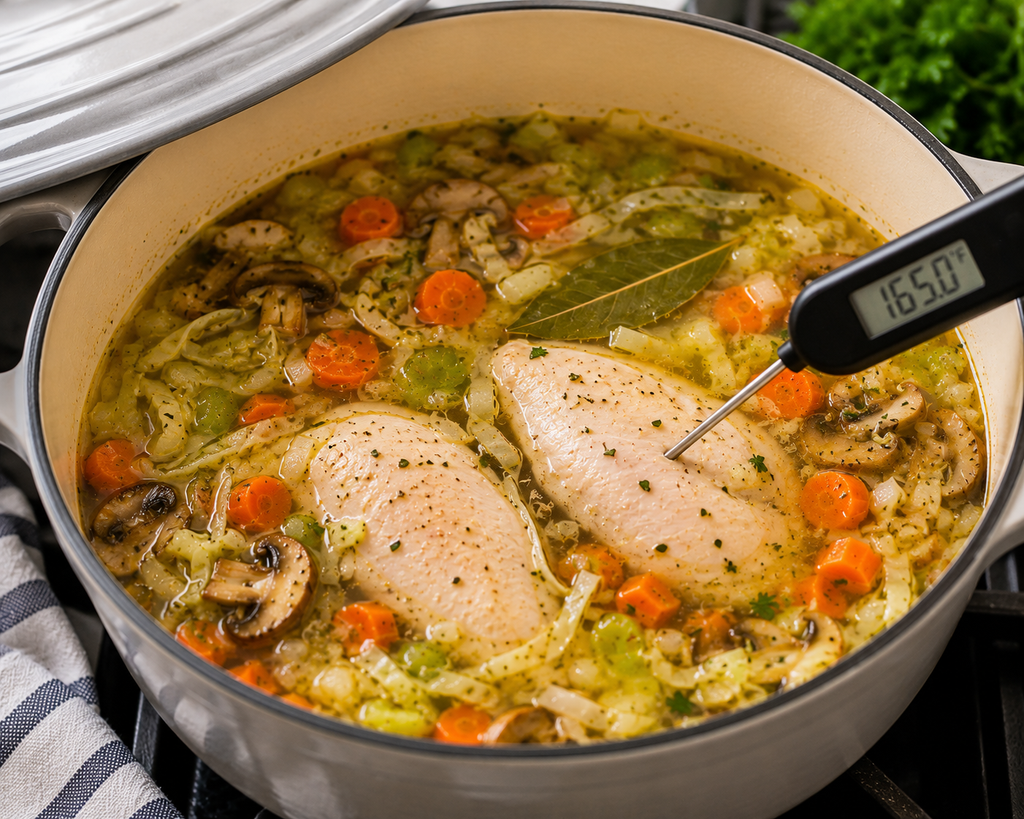
Cover the pot loosely and simmer for approximately 15 to 20 minutes, depending on the size and type of chicken you’re using. Chicken breasts can cook relatively quickly, while larger or bone-in chicken pieces may require additional time.
The safest way to check doneness is with an instant-read thermometer. Chicken should reach 165°F (74°C) in the thickest part.
6. Shred the Chicken for making Healthy Chicken Soup Recipe With Vegetables
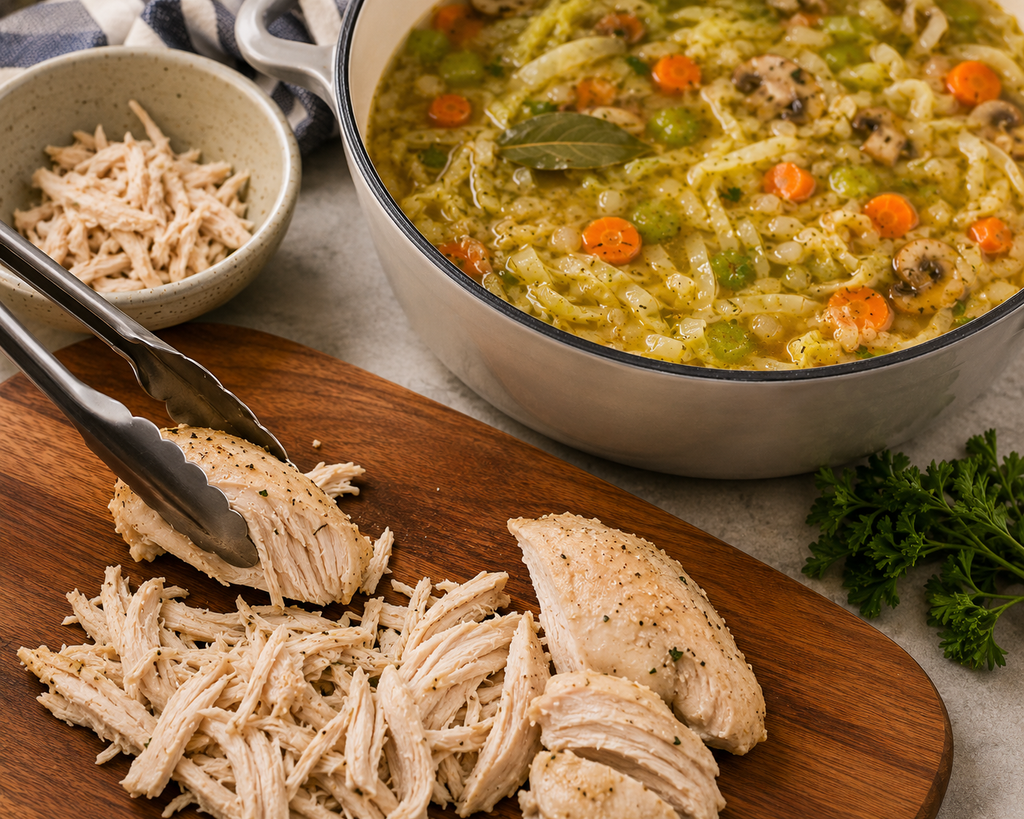
Use tongs to move the cooked chicken to a cutting board. Allow it to cool for a few minutes, then shred or chop it into bite-sized pieces. Return the chicken to the soup.
If you’re using bone-in chicken, remove and discard the bones and skin before returning the meat to the pot.
7. Finish the Soup
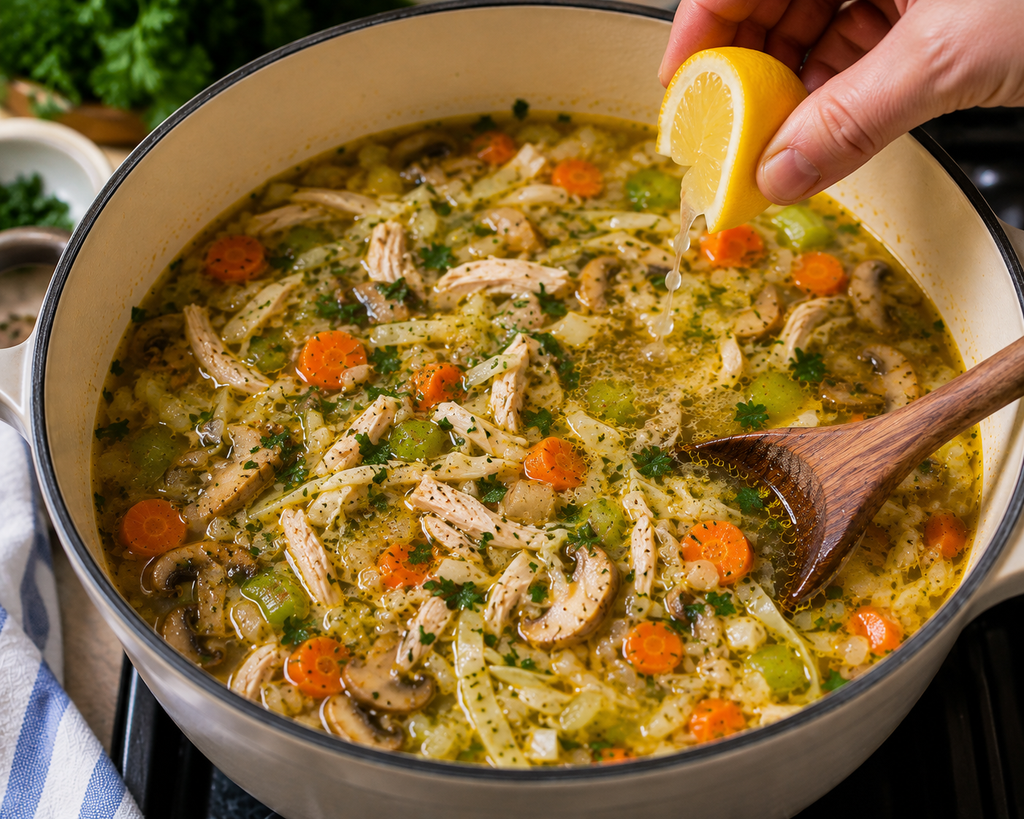
Remove the bay leaves. Taste the broth and adjust the salt and black pepper as needed. Add some fresh parsley and a bit of lemon juice.
The lemon is optional, but I highly recommend trying it. You don’t need a lot to make the soup really taste like lemon. A small amount simply makes the other flavors taste brighter.
8. Serve Hot

Put the soup into bowls and add more parsley on top as a garnish. For extra flavor, you can add a few chili flakes, a drizzle of olive oil, or a little toasted sesame oil.
If you’re adding noodles or rice, consider cooking them separately and adding them to individual bowls. This helps prevent the starch from absorbing too much broth or making the soup cloudy.
Expert Tips for Healthy Chicken Soup Recipe With Vegetables
Build Flavor Before Adding the Broth
One of the easiest ways to improve homemade soup is to spend a few extra minutes cooking the aromatics first.
Onion, carrot, celery, and garlic develop more flavor when sautéed in oil before the broth is added. This small step makes a noticeable difference.
Don’t Boil the Chicken Aggressively
A rolling boil can make the chicken tough and can make the broth look cloudy.
Once the soup reaches a boil, reduce the heat to maintain a gentle simmer.
Season in Layers
Don’t wait until the very end to think about seasoning.
Add a modest amount of salt while cooking the vegetables, then taste the finished broth and make final adjustments. If you’re using regular chicken broth rather than low-sodium broth, you may need less salt.
Use Leftover Roast Chicken
Already have cooked chicken in the refrigerator? You can make this soup even faster.
Prepare the vegetable and broth base first, then add shredded cooked chicken during the final 5 to 10 minutes of cooking. This prevents already-cooked chicken from becoming dry.
Add Lemon at the End
Fresh lemon juice is best added after cooking rather than at the beginning.
The bright acidity can balance the richness of the chicken and bring out the flavor of the vegetables and herbs.
Make Your Own Stock When You Can
Homemade chicken stock can give the soup a richer, more concentrated flavor. However, don’t feel that you must make stock from scratch every time. A quality store-bought broth is a perfectly practical choice for everyday cooking.
Recipe Variations of Healthy Chicken Soup Recipe With Vegetables
Healthy Creamy Chicken Soup
For a creamy version without flour, add peeled yellow potatoes to the pot and cook until fork-tender.
Remove some of the cooked potatoes and blend them with a little warm broth until smooth. Stir the potato mixture back into the soup.
You can add a small amount of half and half for extra richness, or use full-fat coconut milk for a dairy-free variation.
This technique creates a naturally creamy texture without making a traditional roux.
Lemon Ginger for Healthy Chicken Soup Recipe
For a brighter, more aromatic soup, add fresh grated ginger along with the garlic.
End with a lot of fresh lemon juice and some chopped parsley or cilantro. This combination gives the broth a fresh, lively flavor.
Chicken Noodle Soup
Cook egg noodles, rice noodles, or another favorite pasta separately.
Add the cooked noodles to each bowl and ladle the hot chicken soup over them. This is especially useful if you expect leftovers because the noodles won’t continue absorbing the broth in the storage container.
Chicken and Rice Soup
Add cooked rice to individual bowls, or add a small amount of uncooked rice directly to the soup.
If you cook the rice in the broth, remember that it will absorb liquid as it cooks. You may need to add additional broth.
Chicken and Bean Soup
White beans, cannellini beans, chickpeas, or lentils can turn this light soup into an even more filling meal.
Use canned beans for convenience. Drain and rinse them before adding them during the final part of cooking.
Extra Vegetables for a Healthy Chicken Soup Recipe
Increase the vegetables if you’re looking for a more substantial vegetable-packed meal.
Good choices include:
- Spinach
- Zucchini
- Green beans
- Peas
- Mushrooms
- Leeks
- Potatoes
- Kale
Add delicate vegetables such as spinach near the end so they retain their texture and color.
Low-FODMAP Adaptation
If you’re following a low-FODMAP diet, ingredient choices matter. Depending on your individual tolerance and the specific dietary phase you’re following, onion and garlic may need to be avoided or limited.
Garlic-infused oil gives a garlic taste, and the green parts of scallions or chives add a mild onion flavor.
Because dietary tolerance varies, use a trusted low-FODMAP resource or guidance from a qualified dietitian for exact portions.
Serving Suggestions for Healthy Chicken Soup Recipe
Healthy chicken soup recipe with vegetables can be a complete meal on its own, but simple sides can make it more substantial.
Serve With Bread
A slice of whole-grain bread, crusty sourdough, or a warm dinner roll is perfect for soaking up the broth.
Add a Grain
Serve the soup over cooked brown rice, quinoa, barley, or farro for a heartier meal.
Add Fresh Garnishes
Fresh toppings can make a simple soup feel more special.
Try:
- Chopped parsley
- Cilantro
- Sliced scallions
- Fresh lemon wedges
- Chili flakes
- Black pepper
- A drizzle of olive oil
- Toasted sesame oil
Make It a Complete Dinner
For an easy family meal, serve chicken soup with a simple green salad and a piece of whole-grain bread. You don’t need an elaborate side dish because the soup already contains chicken and plenty of vegetables.
Storage & Reheating
Allow leftover soup to cool slightly before transferring it to airtight containers. Cool the leftovers in the refrigerator, not leave them at room temperature.
Store the soup in an airtight container in the refrigerator and use it within 3 to 4 days.
Freezer
Healthy Chicken Soup can generally be frozen for approximately 2 to 3 months for best quality.
If you know you’ll freeze the soup, consider leaving out noodles, rice, or other starches. They can become soft after freezing and reheating.
Instead, prepare the starch separately and add it when serving.
Reheating
By using the microwave-safe bowl, you can also reheat the portion in the microwave. Heat in short intervals and stir between each interval for more even heating.
If the soup has thickened in the refrigerator, add a splash of water or broth before reheating.
Common Mistakes to Avoid
Overcooking the Chicken
Chicken doesn’t need hours of cooking to become tender. Boneless chicken can cook relatively quickly. Use an instant-read thermometer to check that it reaches 165°F (74°C).
Adding Too Much Salt
Chicken broth can already contain a significant amount of sodium. Start conservatively and adjust after tasting the finished soup.
Skipping the Sauté
Adding raw vegetables directly to broth is convenient, but sautéing the aromatics first creates a more developed flavor.
Boiling Too Hard
Keep the soup at a gentle simmer. Vigorous boiling isn’t necessary and can negatively affect the texture of the chicken.
Adding Noodles Too Early
Noodles continue absorbing liquid after cooking. If you plan to save leftovers, cook them separately and add them to individual portions.
Using Too Many Strong Herbs
Rosemary has a powerful flavor. A little goes a long way. Balance it with milder herbs such as thyme and parsley.
Forgetting the Final Taste Test
A soup can taste flat simply because it needs a little more salt or acidity. Taste the broth before serving.
Frequently Asked Questions
Is a healthy chicken soup recipe good for a balanced meal?
It can be. A bowl made with chicken, vegetables, and broth provides protein and a variety of nutrients from the ingredients. Adding whole grains, beans, or potatoes can make it more substantial. The total amount of nutrition in a meal depends on what is used in it and how much is eaten.
Can I use chicken breast instead of chicken thighs?
Yes. Chicken breast works very well if you prefer leaner meat. Just be careful not to overcook it because breast meat can become dry more quickly than thighs.
Can I make a healthy chicken soup recipe with cooked chicken?
Absolutely. This is one of the best ways to use leftover roast or rotisserie chicken. Prepare the broth and vegetables first, then stir in shredded cooked chicken near the end and simmer briefly to warm it through.
How do I make chicken soup creamy without flour?
Potatoes are an excellent natural thickener. Cook them until tender, then blend some of the potatoes with warm broth until smooth. Return the mixture to the pot for a creamy texture without making a flour-based roux.
Why does my chicken soup taste bland?
The most common reason is insufficient seasoning. Taste the broth before serving and adjust the salt gradually. Fresh herbs, garlic, onion, and a small amount of lemon juice can also make the flavors more noticeable.
Can I add rice or noodles directly to chicken soup?
Yes, but keep in mind that they absorb broth as they cook and continue absorbing liquid during storage. For clearer broth and better leftovers, cook them separately and add them when serving.
Can I freeze homemade chicken soup?
Yes. Store cooled soup in freezer-safe airtight containers, leaving some room for expansion. For the best texture, freeze the soup without noodles or rice and add freshly cooked starch when reheating.
What vegetables can I add to chicken soup?
There are many possibilities. Carrots, celery, cabbage, mushrooms, fennel, spinach, zucchini, peas, green beans, potatoes, and leeks can all work well. Add vegetables according to how long they need to cook.
Nutrition Information (Approximate)
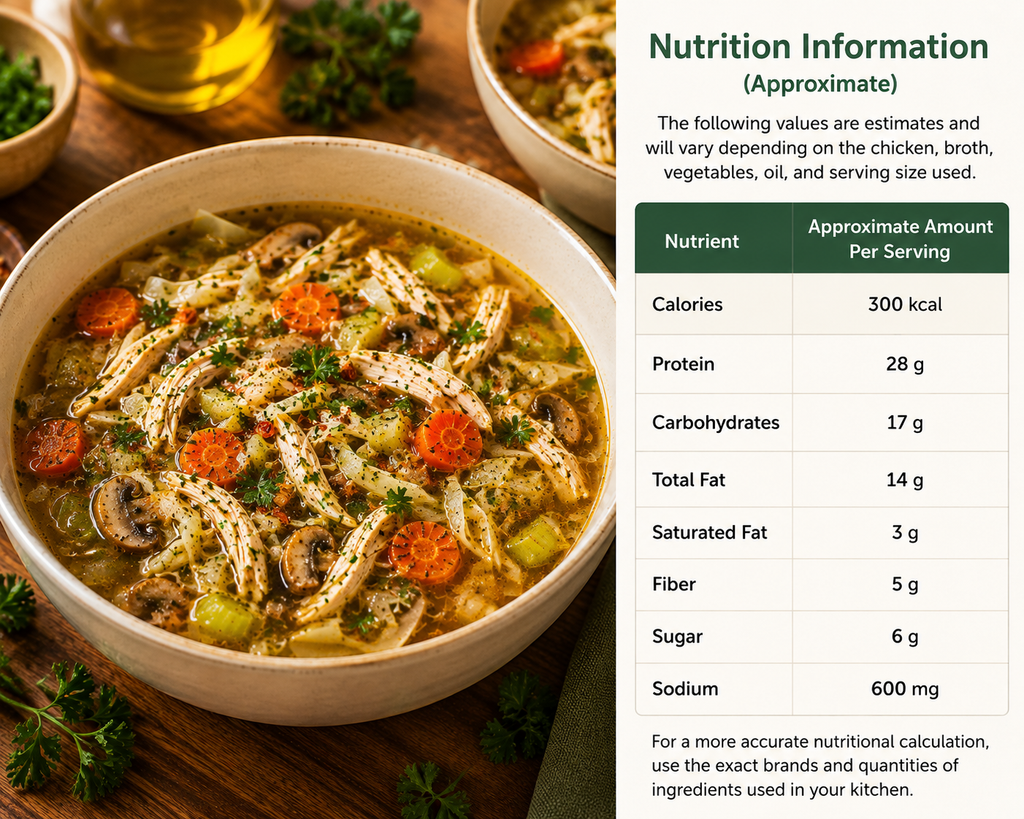
The following values are estimates and will vary depending on the chicken, broth, vegetables, oil, and serving size used.
| Nutrient | Approximate Amount Per Serving |
| Calories | 300 kcal |
| Protein | 28 g |
| Carbohydrates | 17 g |
| Total Fat | 14 g |
| Saturated Fat | 3 g |
| Fiber | 5 g |
| Sugar | 6 g |
| Sodium | 600 mg |
For a more accurate nutritional calculation, use the exact brands and quantities of ingredients used in your kitchen.
Recipe Card (Printable Summary)
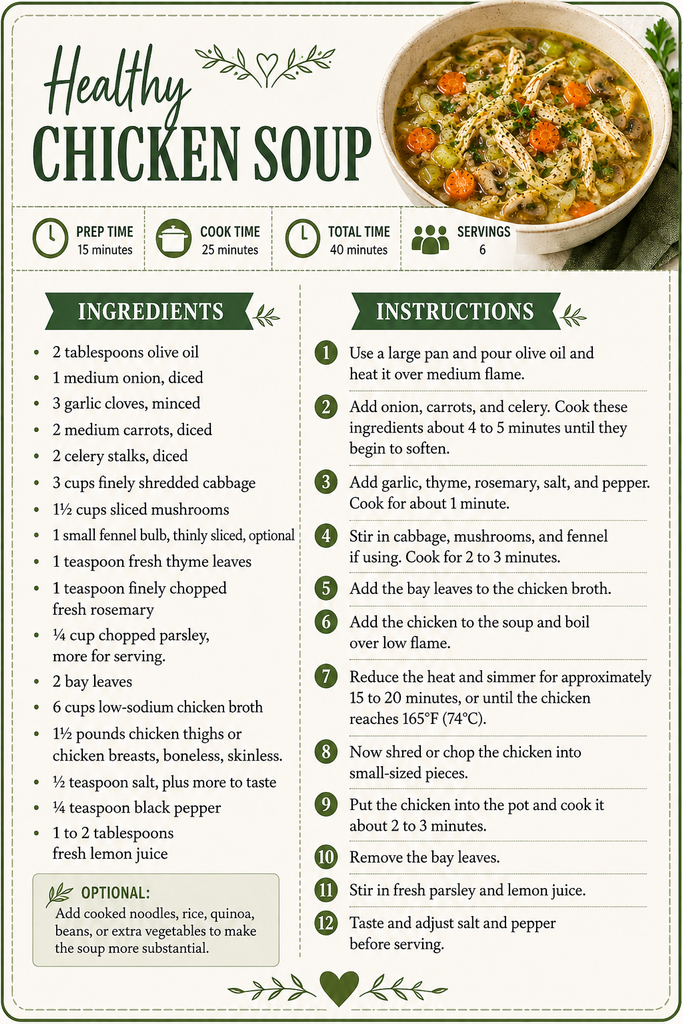
Healthy Chicken Soup
Prep Time: 15 minutes
Cook Time: 25 minutes
Total Time: 40 minutes
Servings: 6
Ingredients
- 2 tablespoons olive oil
- 1 medium onion, diced
- 3 garlic cloves, minced
- 2 medium carrots, diced
- 2 celery stalks, diced
- 3 cups finely shredded cabbage
- 1½ cups sliced mushrooms
- 1 small fennel bulb, thinly sliced, optional
- 1 teaspoon fresh thyme leaves
- 1 teaspoon finely chopped fresh rosemary
- ¼ cup chopped parsley, more for serving.
- 2 bay leaves
- 6 cups low-sodium chicken broth
- 1½ pounds chicken thighs or chicken breasts, boneless, skinless.
- ½ teaspoon salt, plus more to taste
- ¼ teaspoon black pepper
- 1 to 2 tablespoons fresh lemon juice
Instructions
- Use a large pan and pour in olive oil and heat it over medium heat.
- Add onion, carrots, and celery. Cook these ingredients for about 4 to 5 minutes until they begin to soften.
- Add garlic, thyme, rosemary, salt, and pepper. Cook for about 1 minute.
- Stir in cabbage, mushrooms, and fennel if using. Cook for 2 to 3 minutes.
- Add the bay leaves to the chicken broth.
- Add the chicken to the soup and boil over a low flame.
- Reduce the heat and simmer for approximately 15 to 20 minutes, or until the chicken reaches 165°F (74°C).
- Now shred or chop the chicken into small pieces.
- Put the chicken into the pot and cook it for about 2 to 3 minutes.
- Remove the bay leaves.
- Stir in fresh parsley and lemon juice.
- Taste and adjust salt and pepper before serving.
Optional: Add cooked noodles, rice, quinoa, beans, or extra vegetables to make the soup more substantial.
Conclusion
Healthy chicken soup doesn’t need complicated ingredients or hours of cooking to taste homemade. With tender chicken, plenty of vegetables, aromatic herbs, and a well-seasoned broth, you can make a satisfying meal in about 40 minutes.
Use chicken thighs for extra richness or chicken breast for a leaner option. Add rice, noodles, beans, or potatoes when you want a heartier bowl, or keep it light with plenty of vegetables and broth. You can even turn the same basic recipe into a creamy soup without flour by blending cooked potatoes into the broth.
Once you’ve made it a few times, you’ll likely stop thinking of this as a strict recipe and start treating it as a reliable cooking formula. Use what you have, taste as you go, and finish with fresh herbs and a little lemon. That’s often all it takes to turn a simple pot of chicken soup into a comforting homemade meal.

Homemade Cream of Chicken Soup Recipe 2026

Keto Brownies Recipe: Fudgy, Easy And Low Carb

Chicken Alfredo Pasta Recipe (homemade & creamy)

Chicken Broccoli Pasta Bake: Creamy, Easy One-Dish Dinner

Chocolate Lava Cakes Recipe with Delicious Center

The Best Homemade BBQ Chicken Pizza Recipe 2026

Simple Fried Chicken Recipe: Crispy, Juicy, and Easy

Healthy Chicken Soup Recipe With Vegetables and Tender Chicken

Gluten-Free Chicken Nuggets Crispy And Homemade

Chicken Biryani Recipe: Flavorful and Easy to Make
-
 Baked Chicken2 weeks ago
The Best Homemade BBQ Chicken Pizza Recipe 2026
-
 Chicken Recipes2 weeks ago
Simple Fried Chicken Recipe: Crispy, Juicy, and Easy
-
 Soups and Salad2 weeks ago
Healthy Chicken Soup Recipe With Vegetables and Tender Chicken
-
 Fried Chicken2 weeks ago
Gluten-Free Chicken Nuggets Crispy And Homemade
-
 Chicken Recipes1 week ago
Chicken Biryani Recipe: Flavorful and Easy to Make
-

 Chicken Recipes1 week ago
Air Fryer Chicken Wings with Crispy, Juicy, and Delicious
-
 Soups and Salad1 week ago
Classic Chicken Salad Recipe – Creamy, Flavorful And Delicious
-
 Chicken Recipes4 days ago
Chicken Broccoli Pasta Bake: Creamy, Easy One-Dish Dinner